
Last Updated on May 28, 2026
Starting out in interior design — whether as a career, a serious hobby, or simply an attempt to make your own living spaces more beautiful — can feel simultaneously exciting and overwhelming. The field encompasses an enormous range of knowledge: color theory, spatial planning, furniture history, materials and finishes, lighting design, building systems, client psychology, and the practical realities of sourcing, budgeting, and project management. Knowing where to begin, and how to progress systematically, makes the difference between building genuine competence and getting lost in a sea of aesthetic possibilities.
This guide offers the practical advice most helpful to those at the beginning of their interior design journey — whether you are decorating your first home, considering design as a career, or simply trying to develop your own eye and vocabulary.
Learn to See Rooms the Way Designers Do
The most fundamental skill in interior design is learning to observe spaces analytically — to move beyond “I like it” or “I don’t like it” toward a specific understanding of what works and why. This analytical seeing is not natural to most people; it is a trained skill developed through deliberate practice.
Start a habit of studying rooms you encounter: in person, in design publications, and online. When you see a room that appeals to you, ask yourself specific questions. What is the color palette, and how many colors are in use? How is the furniture scaled relative to the room? Where is the light coming from, and what effect does it have on the atmosphere? How are the decorative elements grouped — what is the relationship between different pieces and objects? What is drawing your eye first, and why?
Equally valuable is studying rooms that do not work — spaces that feel wrong, uncomfortable, or aesthetically unresolved. What specifically is the problem? Is the furniture too small? Is the palette incoherent? Is the lighting inadequate? Learning to diagnose problems trains your eye as much as admiring successful solutions.
Keep a visual journal. Whether physical or digital, collect images of rooms that speak to you and make notes about what specifically you find compelling about each. Over time, patterns will emerge that reveal your own aesthetic sensibility — the throughlines that connect the rooms you love. This self-knowledge is essential for anyone hoping to develop a personal design voice.
Master the Foundational Principles
Interior design, like all design disciplines, is governed by principles that provide a framework for decision-making. These are not rigid rules but organizing concepts that, once internalized, make design decisions more deliberate and more successful. The foundational principles include:
Balance is the distribution of visual weight throughout a room. Symmetrical balance — mirror-image arrangements on either side of a central axis — is the most obvious and the easiest to achieve; it reads as formal and structured. Asymmetrical balance uses different elements with equal but non-identical visual weight, and requires more careful judgment to achieve; it reads as more casual and dynamic.
Scale and proportion address how objects relate in size to each other and to the overall space. Furniture that is too small for a room disappears visually and makes the room feel sparse; furniture that is too large feels oppressive. Learning to judge scale and proportion accurately takes practice — studying rooms carefully and experimenting with your own spaces is the best way to develop this judgment.
Rhythm is the repetition of design elements that creates visual movement through a space. Color repetition, repeating shapes, and consistent spacing of elements all create rhythm. Without rhythm, rooms feel static and disjointed; with too much rigid repetition, they feel mechanical. The sweet spot is a balance of repetition and variation.
Emphasis is creating a focal point — something in the room that draws the eye first and anchors the space. Every well-designed room has at least one focal point: a fireplace, a dramatic piece of artwork, a beautiful view, or an architecturally interesting wall. Everything else in the room is arranged to support or complement that focal point rather than compete with it.
Develop a Vocabulary for Color
Color is among the most powerful tools in interior design and among the most complex to master. A working knowledge of color theory — the relationships between colors on the color wheel and how different combinations behave together — is foundational knowledge that every beginning designer should develop.
The color wheel organizes all hues in a circular arrangement that reveals their relationships. Adjacent colors on the wheel (analogous colors) create harmonious, low-contrast combinations that feel unified and calming. Colors directly opposite each other on the wheel (complementary colors) create high-contrast, dynamic combinations. Colors that form an equilateral triangle on the wheel (triadic colors) create vibrant, balanced combinations.
Beyond hue relationships, understanding value (how light or dark a color is) and saturation (how intense or muted a color is) gives you much finer control over palette development. Two colors with very different hues but similar values can coexist harmoniously in a palette in a way that would be jarring if their values were more different. Muted, desaturated versions of colors tend to coexist more easily than highly saturated versions of the same hues.
The relationship between color and light is perhaps the most important practical consideration for residential interior designers. Paint colors look dramatically different under different lighting conditions — warm incandescent or LED light shifts colors warm; cool fluorescent or daylight light shifts them cool. Always evaluate paint samples under the actual lighting conditions of the space, at multiple times of day, before committing to a color.
Study Materials, Finishes, and Textiles
The physical materials from which furniture, surfaces, and accessories are made have enormous influence on how a space looks and how it functions in daily life. Beginning designers sometimes focus so heavily on color and style that they underestimate the importance of material selection — but the wrong material choice can undermine even the most carefully considered design.
Spend time learning to distinguish quality from mediocrity in common materials. What distinguishes solid hardwood furniture from furniture with a veneer over particleboard? How does full-grain leather differ from bonded leather or faux leather? What does a well-made wool or silk rug feel like relative to a synthetic one? This tactile knowledge — developed through handling many different materials in showrooms, stores, and model homes — is invaluable for making good material specifications and for helping clients understand what they are getting for different price points.
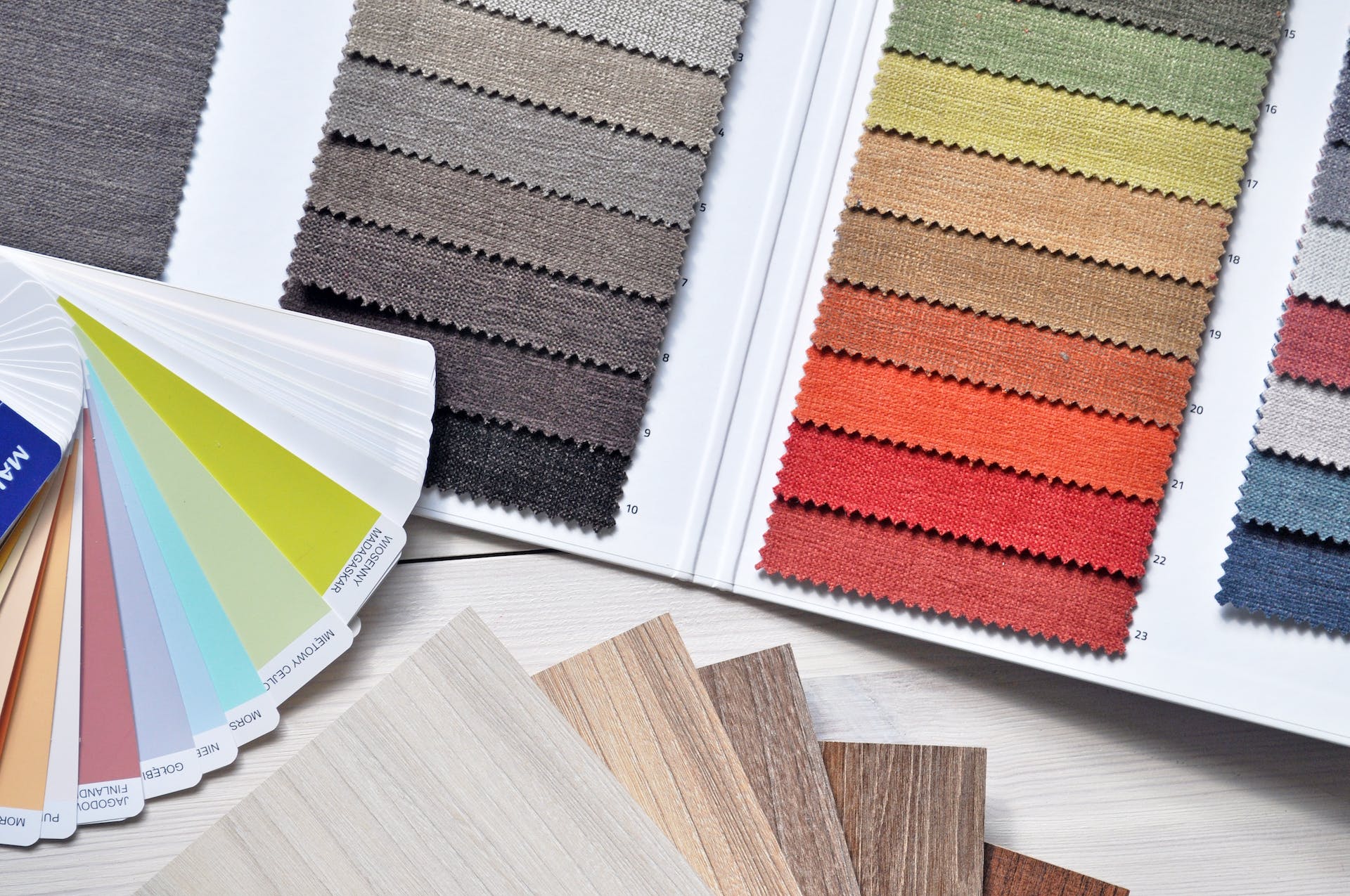
Textiles are an area of particular complexity. Fabric types, weave structures, fiber contents, and finishing treatments all affect how a textile looks, how it feels, how it wears over time, and how it should be cleaned. Performance fabrics — those engineered for stain resistance, UV stability, and durability — have transformed what is possible in residential upholstery and are worth understanding in depth, both for client-facing projects and for your own home.
Understand Spatial Planning and Furniture Layout
The ability to arrange furniture to maximize the functional and aesthetic potential of a space is one of the most immediately practical skills in interior design. Poor furniture arrangement is responsible for a large proportion of the rooms that feel wrong despite having perfectly good individual pieces, and the fix costs nothing but thought and effort.
Start with the room’s primary function and the activities it needs to accommodate. A living room needs to enable conversation, accommodate different group sizes, and potentially also serve individual activities like reading or working. The furniture arrangement must create clear conversation zones without blocking circulation paths, and should make the room feel welcoming to both a single person relaxing and a group of people socializing.
Learn the guidelines that experienced designers apply to furniture layout: all furniture in a seating area should have at least some visual connection to the others rather than being pushed against separate walls; rugs should be large enough that at minimum the front legs of all major seating pieces rest on them; traffic paths through the room should be at least 30 to 36 inches wide to feel comfortable; and the distance between facing seating pieces should be within the range that allows comfortable conversation (roughly 8 to 10 feet).
Practice with free floor planning tools. Apps like Roomstyler, Planner 5D, and the IKEA planning tools allow you to input room dimensions and test furniture arrangements to scale before moving anything. This is an excellent way to develop spatial reasoning skills and to experiment with configurations that would be impractical to test in the physical room.
Build Your Design Library
The development of taste and visual knowledge requires immersion in excellent design work. Build a design library — both physical and digital — that exposes you consistently to high-quality interior design across different periods, styles, and scales.
Design books are an invaluable resource. Many of the most important designers in the history of interior design have published extensively: Albert Hadley, Sister Parish, David Hicks, Michael Taylor, Billy Baldwin, Kelly Wearstler, Bunny Williams, Miles Redd, and many others. Their books provide both visual inspiration and — often — articulate insight into their design thinking and philosophy.
Design publications — both print and digital — provide access to current work across the spectrum of contemporary interior design. Publications like Architectural Digest, Elle Decor, House Beautiful, and Veranda have deep archives and current content that rewards regular study. Design websites and Instagram accounts bring exposure to a much wider range of designers than any single publication.
Visit design showrooms, furniture markets, and model homes whenever you have the opportunity. Seeing materials, furniture, and finishes in person — being able to touch fabrics, open drawers, sit on upholstery, and walk through fully styled rooms — builds knowledge and judgment that no amount of looking at photographs can replicate. If you have access to a trade design center (available in most major metropolitan areas), periodic visits are one of the best investments of time available to a beginning designer.
Develop Your Process and Your Tools
Professional interior designers work within a structured process that keeps projects organized, clients informed, and decisions made in the right order. Even if you are designing only your own home, adopting elements of this process will produce better results and fewer expensive mistakes.
Begin every project with a thorough assessment: measure the space accurately, inventory existing furniture and finishes, and articulate — in writing — what you want the space to accomplish and feel like. This program document is your anchor throughout the design process.
Develop a concept before purchasing anything. Whether a single inspiration image, a mood board assembled from magazine clippings, or a digital board of images and swatches, a concept gives all subsequent decisions a filter. Every potential purchase can be evaluated against the concept: does this advance the vision or compromise it?
Keep a project binder or folder (physical or digital) with samples, tear sheets, measurements, receipts, and supplier contact information for every project. This documentation prevents the common problem of purchasing something that does not quite fit because you misremembered a measurement, or spending significant time trying to reorder something when you do not have the supplier or product information readily available.
Find Your Aesthetic Voice
Perhaps the most important and most personal aspect of developing as a designer — whether as a professional or as someone designing your own home — is finding your own aesthetic voice. This is the set of consistent preferences, sensibilities, and values that make your design work recognizably yours.
Your aesthetic voice emerges from the rooms you love, the materials you are drawn to, the way you feel about comfort versus restraint, historical reference versus contemporary edge, color versus restraint. It develops through practice, through exposure to broad design history and current work, and through honest reflection on your own preferences.
Give yourself permission to develop slowly. The designers with the most distinctive voices typically arrived there after years of exploration, experimentation, and refinement — not from day one. Every design project, even a small one, teaches you something about what works, what resonates with you, and where your instincts are most reliable. Trust the process and know that your eye and your confidence will develop with time and practice.