
Last Updated on November 4, 2023
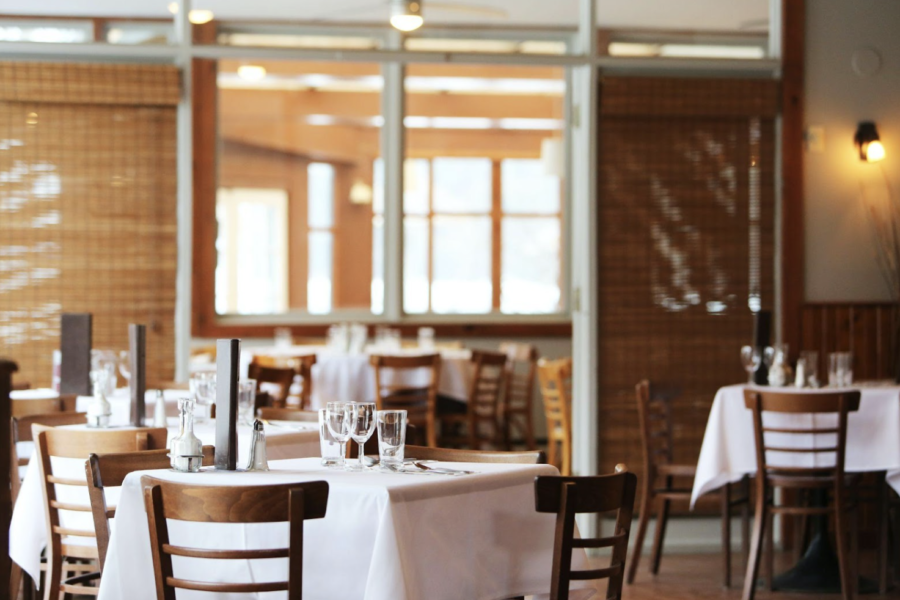
The dining room is the heart of the home. It’s where family and friends meet to eat, talk, and make memories. Good lighting sets the mood for these special times together and the right lights can transform your dining space. According to a 2022 survey, many homeowners believe lighting design is extremely important in setting the right atmosphere in dining rooms.
They make it welcoming and bring people together. This guide looks at how thoughtful fixture choices and placement can improve the look and feel of your dining room.
Why Lighting Matters in Dining Rooms
Lighting matters in dining rooms for many reasons. Different lights make dining feel formal or casual and can help show the room’s beauty. Good lights let you see food, dishes, and faces. Focused lights draw people to the table and efficient LED bulbs save electricity but still give great light.
Experts say to have ambient, task, and accent lights in dining rooms. Together, they provide general and targeted light and this helps dining activities and makes the space beautiful. The data below shows common dining room lighting:
- Chandeliers give ambient light from above the table and create an elegant feel
- Sconces on the walls provide task lighting and help people see their food and plates
- Under Cabinet lights shine on modern dining chairs and tables and highlights the furniture as accents
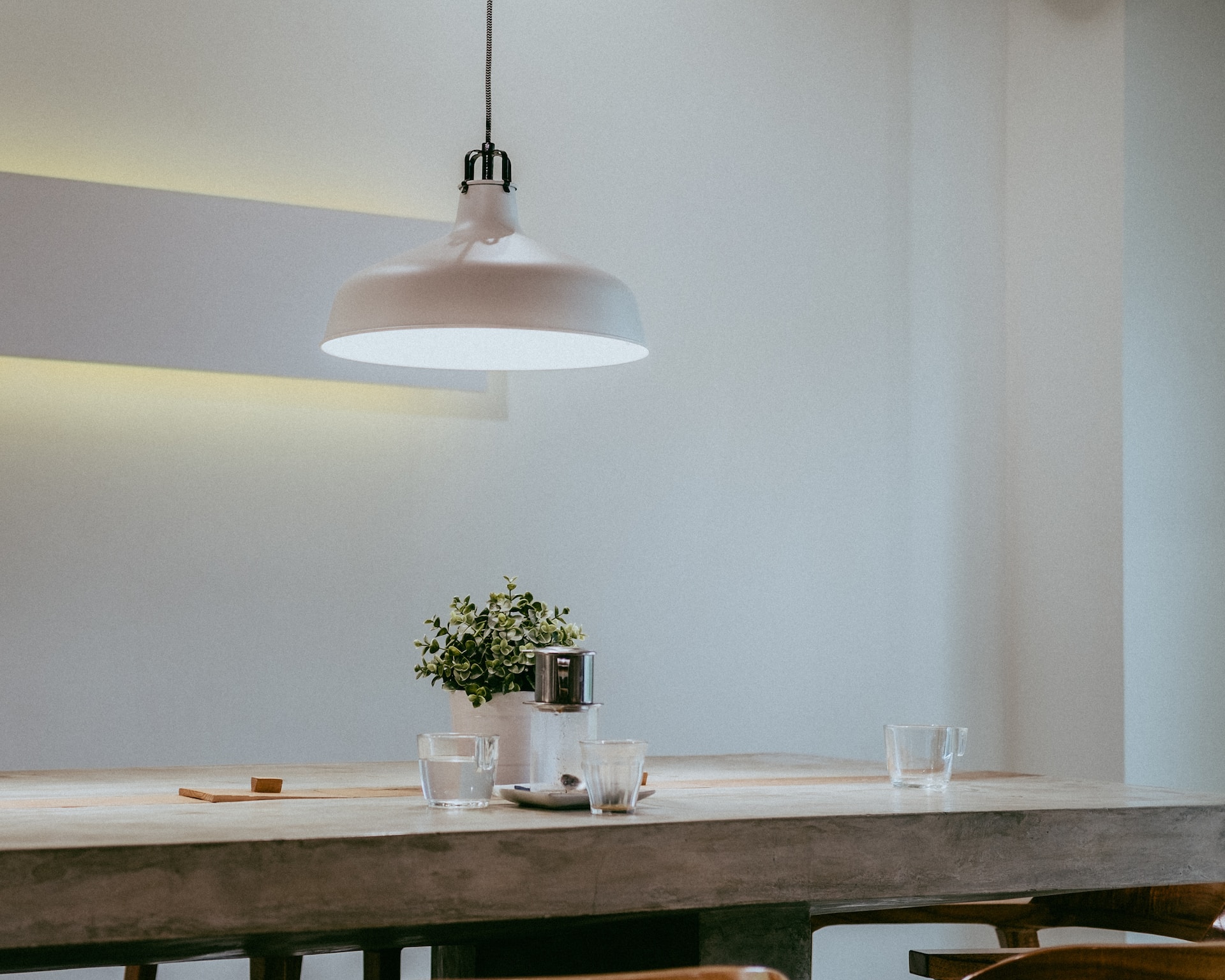
- Pendants hang above the table for accent lighting and focus light right where it’s needed
Types of Dining Room Lighting Fixtures
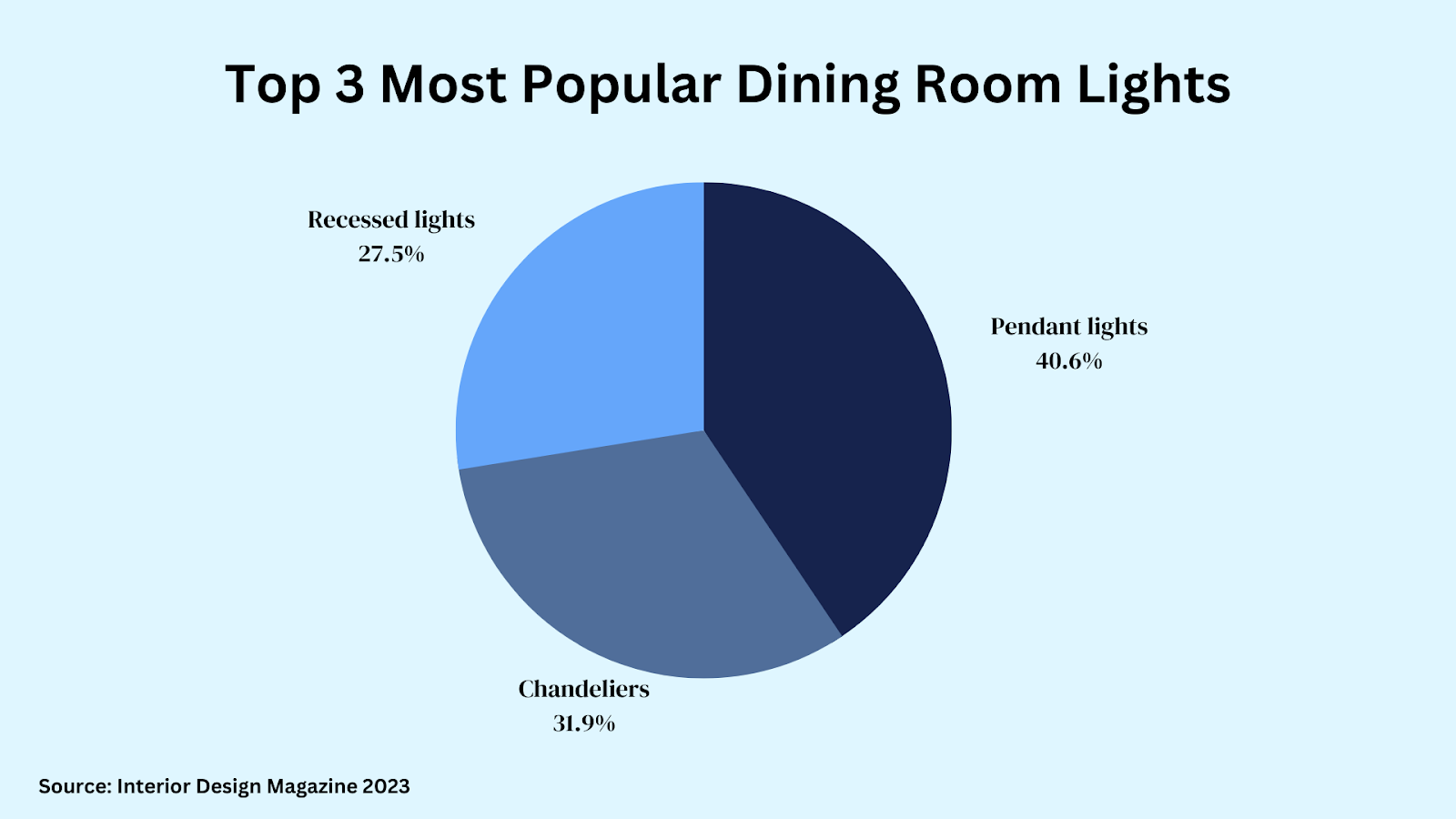
Experts suggest having ambient, task, and accent lighting in dining rooms. Together, they give and target illumination which supports dining activities and makes a beautiful space. Below is data that shows the most popular lighting used for the kitchen:
1. Ambient Lighting Fixtures
Ambient lighting gives general illumination for moving around and basic tasks. It’s the room’s basic light.
- Chandeliers: Grand, sparkling chandeliers grab attention. They work well over dining tables.
- Pendant lights: Groups of pendants give broad, ambient downlight.
- Ceiling lights: Flush and recessed options provide even, ambient ceiling light.
2. Task Lighting Fixtures
Task lighting gives better visibility for eating, drinking, and talking. It makes dining more enjoyable.
- Table lamps: Strategically placed lamps provide direct dining light.
- Track lighting: Flexible track spots highlight the table.
- Pendants: Center pendants also give task lighting.
3. Accent Lighting Fixtures
Accent lighting highlights decorative details, art, and displays. It showcases pretty elements.
- Picture lights: Discreet picture lights illuminate wall art.
- Wall sconces: Mounted sconces shine both up and down.
- Track lighting: Adjustable spots accent decor.
- Cabinet lighting: Lights display china cabinets and shelves.
Factors For Picking Fixtures
Consider these things when choosing dining room lighting:
1. Style and Finish
Match dining room lighting style to your decor – from traditional to modern. Fixture shapes, materials, and detailing create a unique style. Finishes like bronze, nickel, brass, black, and white also impact the look. Coordinate metals, wood tones, crystals, and colors in fixtures with your room decor. Traditional crystal chandeliers suit formal spaces. Modern angular pendants have a contemporary edge. Rustic materials like wood, leather, or iron have casual, earthy appeal perfect for farmhouse dining rooms. Pick lighting that complements and enhances your decor.
A 2022 Houzz study found that 74% of people want dining room lighting to reflect their personal home style.
2. Light Quality
Light color temperature, brightness, and color rendering affect ambiance. The warm 2700k-3000K light is welcoming and flattering for dining. Cool light over 5000K feels stark and harsh. Dimmable fixtures allow customizing brightness with ease for any activity or mood. The color rendering index (CRI)
indicates how a light shows colors with accuracy. High CRI (90-100) lighting makes food, people’s faces, and the room itself look their best.
3. Placement
Properly placed fixtures distribute light in dining spaces. Chandeliers or pendants hung centered over dining tables provide even, ambient illumination. Table lamps spaced at even distances give targeted task lighting. Picture lights mounted at artwork eye level prevent glare. Wall sconces flanking a sideboard or china cabinet provide balanced accent lighting. Consider room size and ceiling height when selecting fixture styles and hanging positions.
4. Budget
With average dining lighting costing $600-$2000, set a realistic budget. Well-designed lighting doesn’t have to be expensive. Focus on flexible, easy-to-install fixtures. This provides quality illumination, saves energy dollars over time, and maximizes enjoyment.
5. Energy Efficiency
Choose LED bulbs that use at least 75% less energy and last 25 times longer than old incandescent bulbs. LEDs give great light quality while saving money and hassle from frequent bulb changes. Energy-efficient lighting also helps the planet!
Popular Dining Room Lighting Styles
Different lighting styles create unique dining room decor. Let’s look at popular options to match any home.
1. Rustic Lighting
Rustic lighting has a natural, informal feel perfect for casual dining rooms. Materials like wood, iron, and mason jars add texture. Warm metal finishes like bronze and copper complement the earthy look.
- Antler chandeliers made from real or faux antlers have an organic style. Twisting branches holding bulbs or candles become a focal point.
- Wagon wheel pendants resemble vintage barn lighting. Real or fake wagon wheels hold pendant lights. Their worn, rustic look feels comfortable.
- Candle chandeliers mimic flickering candlelight with clear glass globes around bulbs. Old-world black iron finishes enhance the vintage vibe.
- Mason jar pendants use upside-down jars as shades. Blue or clear suspended jars give a homemade, country style.
Rustic dining room lighting creates a cozy, laid-back feel perfect for gatherings with family and friends.
2. Transitional Lighting
Transitional fixtures combine traditional and modern elements. This flexible style complements both formal and casual dining rooms.
- Drum pendants have simple metal and glass cylindrical shades. Large statement pendants make a dramatic impression.
- Orb chandeliers have rows of clear or colored globe glass shades surrounding bulbs for elegance.
- Seeded glass pendants have vintage glass that sparkles when lit.
- Fluted glass sconces have elegant vertical ridged glass shades on minimalist metal bases.
The versatility of transitional lighting grew 33% more popular in 2023 than in 2022.
3. Modern Lighting
Modern dining lighting has a streamlined, geometric style showing current trends.
- Angular pendants have sharp lines and pointed corners in matte black or chrome for a contemporary edge.
- Sputnik chandeliers resemble spiky space satellites with arms radiating from a central bulb. Their futuristic look defines modern rooms.
- Track lighting offers flexible tracks. It also allows you to adjust spotlights ideal for task and accent lighting.
- LED strip lighting provides a subtle glow concealed under cabinets or shelves.
Modern lighting sales rose 11% from 2021 to 2022 as the demand for contemporary style increased.
4. Traditional Lighting
Traditional dining lighting uses ornate details inspired by past styles. Elaborate crystal, metalwork, and carvings create sophistication.
- Crystal chandeliers covered in cut prisms and beads refract light dramatically. Intricate styles evoke palatial elegance.
- Cut glass pendants with crystal or colored cut glass pieces shimmer above tables.
- Candle sconces hold real or battery-operated faux candles for romantic traditional charm.
- Ornate picture lights have embellished frames and details to stylish accent artwork.
Crystal lighting helps create a refined, elegant ambiance perfect for formal dining occasions.
Design Tips For Dream Fixtures
Follow these tips when choosing the perfect dining room lighting:
- Measure for ideal fixture size and placement
- Layer ambient, task, and accent lighting
- Pick dimmable fixtures to customize light levels
- Mix styles like modern pendants with a rustic table
- Select efficient LED bulbs to reduce costs
With this guide, you can combine fixtures and lighting elements with confidence to design your dream dining space. Start planning today for an illuminated dining room that matches your personal taste.
Conclusion
Thoughtful dining room lighting encourages meaningful connections. The right fixture styles, placement, and lighting should be according to your goals. This way you can create ambiance and functionality. Use this guide to pick lighting that transforms mealtimes into memorable moments.
Frequently Asked Questions
What is the best chandelier height?
Hanging them 32-34 inches above the table is ideal for dining.
How many dining room light fixtures?
Most designers recommend 3-5 fixtures. A central one plus sconces, pendants, or track lighting.
Should you light the table or the whole room?
Balance focus table task lighting with ambient room lighting for best function.