
Last Updated on May 28, 2026
A beautiful patio represents one of the best returns on investment in home design: an outdoor room that extends your living space, provides a gathering place for family and friends, and — if maintained properly — serves as a showcase for the care and quality invested in your home. But outdoor spaces face conditions that indoor rooms do not: ultraviolet radiation, precipitation, temperature swings, freeze-thaw cycles, and the relentless encroachment of plant life. Without regular attention, even the most beautifully designed patio deteriorates.
The good news is that patio maintenance is far less daunting than most homeowners assume. A few hours of focused attention each season keeps even ambitious outdoor spaces looking their best and prevents the small problems that, if ignored, become expensive ones. Here are four essential tips for maintaining your patio and keeping it beautiful year after year.
Tip 1: Clean Thoroughly and Consistently
Consistent cleaning is the foundation of all outdoor space maintenance. Dirt, organic debris, mold, mildew, algae, and staining all accumulate gradually on patio surfaces, and the longer they remain, the more difficult they become to remove and the more damage they cause. A cleaning routine appropriate to your patio material and climate keeps the surface looking its best with minimal effort at each session.
For concrete patios, a stiff-bristle brush and a cleaning solution appropriate to the specific problem — dish soap and water for general grime, white vinegar for mild efflorescence, a diluted bleach solution for mold and mildew — handles most cleaning tasks without requiring specialized products. Pressure washing is effective for concrete but should be approached carefully: use a fan tip rather than a concentrated stream, maintain adequate distance to avoid surface etching, and avoid directing water into control joints or cracks where it can displace sand or erode the base.
Stone patios — bluestone, flagstone, slate, travertine — require gentler cleaning than concrete. Acidic cleaners like vinegar can damage certain stone types; always test any cleaner in an inconspicuous area first and use pH-neutral cleaners when in doubt. A soft brush or mop with mild dish soap and warm water is appropriate for most stone cleaning. Pressure washing is acceptable at low settings on hard stone types but should be avoided on softer or more porous stones.
Brick patios require attention to the mortar joints as well as the brick surface itself. Sweep or blow debris from the joints regularly; decomposing organic material in the joints promotes weed growth and can cause joint deterioration over time. Clean the brick surface with a stiff brush and mild soap. Avoid concentrated muriatic acid cleaners on brick unless specifically indicated for efflorescence removal, and follow all safety precautions carefully when using any acid-based cleaner.
Composite and hardwood decking adjacent to or incorporated into patio areas requires its own cleaning protocol. Composite decking typically cleans easily with soap and water; use a cleaner specifically formulated for the product you have if there are stubborn stains or mold issues. Hardwood decking may benefit from an annual treatment with a wood cleaner and a subsequent application of a penetrating oil sealer that protects against UV degradation and moisture.
Tip 2: Inspect and Repair Before Small Problems Become Large Ones
Annual inspection of every element of your patio — the surface material, the structural supports, the drainage, the surrounding landscape, and any built features like walls, steps, or pergolas — catches developing problems at the stage where they are least expensive to address. This inspection should happen in the spring, after winter weather has revealed any damage, and again in the fall before the next winter season.
For concrete patios, look for cracks. Not all cracks are equal: hairline surface cracks are typically cosmetic and can be left alone or filled with a matching concrete caulk for aesthetic reasons. Wider cracks (anything you can fit a coin into) are more serious and may indicate movement in the base or the slab itself; these should be filled with a flexible crack filler and monitored for any further movement. Heaving, where sections of the slab have lifted relative to each other, indicates a more significant problem with the base and may require professional assessment.
For mortared stone or brick surfaces, inspect the mortar joints for crumbling, gaps, or sections where mortar has fallen out entirely. This process, called tuckpointing, is a DIY-accessible repair for most homeowners — remove loose mortar from the joint, clean the area thoroughly, and pack in fresh mortar matched to the existing color. Deteriorated mortar joints allow water to penetrate the surface and the base, accelerating deterioration and promoting weed growth.
Inspect steps and any grade transitions carefully. These are high-traffic, high-consequence areas where a cracked or uneven tread can cause a fall. Any structural crack, loose step, or settling that creates an uneven tread surface should be addressed promptly. Handrails, where present, should be checked for secure attachment and structural integrity.
Check drainage carefully after a significant rain event. Water that pools on the patio surface, drains toward the house foundation, or sits in low spots indicates drainage problems that need correction. Proper drainage should carry water away from all structures at an adequate pitch. Standing water accelerates surface deterioration, creates ice hazards in winter, and is a breeding ground for mosquitoes in warm weather.
Tip 3: Seal and Protect Surfaces Appropriately
Most patio surface materials benefit from periodic sealing or treatment that protects against the specific stressors each material faces. Concrete, natural stone, brick, and wood all have appropriate protective treatments; the timing and product type depend on the material and your specific climate conditions.
Concrete sealers fall into two broad categories: penetrating sealers that absorb into the concrete surface and protect from within, and film-forming sealers that create a protective layer on the surface. Penetrating sealers are generally preferred for outdoor concrete because they allow moisture vapor to escape from below while blocking liquid water penetration from above — important in climates with freeze-thaw cycles where trapped moisture causes surface spalling. Film-forming sealers create a more visible sheen and may change the surface appearance significantly; they also tend to peel over time and require more maintenance.
Natural stone varies widely in porosity and the appropriate sealer depends on the specific stone. Dense, low-porosity stones like granite and slate require less frequent sealing than more porous options like travertine and sandstone. Test your stone’s absorption before sealing by dropping a few drops of water on the surface; if they bead up, the existing sealer is still effective. If they absorb into the stone within a few minutes, it is time to reseal. Most outdoor stone patios benefit from resealing every one to three years depending on foot traffic and exposure.
Brick patios can be sealed or left unsealed depending on the look you prefer and the specific brick type. Sealed brick has a slight sheen and resists staining more effectively; unsealed brick has a more natural matte appearance. In climates with significant freeze-thaw cycling, a penetrating sealer that allows moisture to escape while blocking liquid penetration is generally recommended to prevent spalling at the brick surface.
Hardwood decking requires annual treatment with a penetrating oil or hardwood deck sealer to maintain its appearance and protect against the UV degradation that causes hardwood to gray and crack. Clean the surface thoroughly before applying any treatment; oil applied over dirt and grime is ineffective and can cause adhesion problems. Follow the specific product recommendations for your species of wood, as different hardwoods have different absorption characteristics.
Tip 4: Manage Landscape and Surrounding Elements
Your patio does not exist in isolation — it is embedded in a landscape that directly affects its condition and maintenance needs. Overhanging trees drop leaves, sap, berries, and debris. Surrounding planting beds create organic material that migrates onto hard surfaces. Roots growing toward the patio can eventually cause structural damage. Managing the relationship between your patio and its surrounding landscape is an essential part of outdoor space maintenance.
Keep trees and shrubs adjacent to the patio properly pruned so that debris on the patio surface is minimized. Overhanging branches that drop leaves and organic material are both a cleaning nuisance and a potential source of staining from tannins, sap, and berry pigments. Trees that root aggressively should be planted at adequate distance from paved surfaces; if roots have already reached the patio, root barrier installation can prevent further encroachment.
Weeds growing in joints and cracks are both unsightly and structurally damaging — plant roots exert significant force as they grow and can widen cracks in concrete and mortar joints. Keep joints clear of vegetation. Boiling water poured directly on weeds in joints kills them without chemical residue; white vinegar is another environmentally gentle option. For persistent or widespread weed problems, a jointing sand with polymeric properties significantly reduces weed germination in paver and stone joints.
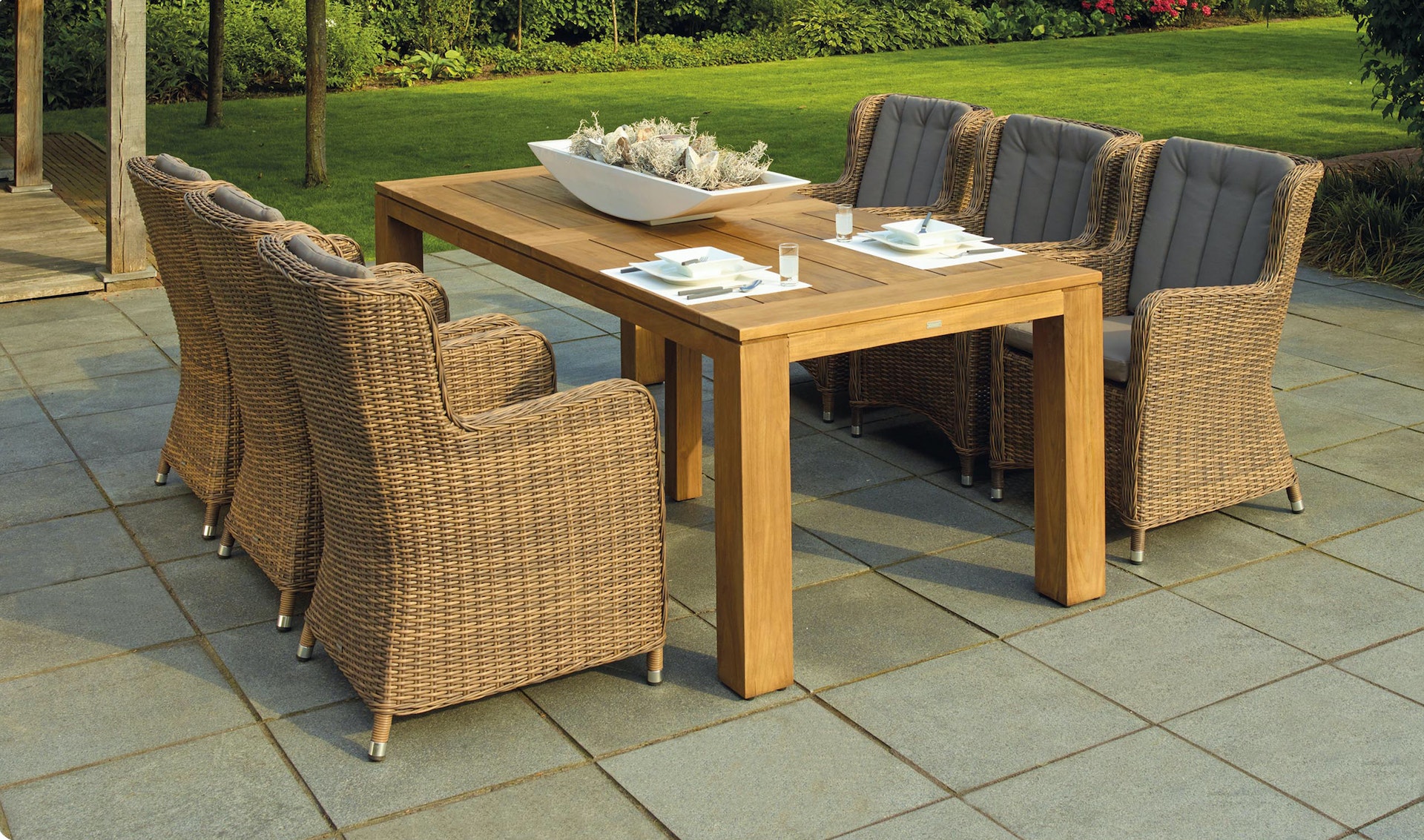
Outdoor furniture, planters, and decorative elements require periodic cleaning and end-of-season storage or protection in climates with harsh winters. Furniture left on the patio year-round in wet climates promotes algae and mildew growth on both the furniture and the patio surface beneath it. Moving furniture or using outdoor furniture covers extends the life of both the furniture and the patio surface.
For planters and pots on the patio, use feet or risers that lift containers off the surface slightly. Standing moisture underneath planters permanently stains concrete and stone surfaces and promotes mildew growth. Good quality plant pot risers allow drainage and air circulation, protecting the surface below while giving the planting arrangement a more finished appearance.
The Payoff: A Patio That Lasts and Delights
A well-maintained patio is one of the most valuable and enjoyable assets a home can have. It extends the usable square footage of your home, provides an outdoor entertaining and relaxing space that improves daily quality of life, and contributes meaningfully to curb appeal and property value. Getting there requires consistent attention — but not enormous effort.
The seasonal rhythms of outdoor space maintenance quickly become habit. Spring cleaning and inspection, summer attention to weeds and routine upkeep, fall cleaning before winter, and occasional sealing and repairs — these tasks done regularly keep problems small and the space beautiful. The alternative — deferred maintenance that allows small problems to compound into large ones — typically results in significantly more expensive interventions and a space that fails to deliver on its potential.
Invest a few hours each season in the outdoor space you have built or inherited, and it will reward that investment with years of beauty, function, and the particular pleasure of a well-kept place to enjoy the outdoors from home.