

Last Updated on July 19, 2026
Where you choose to live shapes almost every dimension of your daily experience: the quality of your mornings, the ease of your commute, the texture of your social life, the restaurants that become yours, the parks where you walk the dog, the neighbors you nod to across the fence. It is one of the most consequential decisions you will make, and yet many people make it based primarily on job location or proximity to family, without engaging seriously with the deeper question of what kind of city actually fits who they are and who they are becoming.
There is no objectively best city. There is only the right city for you, at this particular stage of your life, given your specific priorities, preferences, and circumstances. Finding it requires thinking honestly about what you need from a place and what you are willing to trade off to get it.
Define Your Non-Negotiables First
Before evaluating any specific city, spend time identifying your true non-negotiables: the things about a place that you know from experience you genuinely cannot be happy without. Be honest here, because this is where the decision framework gets built. Non-negotiables are not preferences. They are the conditions without which a place will not work for you regardless of its other merits.
For some people, access to natural landscapes is non-negotiable. They need to be within a reasonable drive of mountains, ocean, forest, or desert. For others, cultural density is essential: great restaurants, performing arts venues, independent bookshops, museums, the specific kind of intellectual and social stimulation that only cities of a certain size and sophistication can provide. For others still, the ability to own a house with a garden is fundamental to their sense of what a satisfying life looks like, and the cities where that is financially feasible within their budget immediately filter the list dramatically.
Family proximity can be a non-negotiable in either direction. Some people need to be near aging parents or young nieces and nephews. Others find that distance from family is genuinely important to their ability to build their own life with autonomy. Both are legitimate.
Write down your non-negotiables before you start researching specific cities. They will give you a filter that makes the subsequent evaluation much more efficient and much more likely to lead to a good outcome.
Climate: More Important Than You Might Think
Climate is one of the most consistently underestimated factors in city selection. Its effects on your daily life are so pervasive that they become invisible background texture once you are living somewhere, but they profoundly shape how you spend your time, your energy, and your money.
Seasonal light is the variable that affects most people most strongly. The Pacific Northwest is famous for its months of overcast skies and persistent gray drizzle. For people sensitive to light and prone to seasonal depression, this is a genuine quality-of-life issue. The desert Southwest delivers intense sunshine and warmth but includes summer months where temperatures make outdoor activity genuinely uncomfortable for extended periods. The upper Midwest winters are brutally cold and dark in ways that affect activity patterns from November through March. None of these climates is objectively bad, but each creates a specific kind of life that suits certain people and does not suit others.
Think carefully about the kinds of outdoor activities that matter to you and whether the climate of the cities you are considering supports them during the months when you would want to pursue them. If running, cycling, or hiking outdoors is central to your mental health and daily rhythm, the nine months of good outdoor weather in Austin, Texas are a very different proposition from the five months available in Minneapolis.
Humidity affects comfort profoundly in ways that temperature charts alone do not capture. A ninety-degree day in Tucson feels very different from a ninety-degree day in New Orleans, and neither feels like a ninety-degree day in Denver. Visit any city you are seriously considering during the season that is hardest to be there, not just during the optimal weeks, before committing to relocating.
Cost of Living: Budgeting Your Life, Not Just Your Rent
Housing cost is the component of cost of living that receives the most attention, and with good reason: it is typically the largest single line item in a household budget and the one that determines most directly what kind of home and neighborhood you can access. But housing is only one dimension of a city’s cost profile.
State and local income taxes, property taxes, sales taxes, and other levies can swing the real cost of living between cities dramatically even when headline rents or home prices appear similar. A salary that provides a comfortable life in Austin, which has no state income tax, translates to a meaningfully different standard of living in New York or California, where state and local taxes reduce take-home pay substantially. Calculate what you actually keep, not what you earn, when comparing financial profiles across cities.
Transportation costs vary enormously between cities based on infrastructure and walkability. In New York, San Francisco, or Chicago, a car-free or car-light lifestyle is not only possible but often preferable. In most of Texas, much of the Southeast, and the majority of mid-sized American cities, a car is a practical necessity, and the combined cost of purchase, insurance, fuel, and maintenance adds several thousand dollars per year to the cost of living relative to a transit-accessible city.
Healthcare costs, childcare availability and cost where relevant, and the local price of groceries, dining, and entertainment all factor into what a comfortable life actually costs in a specific market. Cost of living comparison tools available through major real estate and personal finance websites can give you a reasonable first approximation, but nothing substitutes for actually spending a week living in a city like a resident rather than a tourist before deciding to move there.
Career and Economic Opportunity
The economic density of a city, the concentration of employers, industries, and professional networks operating within it, shapes not just your current employment prospects but your ability to navigate career changes, pivot industries, and build the professional network that creates opportunities over decades rather than just at the point of initial hire.
Certain cities have profound specialization in specific industries: finance and media in New York, technology in the Bay Area and Seattle, healthcare and education in Boston, energy in Houston. If your career is deeply embedded in one of these industries, proximity to its primary hub provides access to employers, colleagues, and networks that do not exist in the same density elsewhere. If your career is industry-agnostic, this specialization matters much less, and you have considerably more geographic freedom.
Remote work has restructured this calculation meaningfully for the segment of the workforce whose jobs can be performed from anywhere with reliable internet. For these workers, the city selection question has become genuinely open in a way that was not true a decade ago. The cities that have benefited most from this shift, places like Austin, Nashville, Raleigh-Durham, and Boise, have done so by offering strong quality of life at lower cost than the traditional tech and finance hubs, attracting workers whose salaries remain calibrated to more expensive markets.
Community and Social Life
Human beings are social creatures, and the ease or difficulty of building genuine community in a new city is among the most important and most difficult things to assess from the outside. Some cities are notoriously hard to break into socially: long-established communities where friendships date to childhood and networks are closed to newcomers. Others are famously welcoming to transplants, with active social cultures organized around shared activities, neighborhoods with high foot traffic and natural gathering places, and community organizations that make it easy to meet people with shared interests.
The age profile and life stage composition of a city’s population shapes the social opportunities available. A city with a large, active young professional population provides ample opportunities for the specific kind of social life that matters most to people in their twenties and early thirties. A city with strong family-oriented infrastructure, good schools, youth sports leagues, and community parks, creates the social environment that matters most to people raising children. A city with vibrant retirement amenities, strong healthcare systems, and active older populations serves people in their later decades in ways that younger cities do not.
Think about the specific communities you want to be embedded in: faith communities, creative communities, athletic communities, professional networks, political organizations, cultural institutions. Research whether those communities are active and accessible in the cities you are considering. The presence or absence of a specific kind of community can matter far more than any statistical quality-of-life metric.
Neighborhoods Within Cities Matter as Much as Cities Themselves
One of the most important lessons experienced movers report is that the specific neighborhood within a city you choose often matters as much as the city itself. A city that seems perfect from the outside can fail to deliver if you land in a neighborhood that does not suit your lifestyle. Conversely, the right neighborhood in a city that is second on your list can provide everything you are looking for.
Before deciding on a city, research its neighborhoods with specific attention to which ones align with your priorities. Walk the neighborhoods you are considering during different times of day and on different days of the week. The neighborhood that feels vibrant on a Saturday afternoon may feel deserted on a Tuesday morning or vice versa. Talk to people who live there. Visit the coffee shops, the grocery stores, the parks. Get a sense of the micro-environment you would actually inhabit day to day.
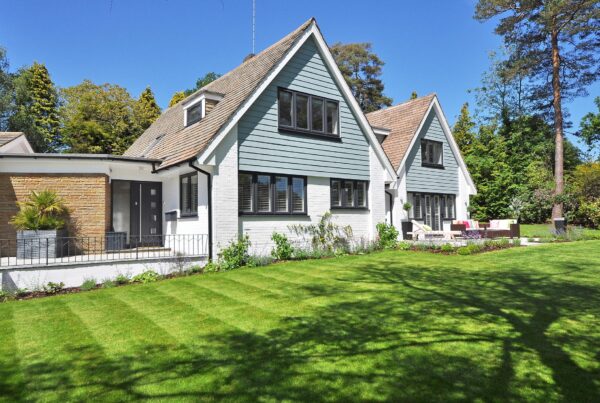
Home design and neighborhood character are deeply intertwined. The aesthetic character of the homes and streetscapes around you shapes your daily experience in ways that accumulate over time. The tree-lined streets of certain established urban neighborhoods, the mid-century modern architecture concentrated in specific districts, the renovated Victorian stock of historic neighborhoods: these aesthetic environments are not merely backdrop. They are part of what makes a place feel genuinely like home, and they are worth weighing alongside the more practical factors in your decision.
The Decision Is Never Perfect, and That Is All Right
No city will check every box on your list. Every choice involves tradeoffs, and acknowledging that honestly, before the move rather than after, sets up the right relationship with whatever place you choose. Cities that deliver on your most important needs while falling short on secondary preferences are almost always more livable than cities that check every box on paper but fail on one or two things that turn out to matter more than you anticipated.
Give yourself permission to move if the city you choose does not work out. Many of the most satisfying residential lives are shaped by a sequence of places, each teaching something about what you need and what you can live without. The goal is not to find the city you will never want to leave. The goal is to find the city that is right for you right now, and to inhabit it fully and with genuine attention while it is yours.
The home you create within whatever city you choose is the expression of how you live within that larger context. Making it beautiful, comfortable, and genuinely yours is the design work that gives any place its fullest meaning.
Are you an expert in this area? Write for us about home lifestyle — we welcome guest contributions from industry professionals.