
Last Updated on July 19, 2026

I have made a lot of good decisions in this house and a few I would take back. The floors are squarely in the first category, but only because I did my homework before committing. Choosing flooring sounds simple until you are standing in a showroom surrounded by forty samples that all look slightly different depending on the light, and the salesperson is hovering with a quote sheet.

Here is what I wish someone had told me before I got to that showroom: the aesthetic decisions are actually the easy part. The harder work is figuring out what your life actually needs from a floor, and then finding something beautiful that also delivers on those practical requirements. These are the factors that matter most, in the order you should be thinking about them.

Start with Your Actual Lifestyle

The most beautiful floor I almost installed was completely wrong for my real life. Light-colored wide-plank white oak looks extraordinary in a styled photo, and it also shows every single crumb, paw print, and water drip within hours of installation if you have kids, dogs, or a tendency to cook barefoot.

Before you look at a single sample, think honestly about who is living in this home and how. Do you have young kids who spill things constantly? Do you have pets with nails? Do you wear shoes inside? These questions matter enormously and pretending otherwise leads to expensive regret.

For high-traffic households with kids and pets, luxury vinyl plank (LVP) has become the clear practical front-runner. It is waterproof, scratch-resistant, comfortable underfoot, and now looks realistic enough that most guests cannot tell the difference from hardwood. If real hardwood is what your heart wants and you are committed to it, go for harder species like hickory or white oak with a matte finish that hides everyday wear much more forgivingly than a high-gloss option.

Match the Flooring to the Room

Different rooms have different demands, and what works beautifully in a bedroom will fail in a bathroom. Water resistance is not optional in kitchens and baths. These rooms see moisture, spills, and humidity every single day, and the wrong flooring will show it within a year.

RELATED  5 Reasons to Invest in a High-quality Viking Arm Tool

Tile is the gold standard for bathrooms and kitchen floors, particularly porcelain options like outdoor porcelain tiles that offer exceptional strength and easy upkeep. LVP is also excellent in kitchens when properly installed with waterproof underlayment. Understanding the right flooring choice for your kitchen before you commit can save you from a costly redo down the road. If you love the look of hardwood in your kitchen, it is possible with the right finish and sealing, but it requires more diligence and is not a great choice in homes where spills happen freely.

Living rooms and bedrooms have more flexibility. Hardwood, engineered hardwood, LVP, and carpet are all legitimate options depending on your priorities. Hardwood adds warmth and real value. Carpet adds softness and sound absorption that feels luxurious in bedrooms. LVP offers a practical middle ground that holds up well and looks genuinely good. For basements and below-grade spaces, stick to materials that can handle moisture. LVP is excellent here. Hardwood is generally not recommended because of moisture exposure concerns.

Think About Durability Honestly

Every flooring material comes with a durability rating, but what that means in practice varies. Hardwood is beautiful and can last decades, but it does scratch and dent, and solid hardwood should not go in rooms with regular moisture exposure. Engineered hardwood is more dimensionally stable and handles humidity fluctuations better, but it is still not waterproof.

LVP is the most durable and water-resistant option in most residential lines. If you go this route, look for a wear layer of at least 12 mil, ideally 20 mil for the highest-traffic areas. Tile is essentially bulletproof but cold underfoot and harder on joints if you stand on it for long periods, which matters in a kitchen where you spend real time cooking.

If your current floors are already showing damage in the main living areas, it is worth knowing when repair is the right call. Our guide on restoring damaged hardwood floors in living rooms walks through exactly that question so you can decide between fixing what you have and starting fresh.

Understand What Maintenance Actually Looks Like

Some floors are genuinely low maintenance. Some are not. And the gap between them becomes painfully real around month eight when you realize you have been on your hands and knees touching up hardwood scratches twice a week, or when you read that your travertine tile needs resealing again.

RELATED  Work-Life Balance for Independent Homebuilding Contractors

Tile grout requires regular cleaning and periodic resealing. Hardwood needs to stay dry and will eventually need refinishing, typically every seven to ten years depending on foot traffic and wear. LVP needs almost nothing beyond regular sweeping and occasional damp mopping. Carpet needs vacuuming, professional cleaning every year or two, and replacement if it absorbs a deep stain it cannot release.

Be honest with yourself about how much maintenance you are genuinely willing to do. A beautiful floor that requires more care than you will give it looks worse at the two-year mark than a simpler floor that is easy to keep. Choose the floor you will actually maintain, not the one that sounds like a reasonable amount of work in theory.

Budget for the Full Cost, Not Just the Material

The cost of flooring is almost never just the cost of the material you pick up at the showroom. Factor in installation labor, subfloor preparation (often more than expected), transitions between rooms, baseboards and trim, and disposal of the old flooring. A standard rule of thumb is to add 20 percent to your material estimate to cover the inevitable extras.

Tile and hardwood tend to have higher installation costs because they require skilled labor and more time. LVP is often the most affordable to install because it is a floating floor system that does not require glue or nails in most applications. Carpet installation is typically priced per square foot and can be bundled with the purchase at most flooring retailers, which keeps the transaction simple.

Consider How the Floor Works with Your Design

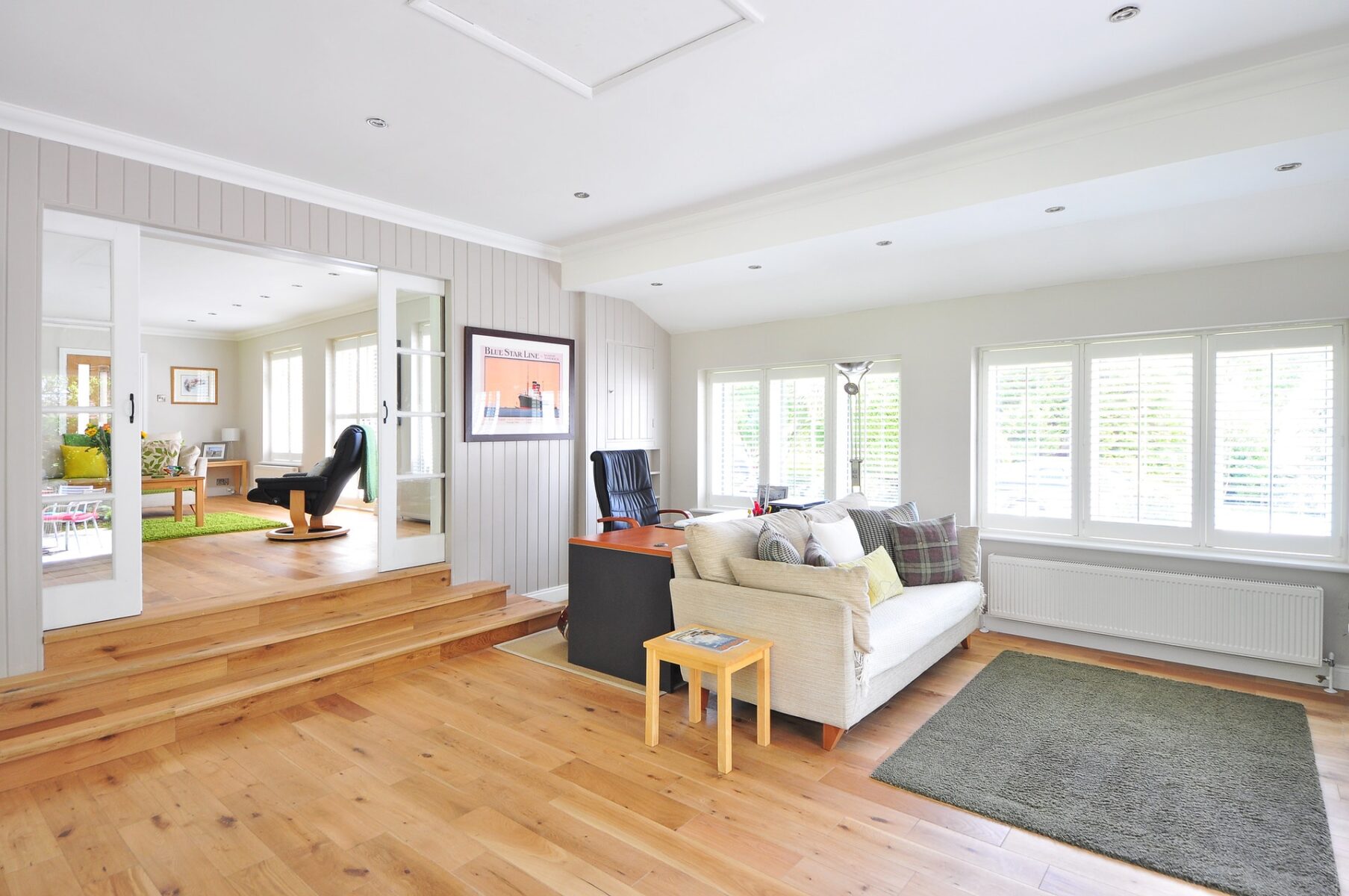
Once the practical boxes are checked, the aesthetic side gets to take over. Color, tone, and grain pattern all affect how a floor reads in a space. Lighter floors make rooms feel larger and airier, while darker floors create a sense of warmth and weight. A lighter floor can genuinely make a smaller room look and feel more open, which is worth knowing if you are working with a challenging layout.

RELATED  9 Pro Tips for Moving Furniture

Wide planks read contemporary and relaxed. Narrower strips read more traditional. The finish matters enormously: high gloss amplifies every piece of dust and every scratch, while matte and satin finishes forgive the kind of daily use that floors actually experience. Pull samples home before committing. See how they read in your actual lighting at different times of day, because what looks perfect under showroom fluorescents may look completely different under the warm lamps in your living room at night.

Think About Long-Term Adaptability

Your home will change over the years. You will redecorate, move furniture, go through different design phases, and potentially sell at some point. Flooring that works as a neutral, versatile backdrop gives you the most flexibility without having to replace everything again when your taste evolves.

Mid-toned woods and warm neutrals have the longest shelf life. Very dark floors and very light floors are both striking but can feel dated more quickly and show different kinds of wear as years pass. When in doubt, go warmer and more neutral rather than trending in either extreme direction.

Putting It All Together

The best flooring decision balances your actual lifestyle, your budget, the specific demands of each room, and your aesthetic preferences into something that works in real life rather than just a showroom. If you are starting with the kitchen, our guide to the best flooring options for kitchens is a great place to narrow down the right choice for that room specifically before you think about the rest of the house. Take your time, pull samples, ask hard questions about installation and maintenance, and let the practical requirements lead. The aesthetic part will follow.

Do you have flooring expertise or renovation experience to share? Our interior design write for us page is always open to contributors who want to help other homeowners make smarter decisions.

Are you an expert in this area? Write for us about flooring — we welcome guest contributions from industry professionals.

Brooks Manley

Brooks Manley

Brooks is a marketer by trade, but has developed quite the passion for home design since becoming a homeowner in New Orleans. He'll be writing about he and his wife's favorite home decor products as well as simple tips and tricks for creating a home you love.

Leave a Reply