
Last Updated on May 28, 2026
A bathroom remodel is one of the most transformative and most personally rewarding home improvement projects available. Unlike many renovation undertakings that remain largely invisible in daily life, a well-designed bathroom is encountered multiple times every single day. The quality of the experience, the comfort of a warm floor underfoot, the pleasure of a well-lit mirror, the delight of a shower that performs exactly as it should, contributes to your everyday sense of well-being in ways that are subtle but genuinely significant.
Bathroom remodels are also among the renovation projects most likely to exceed budget and schedule when approached without proper planning. The combination of plumbing, electrical, tile work, cabinetry, and finish work that a bathroom remodel involves creates multiple opportunities for unforeseen complications. Understanding how to plan strategically, make decisions that balance aspiration with realism, and avoid the most common mistakes will help you achieve the bathroom you actually want within a budget and timeline you can manage.
Tip 1: Define Your Goals Before Anything Else
The most important step in any bathroom remodel is clarity about what you are trying to achieve. Without clear goals, every subsequent decision becomes harder and the risk of scope creep increases substantially. Are you trying to maximize resale value? Create a private spa-like retreat for daily use? Update a functionally outdated layout? Improve storage? Address specific comfort or accessibility needs?
Different goals lead to dramatically different design decisions and budget allocations. A remodel optimized for resale value prioritizes broadly appealing choices in neutral finishes and durable materials. A remodel focused on personal enjoyment might invest more heavily in luxury features like heated floors and a soaking tub that personal experience demands regardless of their resale impact. Understanding which goals matter most to you helps ensure that your budget is directed toward the outcomes that will satisfy you most.
Tip 2: Establish a Realistic Budget with a Contingency
Bathroom remodel costs vary widely based on bathroom size, scope of work, material selections, and regional labor costs. A modest bathroom update in a secondary bathroom might cost $5,000 to $10,000. A full primary bathroom renovation with high-end materials and significant layout changes can run $25,000 to $50,000 or more. Understanding these ranges before beginning helps calibrate your expectations and guide your scope decisions.
Whatever budget you establish, build in a contingency of 15 to 20 percent that is not part of your planned spend but is held in reserve for the unexpected discoveries that bathroom remodels reliably produce. Once walls are opened, plumbers and electricians regularly find issues that were invisible before: outdated wiring that needs upgrading, plumbing that does not meet current code, water damage from a slow leak that has been occurring inside the wall for years. Having contingency funds available allows you to address these discoveries without derailing the project or making compromises on the finished results.
Tip 3: Understand What Moving Plumbing Costs
One of the largest drivers of bathroom remodel costs is whether the plumbing fixtures stay in their current locations or move. Plumbing runs inside walls and floors, and moving a toilet, sink, or shower drain involves opening those surfaces, rerouting pipes, and patching everything back together. This work adds cost quickly and can double or triple the plumbing budget for a project that would otherwise be relatively straightforward.
Wherever possible, keeping fixtures in their existing locations dramatically simplifies the project and controls costs. A bathroom that looks completely transformed can be achieved by replacing the vanity, toilet, shower fixtures, and flooring while leaving the plumbing roughed-in connections exactly where they are. When fixture relocation is truly necessary for the design you want, factor the full cost of that work into your budget planning honestly rather than minimizing it in your estimates.
Tip 4: Invest in Tile Selection Thoughtfully
Tile is the most visually dominant element in most bathrooms and the element that most strongly determines the space’s design character. It also represents one of the most permanent decisions in the renovation, since replacing tile once installed is a significant undertaking. Taking adequate time and effort to find tile that you will love for years is worth every hour invested in the selection process.
Large format tiles, those measuring 12 by 24 inches or larger, are strongly current in bathroom design because they create a cleaner, more expansive visual field than smaller formats and require fewer grout lines to maintain. They work particularly well on shower walls and floors in primary bathrooms, where they contribute to a spa-like quality that smaller mosaic or subway tiles cannot achieve.
Grout color selection is as important as the tile itself and is frequently underestimated. A contrasting grout color emphasizes the pattern of the tile layout and creates a more graphic, intentional effect. A matching grout color minimizes visual interruption and lets the tile’s own texture and color speak without competition. Light grout shows staining more readily than dark grout but can be treated with grout sealer to mitigate this. Consider maintenance requirements honestly when selecting grout color.
Large-format slabs in marble, quartzite, or porcelain that mimic these stones are increasingly popular for primary bathroom shower enclosures because they eliminate grout lines entirely, creating a seamless expanse of material that is both more beautiful and dramatically easier to maintain than any tile installation. The installation cost for slabs is higher, but the result is among the most luxurious possible in a residential bathroom.
Tip 5: Prioritize Good Lighting
Bathroom lighting is consistently underestimated in its importance and consistently executed poorly in the average home. The standard single overhead fixture produces downward light that creates shadows across faces, makes makeup application difficult, and generally makes the bathroom a less flattering and less pleasant environment than good lighting would create.
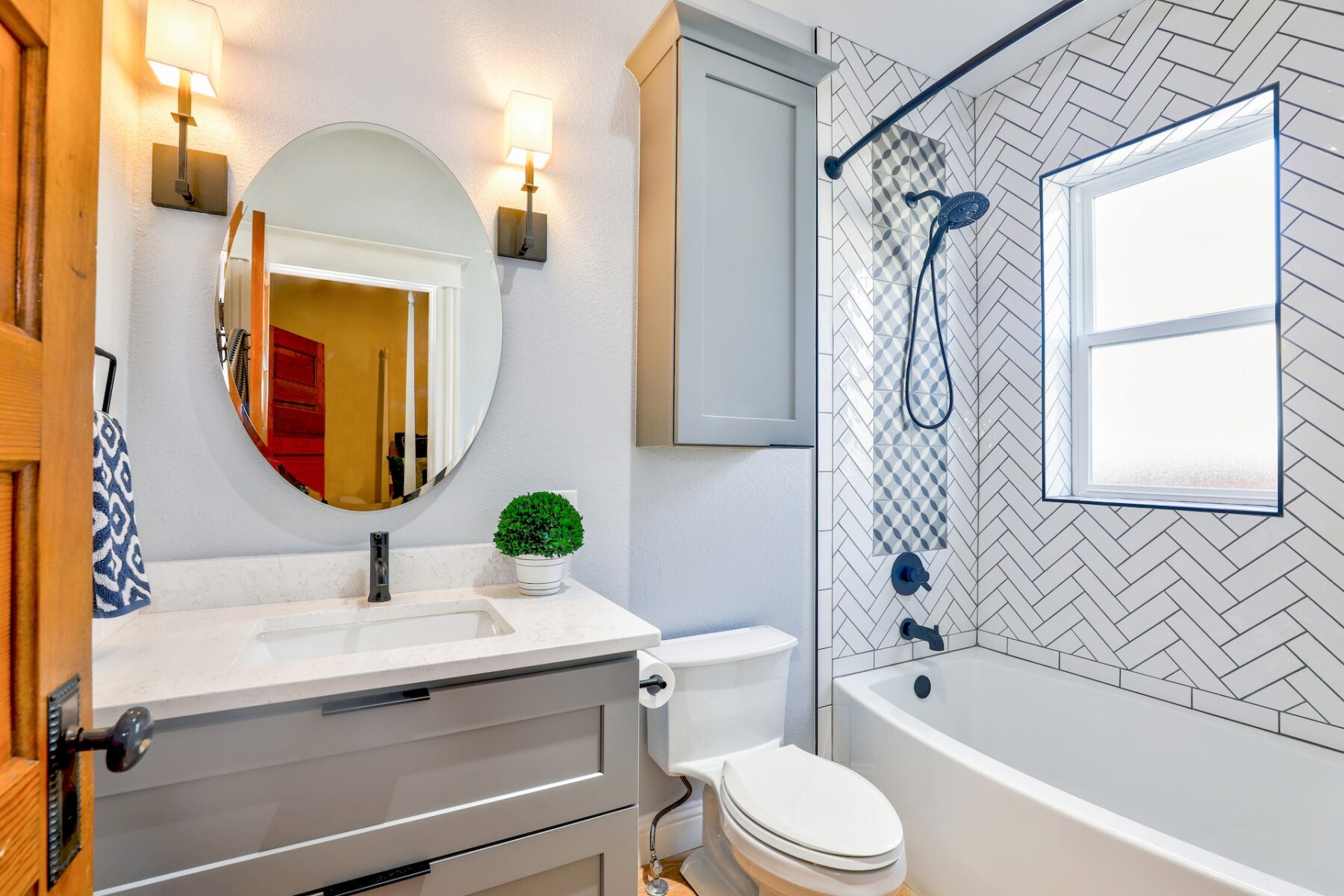
For excellent vanity lighting, the goal is to surround the mirror with light sources that illuminate faces from multiple directions rather than casting light purely from above. Sconces mounted on either side of the mirror at approximately eye level, or a full-width linear LED bar running across the top of the mirror, provide even, flattering illumination that serves all grooming tasks effectively.
A separate overhead fixture provides general ambient light for the room, reducing the need to have task lighting at maximum brightness when you simply want to use the bathroom comfortably without the full intensity required for precision grooming. Putting both the overhead and vanity lighting on separate dimmer switches gives you full control over the room’s light quality and intensity across different situations.
Tip 6: Choose Your Vanity as the Room’s Anchor
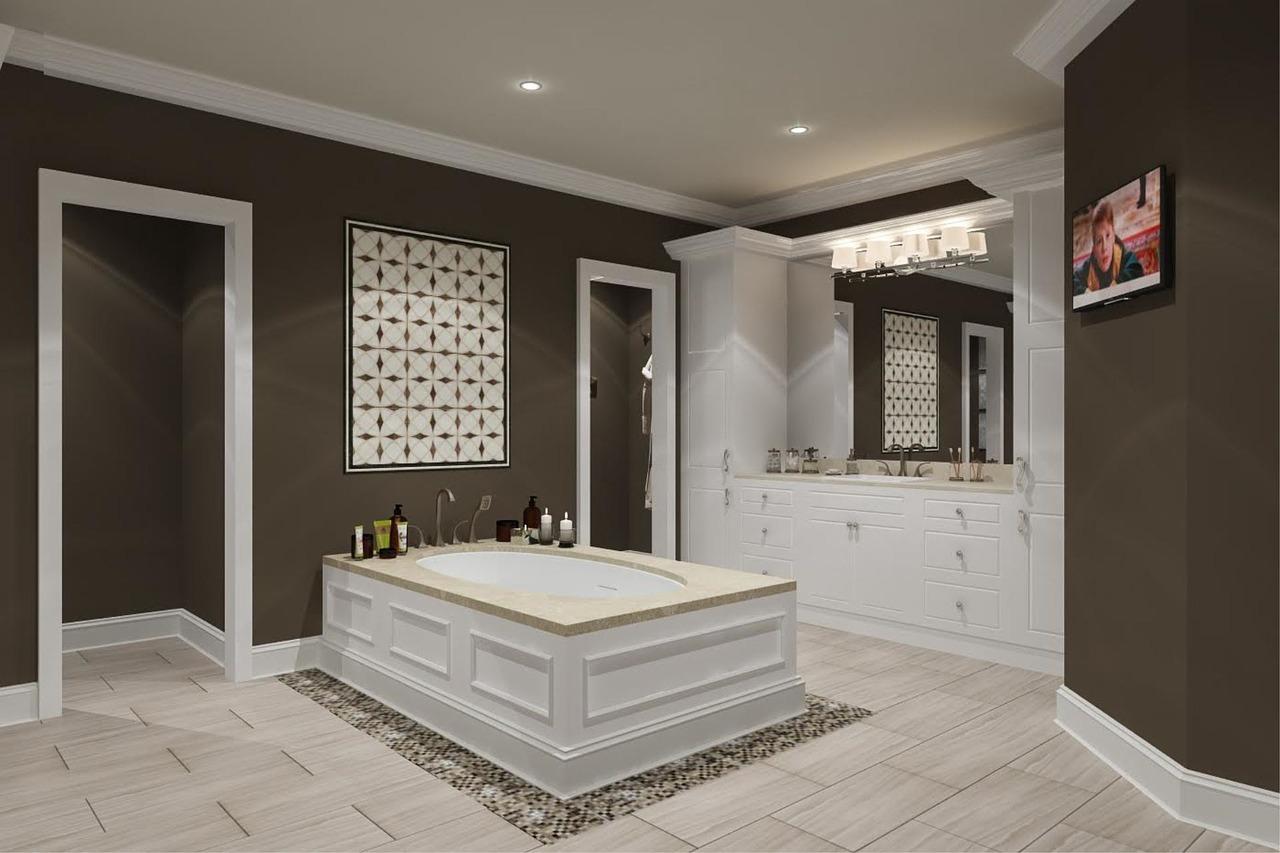
The vanity is the most prominent furniture element in most bathrooms and the piece around which the rest of the room’s design coalesces. Choosing a vanity that combines excellent storage with beautiful design sets the tone for everything that surrounds it.
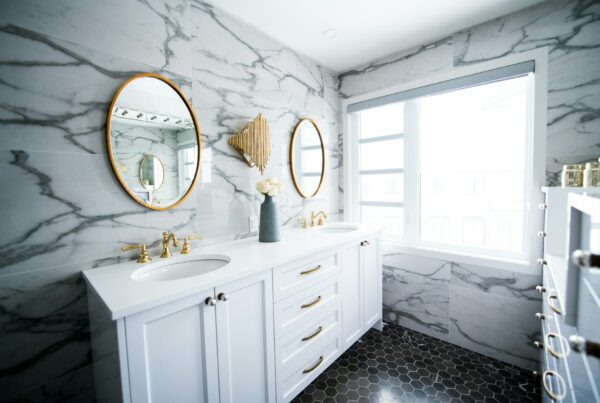
Contemporary vanity design strongly favors clean lines, minimal hardware, and finishes that reflect quality. White and light wood grain vanities with sleek, integrated sinks create a modern, spa-adjacent aesthetic. Darker vanities in navy, forest green, or deep charcoal are increasingly popular as statement pieces that bring sophistication and depth to primary bathrooms. Floating vanities, mounted to the wall above the floor, add a sense of spaciousness in smaller bathrooms by exposing more of the floor plane and creating a visual lift that grounded vanities cannot achieve.
Storage within and around the vanity deserves careful planning. Drawers are significantly more functional than the standard cabinet-and-door vanity configuration because they provide immediate access to contents without reaching into the back of a cabinet. Drawer organizers keep toiletries, cosmetics, and grooming tools organized and accessible. Supplemental storage through a medicine cabinet or mirrored wall cabinet beside the vanity adds surface and concealed storage that most bathroom renovation budgets overlook until the installation is complete and the storage deficiency becomes obvious.
Tip 7: Consider the Walk-In Shower Investment
If your primary bathroom currently features a dated combination tub-shower unit, converting it to a walk-in shower is among the renovation investments most consistently valued by homeowners and most attractive to buyers. The experience of a well-designed walk-in shower, with a large rain showerhead overhead, good water pressure, adequate space to move freely, and frameless glass enclosure, bears so little resemblance to a standard shower-tub combo that they barely seem like the same fixture category.
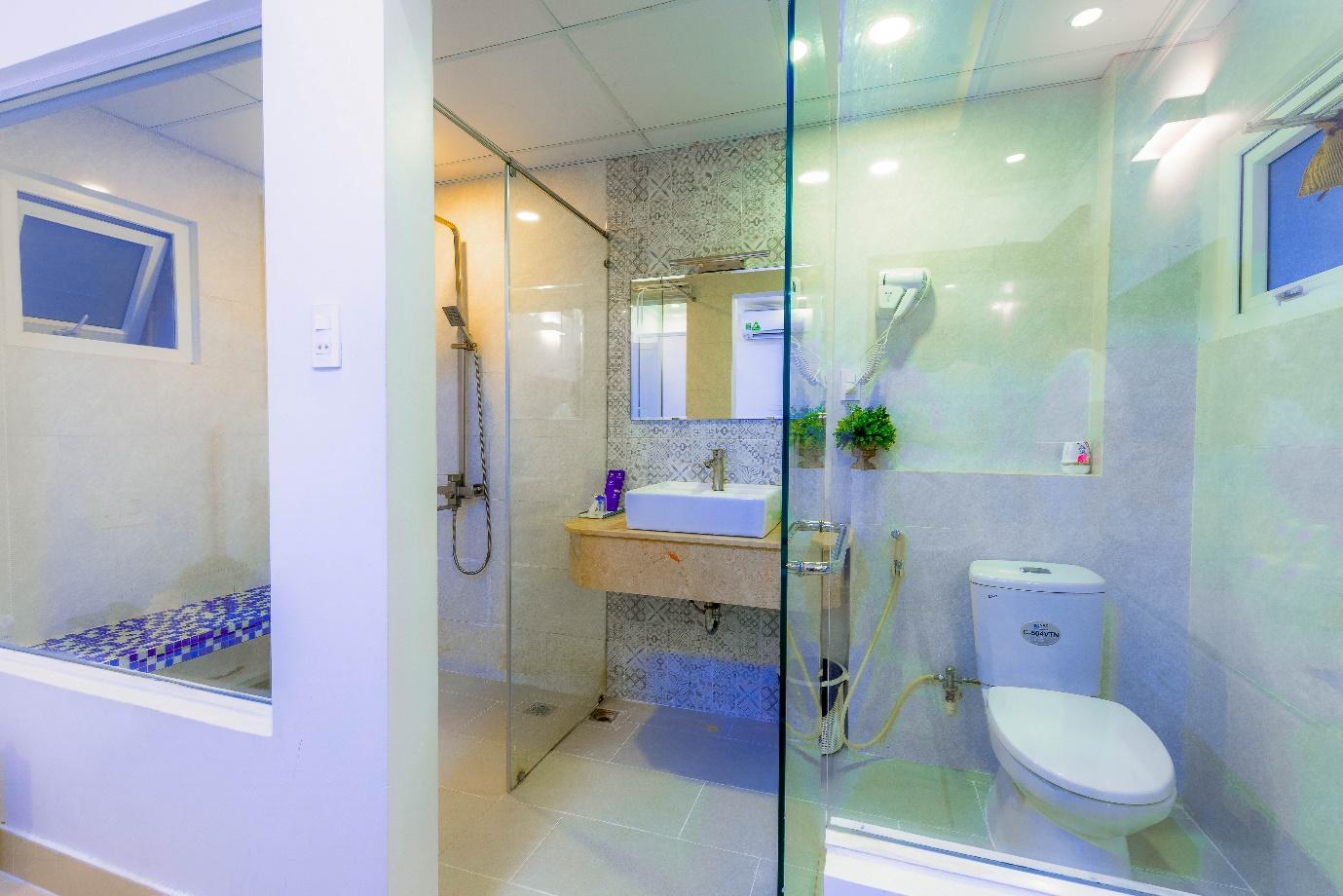
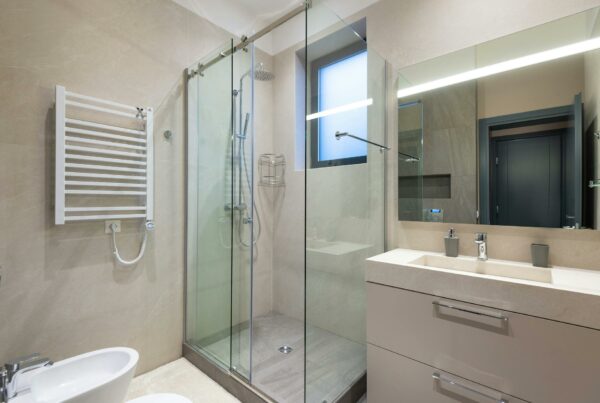
Frameless glass shower enclosures, using tempered glass panels without heavy metal framing, create a visually light, contemporary look that makes the shower feel like an integrated part of the bathroom rather than a box inserted into the corner. The transparency of the frameless enclosure makes smaller bathrooms feel larger by allowing the eye to travel through the shower space rather than stopping at an opaque wall or heavy framed surround.
A recessed shower niche, carved into the shower wall at approximately shoulder height, provides soap and shampoo storage without the clutter of hanging caddies or the safety concern of products balanced on a ledge. Including a niche in the shower design during construction adds minimal cost and eliminates a maintenance and appearance issue that plagues shower enclosures throughout their lifetimes.
Tip 8: Invest in a Quality Shower System
The shower system, meaning the valve, showerhead, and any secondary body sprays or handheld components, determines how the shower actually performs day after day and deserves meaningful budget allocation. A beautiful shower enclosure with a mediocre shower system delivers a disappointing experience that undermines the aesthetic investment.
A thermostatic shower valve maintains water temperature precisely regardless of pressure fluctuations elsewhere in the plumbing system, eliminating the startling temperature changes that conventional pressure-balance valves produce when a toilet flushes or another fixture is used. Thermostatic valves also allow you to set your preferred shower temperature and resume it without adjustment on subsequent uses. This convenience, once experienced, is very difficult to give up.
A quality rainfall showerhead mounted at ceiling height creates an enveloping showering experience that is genuinely different from the experience of a conventional wall-mounted fixture. The sensation of water falling from above rather than projecting from the wall is immediately appealing and contributes to the spa-like quality that drives so many bathroom renovation decisions. The Moen shower system with both overhead and handheld components provides the flexibility of a true spa-style setup at a price point that represents excellent value for the quality delivered.
Tip 9: Do Not Neglect Ventilation
Adequate bathroom ventilation is unglamorous and often overlooked in renovation planning, but it is genuinely important for moisture control, air quality, and the long-term preservation of all the beautiful finishes and materials you are investing in. Insufficient ventilation allows moisture to accumulate, promoting mold growth, paint peeling, grout deterioration, and the general degradation of materials throughout the bathroom.
Replace or upgrade the exhaust fan as part of any bathroom renovation. Modern bathroom fans are significantly quieter, more efficient, and more effective at moisture removal than older models. Fans with integrated humidity sensors automatically activate when moisture levels rise and shut off when they normalize, providing continuous protection without requiring you to remember to run the fan after each shower.
Size the fan appropriately for the bathroom’s cubic footage. A fan rated for a 50-square-foot bathroom will be inadequate in a larger primary bathroom and will struggle to control moisture effectively. The general guideline is one CFM (cubic foot per minute) of ventilation capacity per square foot of bathroom area, with at least 50 CFM minimum regardless of size.
Tip 10: Work with Skilled Tradespeople
Bathroom remodeling involves multiple skilled trades, including plumbing, electrical, tile setting, carpentry, and general construction, that interact in a carefully sequenced order. The quality of the tradespeople you engage is the single most important variable in the outcome of your project, surpassing even the quality of materials in its influence on the final result.
Excellent tile setting, for example, can make modestly priced tile look like a professional installation. Poor tile setting makes expensive tile look worse than a budget alternative set correctly. The same principle applies across every trade involved in a bathroom renovation. Invest in skilled people and let them do their work at the pace that quality requires.
Get detailed written quotes from multiple contractors, verify licenses and insurance before engaging anyone, check references from recent completed bathroom projects specifically, and establish clear communication protocols before work begins. A contractor who is responsive, communicative, and easy to reach during the project is worth a meaningful premium over one whose lower bid reflects less commitment to client service.
A well-executed bathroom remodel delivers daily pleasure for as long as you live in your home and genuine value should you ever sell it. The investment of thoughtful planning, quality materials, and skilled execution pays dividends that are both financial and deeply personal. Approach it with care and the result will be a space you are genuinely proud of every time you walk through the door.