
Last Updated on May 30, 2026
Getting the rug size right in a bedroom is one of those decisions that feels minor until you get it wrong. A rug that is too small makes the room feel choppy and unconsidered, as if someone placed a doormat in the middle of the space and called it decorated. A rug that is too large swamps the room and competes with the bed for visual dominance. The right size, which often differs from what people instinctively reach for, does something quite beautiful: it grounds the bed, unifies the furniture, and makes the entire room feel intentional and complete.
The Standard Approach: What You’re Actually Solving For
In a bedroom, the rug primarily serves the bed. Its job is to anchor the bed visually, make the experience of getting in and out of bed more comfortable (that soft landing when your feet hit the floor in the morning matters more than people realize), and create a defined zone that makes the room feel designed rather than assembled.
With that in mind, the measurement that matters most is how far the rug extends beyond the sides and foot of the bed. Most interior designers recommend a minimum of 18 to 24 inches of rug extending beyond the bed on each side and at the foot. This is enough to provide a soft landing for both people getting out on either side of the bed, and enough visual presence to make the bed feel grounded.
Rug Sizing by Bed Size
A twin bed in a smaller bedroom typically pairs well with a 5 by 8 foot rug. This gives you adequate border on the sides and foot of the bed while fitting a compact room appropriately.
A full or double bed is most commonly paired with a 5 by 8 or 6 by 9 foot rug, depending on the room size. The 6 by 9 gives slightly more presence and works better in rooms where the bed is not the only furniture on the rug.
A queen bed, the most common size, pairs well with an 8 by 10 foot rug in most rooms. This is the size that fulfills the 18 to 24 inch extension rule on both sides comfortably. In a larger primary bedroom where there is additional furniture like a bench or sitting area at the foot of the bed, a 9 by 12 might be more appropriate.
A king bed genuinely needs an 8 by 10 at minimum, and a 9 by 12 is ideal in most rooms. A king bed on a rug smaller than 8 by 10 almost always looks undersized and underwhelming. If budget is a concern, it is better to choose a different rug style at a larger size than to go with a smaller version of a more expensive rug.
Placement Options: Which Works Best?
There are three main rug placement approaches for a bedroom, and which one you choose should be informed by the rug size available and the aesthetic you are after.
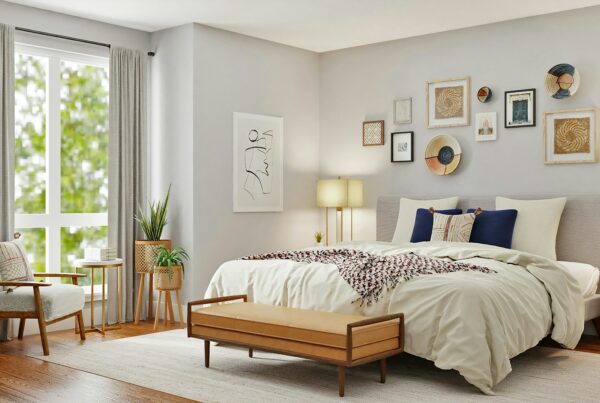
The most common placement is with the rug centered under the lower two-thirds of the bed. The headboard and the top portion of the bed sit on the floor beyond the rug, but the rug extends comfortably on both sides and at the foot. This works well with an 8 by 10 under a queen or king and creates a clean, symmetrical look.
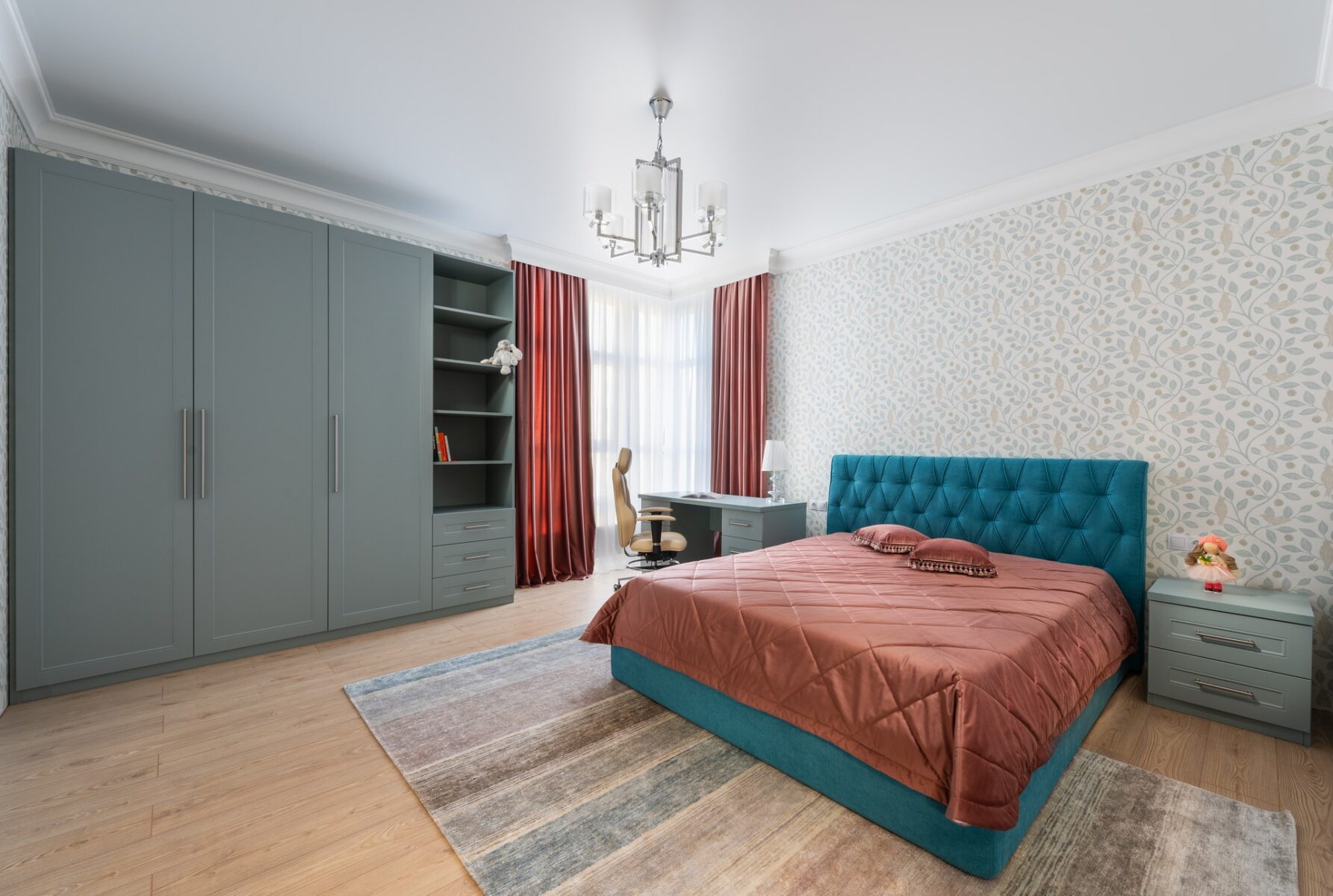
Full rug placement, where the entire bed including the headboard end sits on the rug, requires a larger rug (typically a 9 by 12 or even larger) but creates the most visually expansive and generous look. The room appears larger, the rug feels like a foundation for the entire bedroom composition rather than an accessory.
Two runner rugs flanking the sides of the bed is an alternative that works particularly well in bedrooms without much space at the foot. Runners, typically 2 by 6 or 2.5 by 8 feet, positioned on each side of the bed provide the underfoot warmth and the visual grounding on the sides without needing a large area rug at all. This is a practical solution in a smaller room or when a large area rug is not in the budget.
Consider the Room Proportions
Bedroom size affects rug sizing just as much as bed size does. In a small bedroom where the bed fills most of the floor space, a large rug may overwhelm the room. In these cases, a smaller rug with the top under the foot of the bed (so only the sides and foot of the bed touch or hover above the rug) can work better proportionally.
In a very large primary bedroom with a seating area, a wardrobe or dresser setup, and generous circulation space, a single large rug under the bed might look isolated. Consider whether the room needs two rugs: one large area rug anchoring the bed, and a smaller accent rug in the seating area or near the dresser.
Pattern and Texture Considerations
In a bedroom, the rug you see most of is actually the section in front of the bed, since the bed covers most of the center. If you are choosing a rug with a directional pattern or a central medallion design, consider how it will look with half or more of it covered by the bed.
Solid-color rugs, subtle textures, and all-over patterns (patterns that repeat across the surface without a defined center or directional element) tend to work better under beds for exactly this reason.
For bedroom texture, a rug with more softness and pile depth than you might choose for a living room is generally appropriate. The bedroom is where you want something genuinely plush underfoot in the morning. A high-pile or hand-knotted wool rug in the bedroom is a sensory luxury that adds up to real daily satisfaction.
Material Matters in the Bedroom
Bedrooms see less foot traffic and fewer spills than other rooms, which opens up material choices that would not be practical in a high-traffic living room. Natural wool rugs are one of the best choices: soft, naturally resilient, and beautiful with age. Silk or bamboo silk rugs add a luminous quality in the bedroom that feels genuinely luxurious, though they require more careful maintenance.
Flatweave rugs like kilims and dhurries bring pattern and warmth with a thinner profile that works beautifully in layered bedroom styling, placed over a natural fiber base rug for texture contrast. Cotton rugs are soft, affordable, and washable, making them practical in a bedroom that doubles as a workspace or for households with children or pets.
Practical Tips Before You Buy
Use painter’s tape on your floor to mark the exact dimensions of the rug you are considering before purchasing. This single step prevents the most common sizing mistake: buying too small. When you see the actual footprint on your floor, you will immediately know whether it feels right or needs to be larger.
Always use a quality rug pad. A pad prevents the rug from sliding, adds cushion underfoot, and extends the life of the rug by reducing friction against the floor. In a bedroom, where you step onto the rug every morning while not fully awake, a rug that stays firmly in place is not just comfortable but important. Look for a non-slip rug pad cut slightly smaller than the rug itself. A quality non-slip rug pad is the finishing detail that makes every rug work better.
The right bedroom rug, at the right size and in the right material, is one of the most transformative additions you can make to a bedroom. It is the element that takes a room from looking like it has furniture in it to looking like a room that someone truly designed.