
Last Updated on May 28, 2026
Transforming your backyard does not require a landscape designer, a large budget, or months of construction. Some of the most beautiful and functional outdoor spaces are created by homeowners who approach the project with creativity, a willingness to get their hands dirty, and a smart strategy for prioritizing impactful changes over expensive ones. A great backyard is within reach of anyone with a weekend afternoon and a clear vision for how they want to live outdoors.
This guide is for the DIY-minded homeowner who wants real transformation without real estate renovation pricing. Every idea here has been chosen for its combination of visual impact, achievability for capable non-professionals, and budget friendliness. Some require a few hundred dollars. Others cost almost nothing. All of them can genuinely change the way your backyard looks and feels.
Start with a Clear Plan
The most expensive backyard transformations that go wrong do so because they lack a plan. Materials get purchased without a clear vision of the final result. Projects start in one area and never integrate with the rest of the yard. Money gets spent on elements that feel exciting in the moment but do not contribute to a cohesive outcome. Before buying a single thing, spend an hour sketching your backyard on paper and thinking through how you actually want to use it.
Start with your primary use case. Do you want a space primarily for relaxing and entertaining adults? Do you need space for children to play? Are you interested in growing vegetables or flowers? Do you want a fire pit as a gathering focal point? Each of these goals has different space and material requirements, and clarifying your priorities ensures that your budget goes toward what matters most.
Then assess what you already have. Existing trees, healthy grass, or structures you can work with are assets. Note what needs to be removed, what needs maintenance, and what you want to add. This honest inventory prevents you from spending money on new elements while neglecting existing problems that will undermine the finished look.
Define Zones with Edging and Borders
One of the most dramatic and affordable backyard improvements is creating clear definition between different areas: lawn and planting beds, patio and garden, path and grass. Undefined, blurry boundaries make even a maintained backyard look unfinished and somewhat chaotic. Clean edges transform the same space into something that looks intentional and designed.
Garden edging comes in a range of materials from very affordable to quite expensive. Steel lawn edging creates a clean, modern line between lawn and bed at a cost of a few dollars per linear foot and requires no maintenance once installed. Brick or stone edging can be sourced affordably from landscape supply companies or habitat for humanity ReStores and installed by stacking or partially burying it along bed edges. Even simple trench edging, cut cleanly with a half-moon edging tool, creates a crisp definition between lawn and planted areas at virtually no cost beyond the time investment.
Once edges are defined, apply a fresh layer of mulch to all planting beds. Three inches of wood chip mulch suppresses weeds, retains moisture, moderates soil temperature, and creates a rich visual contrast against plant foliage and lawn. A yard of mulch covers approximately 100 square feet at three-inch depth and typically costs $30 to $50 from landscape suppliers. For most average-sized backyard planting beds, one to two yards of mulch is sufficient and the visual improvement it creates is immediate and dramatic.
Build a Simple Patio or Seating Area
Even a modest designated seating area transforms a backyard’s functionality and usability. You do not need a full poured concrete patio to create an attractive, functional outdoor living zone. Several DIY-friendly materials make it possible to build a beautiful patio in a weekend without professional help.
Gravel and decomposed granite are among the most budget-friendly and easiest-to-install patio materials. Outline your desired patio area with edging to contain the material, lay landscape fabric to suppress weeds, and spread two to three inches of compacted gravel or decomposed granite. The result is a clean, permeable surface that handles rain well, looks attractive, and costs a fraction of poured concrete or pavers. Prices vary by region but typically run $1 to $3 per square foot for materials.
DIY paver patios are achievable for someone with basic skills and a willingness to do the physical preparation work. The key steps are excavating the area to appropriate depth, creating a properly compacted gravel base for drainage, adding sand bedding, and setting the pavers in your chosen pattern. Concrete pavers are typically $2 to $5 per square foot and can be found at major home improvement stores. The labor is significant but the result is a durable, beautiful surface that rivals professionally installed work when done carefully.
For an elevated, modern look without complex installation, composite decking tiles or interlocking wood-effect tiles can be laid directly on a level surface with no tools or adhesive required. These click-together tiles work beautifully over existing concrete slabs, on roof decks, or on any level surface where you want to upgrade the look without major construction.
Add a Fire Feature
Nothing transforms an outdoor space from functional to magical quite like fire. A fire pit creates an immediate gathering focal point, extends outdoor season into cooler evenings, and adds the kind of atmosphere that draws people outside and keeps them there. And creating a fire feature does not have to be expensive or complicated.
A simple DIY fire pit using stacked concrete retaining wall blocks can be built for less than $100 in materials and assembled in an afternoon. Choose a spot with adequate clearance from structures and overhead vegetation, create a level base with gravel for drainage, and stack the blocks in a circle to your desired height. Add a metal fire ring insert to protect the block material and you have a functional, attractive fire pit for a fraction of the cost of a prefabricated or professional unit.
Prefabricated portable fire pits and fire bowls offer even simpler installation with no construction required. They can be positioned wherever you need them and moved as your outdoor arrangement evolves. The range of styles available, from rustic cast iron bowls to contemporary powder-coated steel designs, means you can find something that complements your backyard aesthetic at essentially any price point.
Consider a propane fire table if you want clean, controllable flame without the smoke and ash management of a wood-burning pit. Propane fire tables integrate seamlessly into outdoor furniture arrangements, look beautiful when unlit, and provide warmth and atmosphere with the ease of a gas appliance. They also work in locations where open wood fires might not be permitted, such as some urban areas or HOA-governed communities.
Create Vertical Interest with Trellises and Climbing Plants
Vertical elements transform flat, featureless backyards into layered, lush environments. A trellis supporting climbing plants can define zones, create privacy screens, add height that gives the yard a sense of enclosure and intimacy, and introduce the kind of organic abundance that makes a yard feel genuinely garden-like rather than merely manicured.
Building a basic trellis from cedar or pressure-treated lumber is a straightforward project for anyone comfortable with basic carpentry. Cedar is particularly good for garden structures because it resists rot and insects naturally. A simple ladder or lattice design anchored into the ground and painted or stained to complement your home creates an attractive vertical feature that plants will quickly fill.
Fast-growing climbing plants include clematis, which covers a structure in beautiful blooms within a single season. Climbing hydrangea is a slower-establishing but spectacular long-term choice for significant vertical coverage. Scarlet runner bean provides fast coverage and edible pods. Hops grow aggressively and create dense coverage very quickly. For a perennial, woody vine that delivers fragrance, roses and wisteria are classics, though both require pruning management to stay attractive.
Existing fences can be dramatically improved by training climbing plants along them and adding horizontal wires or simple trellis panels as support. A plain wooden fence transformed by abundant climbing plants becomes an attractive garden wall that improves with each growing season.
Transform Your Fence with Paint or Stain
If your backyard is enclosed by a fence, its condition and color have an outsized impact on the overall impression of the space. A weathered, grayed wooden fence makes an otherwise beautiful backyard feel slightly tired. A freshly stained or painted fence in a carefully chosen color can completely change the yard’s character and serve as a backdrop that makes everything in front of it look better.
Dark fence stains, particularly charcoal grays and deep browns, create a sophisticated backdrop that makes foliage and flower colors pop dramatically. Lighter fence colors reflect more light into the yard, which can be valuable in shadier backyards. A warm sage green fence creates an enveloping garden feel that is currently everywhere in interior and exterior design.
Power washing the fence before applying any finish is essential. Years of grime, moss, and graying must be removed for any stain or paint to adhere properly and look its best. Allow the fence to dry thoroughly after washing before applying finish. A quality exterior stain or paint appropriate for your fence material, applied with a brush, roller, or sprayer, will last several years and make an immediate visual impact.
Build Raised Garden Beds
Raised garden beds are among the most satisfying DIY backyard projects because they deliver both visual transformation and practical function. A set of well-built raised beds filled with quality soil creates the kind of productive, beautiful kitchen garden that makes a backyard feel genuinely alive. They also solve the common problem of poor native soil by creating a contained, controllable growing environment.
Cedar raised beds built from two-by-six boards are within the skill range of anyone who can operate a saw and drill. A standard 4-by-8-foot bed can be built from roughly $40 to $80 in lumber and completed in an hour or two. Set at a standard 12-inch height, it provides ample root depth for most vegetables and herbs. Fill with a mixture of topsoil, compost, and aged manure for a growing medium that supports excellent plant performance from day one.
Position raised beds in the sunniest available spot in your yard since most vegetables require a minimum of six hours of direct sun daily. Orient rectangular beds with their long dimension running north to south to minimize shading of shorter plants by taller ones. Arrange beds with at least 24 to 30 inches of walkway between them for comfortable access from all sides without compacting the growing soil.
Upgrade Your Outdoor Lighting
Outdoor lighting makes your backyard usable and beautiful after dark, which effectively extends your living space during the longest and warmest evenings of the year. Smart, layered outdoor lighting also transforms the nighttime appearance of your home’s exterior, creating a dramatically more attractive and welcoming impression.
Solar-powered path lights along walkways and garden borders require no wiring and install in minutes. Quality solar lights from reputable brands now provide genuinely useful illumination, not just the dim glow of early solar light generations. Line paths, define bed edges, and mark steps with solar fixtures for immediate safety and visual improvement at minimal cost.
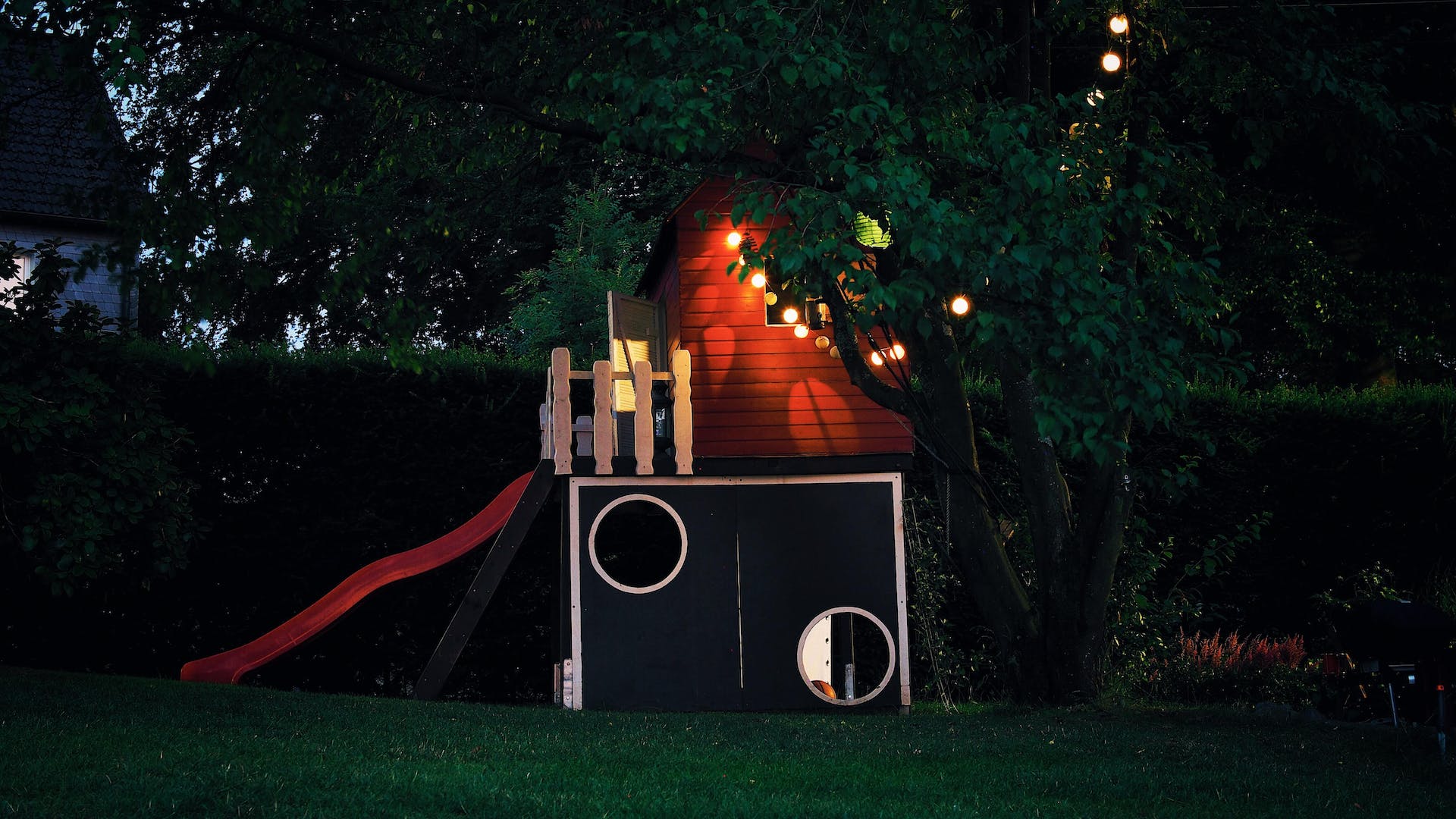
Outdoor string lights strung between trees, fence posts, or mounted poles create the warm, festive atmosphere that makes outdoor evenings feel special. This is one of the most affordable and high-impact lighting upgrades available. A set of weatherproof Edison-style string lights on a simple timer costs $30 to $60 and transforms an outdoor area from ordinary to genuinely enchanting.
Solar-powered lanterns grouped on a patio table or arranged along steps add warm accent lighting that complements string lights beautifully. Mixing light levels and light sources outdoors, just as you would indoors, creates depth and atmosphere that flat, single-source illumination cannot achieve.
Add a Hammock or Swing
Sometimes the most transformative backyard addition is the simplest: something that invites you to slow down and actually use the space. A hammock strung between two trees, or suspended from a freestanding frame, creates an immediate leisure zone that signals that this yard is a place of genuine rest and enjoyment. Few backyard additions generate more use relative to their cost and installation effort.
A double cotton or polyester blend hammock costs $40 to $100 and installs in minutes if you have appropriately spaced trees. If you do not have suitable trees, a freestanding hammock stand costs $100 to $200 and can be positioned anywhere that benefits from the addition.
A hanging chair or porch swing mounted to a pergola or tree limb serves a similar purpose in a smaller footprint. These elements signal that the yard is a space for genuine relaxation, and they tend to get used far more often than expected. The investment is modest; the enjoyment is substantial.
Keep Maintenance Simple and Sustainable
The most beautiful backyard transformation loses its appeal if it requires constant, burdensome maintenance. Design choices that are attractive but also manageable for your actual schedule ensure that your improved backyard stays in good condition without consuming every weekend. Choose low-maintenance plants that are appropriate for your climate and soil. Install drip irrigation or soaker hoses in garden beds to reduce manual watering time. Apply generous mulch to minimize weeding. Choose fence materials and finishes that hold up without annual attention.
A well-planned, beautifully executed DIY backyard transformation is genuinely within reach. The key is starting with a clear vision, prioritizing high-impact changes, and executing each project with care. The result is an outdoor space that you will love and use, one that feels like a natural extension of your home’s best qualities rather than an afterthought at the edge of the property.