
Last Updated on May 28, 2026

Solar energy has moved from a niche technology for early adopters into a mainstream home investment that millions of homeowners across the country are seriously considering. The economics have shifted dramatically in the past decade: panel costs have dropped by more than 90 percent, installation has become more efficient, utility rates have continued to rise, and federal tax incentives remain substantial. For many homeowners, solar is no longer a question of “if” but “how” — how to evaluate the options, size the system appropriately, vet the installers, and make a decision that provides real financial return over the long term.

This guide walks through everything you need to know to choose the right solar panel system for your home — from understanding your energy needs and evaluating your roof to comparing equipment types, financing options, and the installers who will bring the system to life.

Assess Your Energy Consumption First

Before you can meaningfully evaluate any solar proposal, you need to understand how much electricity your home actually uses. Your utility bills contain this information: look for the kilowatt-hour (kWh) consumption figures on twelve consecutive months of bills. The annual total tells you approximately how much electricity your solar system needs to produce to achieve your goals.

Most homeowners designing a solar system aim to offset 80 to 100 percent of their annual electricity consumption, though financial and physical constraints sometimes make a smaller system the right choice. Understanding your consumption gives you a target to evaluate proposals against and helps you immediately identify whether a proposed system size makes sense.

Consider how your electricity needs might change over time. Are you planning to add an electric vehicle? Replace a gas appliance with an electric heat pump? Install a pool or hot tub? Any of these additions substantially increase electricity consumption and should be factored into the system size if the purchase or installation is on the horizon. Designing a system for current consumption that is immediately undersized for planned future consumption is an expensive mistake.

Evaluate Your Roof’s Solar Suitability

Not every roof is equally suited for solar. Several factors determine how productive a solar installation on your home will be.

Orientation and pitch are the primary variables. In the northern hemisphere, south-facing roof surfaces receive the most direct sunlight throughout the year and produce the most energy. East and west-facing surfaces produce somewhat less but still viable energy. North-facing surfaces are rarely appropriate for solar installation. The optimal roof pitch for fixed-mount solar panels in most of the continental United States is between 15 and 40 degrees; roofs significantly outside this range either lose some production efficiency or require tilt racking to position panels at better angles.

Shading is critically important and often underestimated. Trees, neighboring buildings, chimneys, and rooftop equipment that cast shadow on any portion of the roof can substantially reduce system output. In traditional string inverter systems, shading of even one panel reduces the output of the entire string. Microinverter and power optimizer systems mitigate this problem by allowing each panel to operate independently, which makes them significantly better choices for roofs with any shading.

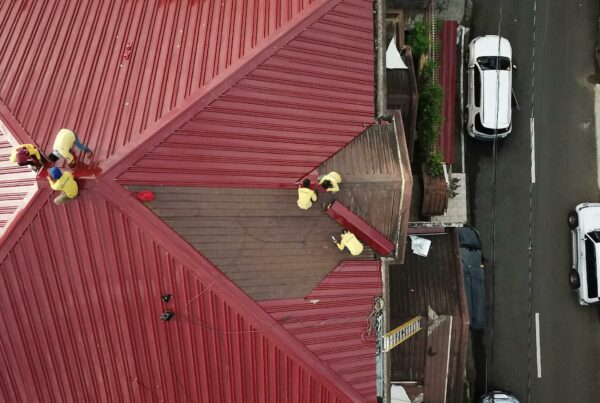
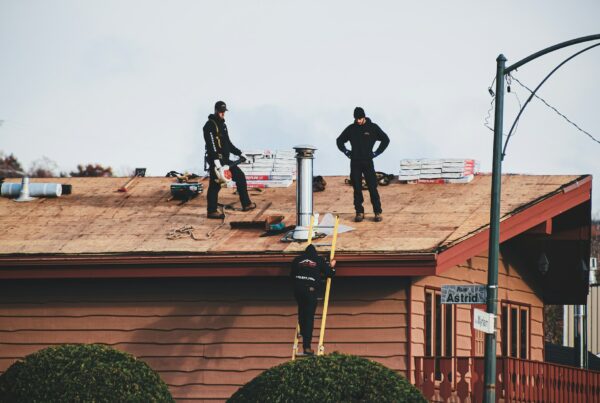
Roof condition matters because solar panels are designed to last 25 to 30 years. If your roof is approaching the end of its useful life, it makes strong financial sense to replace it before installing solar. Removing and reinstalling a solar system to replace a roof adds significant cost — typically between two thousand and six thousand dollars depending on system size — and is entirely avoidable with proactive planning.

RELATED  What Can You Use Laminated Glass For in Your House?

Roof area constrains the maximum system size. A professional solar assessment will calculate the available, appropriate roof area for panel installation after accounting for setbacks from edges and ridges (required by code for safety), any areas with shading, and access pathways. This usable area defines the upper limit of the system size.

Understand Solar Panel Types and Quality

Solar panels come in several distinct technologies, each with different efficiency characteristics, appearance, and price points. Understanding the differences helps you evaluate proposals and make an informed choice.

Monocrystalline panels are made from a single crystal of silicon and offer the highest efficiency available in residential solar. They produce more power per square foot than other technologies, which matters when roof space is limited. They are also the most visually uniform, with a consistent dark color that many homeowners prefer aesthetically. Monocrystalline panels are generally the standard recommendation for residential installations today, and their higher efficiency typically justifies their slightly higher cost compared to alternatives.

Polycrystalline panels (also called multicrystalline) use silicon formed from multiple crystal fragments and are slightly less efficient than monocrystalline but less expensive to manufacture. They have a blue, speckled appearance that some homeowners find less attractive. As monocrystalline panel prices have dropped, polycrystalline panels have become less common in new residential installations.

Thin-film solar panels use a very different manufacturing process and are significantly less efficient than crystalline silicon options, requiring substantially more roof area to produce equivalent power. They are rarely used in residential rooftop applications but have advantages in specific commercial and utility-scale contexts.

Panel manufacturer quality varies significantly, and the manufacturing warranty and the bankability of the manufacturer matter for a product you are depending on for 25+ years. Look for panels from established manufacturers with long track records, strong production and power warranties (25 years of production warranty and at least 25 years of power guarantee are standard for tier-one manufacturers), and company financials solid enough to suggest they will exist in 20 years to honor warranty claims.

Choose the Right Inverter Technology

The inverter converts the direct current (DC) electricity produced by the panels into the alternating current (AC) used by your home and the grid. Inverter technology is among the most consequential equipment choices in a solar system and has significant implications for performance, monitoring, expandability, and battery storage compatibility.

String inverters (also called central inverters) connect all panels into one or several strings, with a single inverter converting the combined output. They are the least expensive inverter option and work well on roofs with uniform orientation, pitch, and no shading. The significant drawback is that any shading or panel-level issue affects the entire string’s performance. String inverters are typically not compatible with battery storage addition without significant additional equipment.

Microinverters are small inverters attached to each individual panel. They convert DC to AC at the panel level, which means each panel operates independently. This makes microinverter systems dramatically more resistant to shading and panel-level performance issues. They also provide module-level monitoring — you can see exactly how each panel is performing at any time, which makes troubleshooting much simpler. Microinverters are also typically more compatible with battery storage additions. The primary drawback is higher upfront cost.

Power optimizers are DC-to-DC converters attached to each panel that maximize each panel’s output and feed the result to a central string inverter. They provide most of the shading tolerance and monitoring benefits of microinverters at a lower total cost than a full microinverter system, while maintaining compatibility with central inverter warranties and performance.

RELATED  Maximizing the Lifespan of Your Solar Panels

For roofs with any shading or complex orientation, microinverters or power optimizers are strongly recommended. For simple, unshaded roofs with uniform orientation, a string inverter is a viable and cost-effective choice.

Evaluate Battery Storage Options

Battery storage — pairing a solar system with a battery that stores excess production for use when the panels are not generating — has become an increasingly popular addition to residential solar systems, driven by rising utility rates, growing interest in backup power, and declining battery costs.

The primary use cases for residential battery storage are backup power during grid outages and the ability to use solar-generated power during peak-rate periods rather than exporting it to the grid and buying it back at higher rates. In states with strong time-of-use utility rates, where electricity is significantly more expensive during certain evening hours, a battery that stores afternoon solar production for evening use can meaningfully improve the financial return of a solar investment.

Battery capacity is measured in kilowatt-hours; most residential batteries have usable capacity between 10 and 30 kWh. A single battery system provides backup power for essential circuits (refrigerator, lights, critical medical equipment) during typical grid outages. Whole-home backup requires multiple batteries.

The most commonly installed residential battery systems currently include the Tesla Powerwall, Enphase IQ Battery, SolarEdge Energy Bank, and LG RESU. Each has different capacity, compatible inverter ecosystems, and performance characteristics. An installer who is a certified partner for multiple battery manufacturers can help you select the system best suited to your specific goals.

Understand Net Metering and Local Incentives

The financial return on a solar investment depends significantly on how your utility compensates you for excess solar production sent to the grid, what state and local incentives are available, and how you finance the system.

Net metering is the most common utility compensation structure for residential solar: excess production is credited to your bill at the retail electricity rate, which you can then draw down when your panels are not producing. Full retail net metering (NEM 1.0 in California’s historic terminology) provides the best financial return for solar owners. Some utilities have moved to reduced-rate compensation structures for exported solar — typically crediting at wholesale rather than retail rates — which reduces the financial case for system oversizing.

Research your specific utility’s current net metering policy before finalizing your system size. An installer should be able to explain your local utility’s structure and help you optimize system size for maximum financial return under the applicable policy.

The federal residential clean energy tax credit (commonly called the ITC, or Investment Tax Credit) currently provides a credit equal to 30 percent of the total system cost against your federal income tax liability. This is a dollar-for-dollar reduction in taxes owed, not a deduction, and it applies to equipment and installation costs including battery storage. Many states offer additional credits, rebates, or exemptions that stack with the federal credit. Research all applicable incentives for your location, as they can substantially improve the economics of solar investment.

Evaluate Solar Financing Options

Solar systems can be acquired through several different financial structures, each with distinct implications for ownership, tax credit eligibility, and long-term financial return.

RELATED  7 Easy Ways To Spruce Up Your Home Exterior

Cash purchase provides the highest long-term financial return because you capture the full value of the system’s production without any financing cost, and you are eligible for the federal tax credit directly. The upfront cost is substantial but the system is yours from day one.

Solar loans allow you to own the system and claim the federal tax credit while financing the purchase over time. Secured solar loans (using the home as collateral) typically offer the lowest interest rates. Unsecured solar loans are also available. The key to solar loan analysis is ensuring the monthly loan payment is lower than the electricity savings — you want to be cash-positive from day one of the loan.

Solar leases and power purchase agreements (PPAs) are third-party ownership structures in which the solar company owns the system and you pay either a fixed monthly payment (lease) or a per-kWh rate for the power produced (PPA). These eliminate upfront cost but also eliminate ownership — you do not get the tax credit, you do not own the system, and the contract typically transfers with the home if you sell. Many financial analysts consider cash purchase or loan ownership superior for homeowners who can qualify for financing.

Vet Solar Installers Carefully

The quality of your installer matters enormously for a system that will be attached to your roof and producing power for 25 years. The solar installation industry has historically attracted some contractors with poor practices, and choosing wrong can mean installation errors, unresolved warranty issues, and significant frustration.

Look for installers who are NABCEP (North American Board of Certified Energy Practitioners) certified — this certification is the most widely recognized quality standard in the residential solar installation industry. Verify that the company is licensed as an electrical contractor in your state. Check their Google and Yelp reviews, particularly for patterns in how they handle warranty issues and post-installation support. Ask for references from installations at least three years old.

Get at least three proposals from different installers and compare them carefully. Proposals should specify panel model and wattage, inverter type and model, total system size, estimated annual production, and full pricing broken down by component. Beware of proposals that are suspiciously low — these often involve lower-quality equipment, less experienced installation crews, or both.

A high-quality solar monitoring system, included with the installation, lets you verify your system is performing as designed and detect any issues quickly. The Emporia Smart Home Energy Monitor is a popular choice for whole-home energy monitoring that complements solar system monitoring by showing your full consumption picture alongside generation data.

Making Your Decision

Choosing a solar system is a significant financial decision that deserves careful research, multiple proposals, and a clear understanding of the numbers. Take the time to understand your energy consumption, evaluate your roof’s suitability, compare equipment types, and assess installer quality before signing any contract.

When the right system is selected and properly installed, solar delivers genuine long-term value: reduced or eliminated electricity bills, protection against utility rate increases, a meaningful contribution to reducing carbon emissions, and — in most markets — added resale value to your home. For homeowners with suitable roofs and adequate sun exposure, the question of whether solar makes sense has largely been answered by the economics of today’s market. The remaining question is how to do it right.

Tia

Tia

Tia is a marketing strategist who seamlessly blends her professional expertise with her personal passions. With a green thumb and an inherent love for all things related to home decor, she brings a unique perspective to her work and finds joy in cultivating both plants and creative design ideas.

Leave a Reply