
Last Updated on May 28, 2026
The exterior of your home does two important jobs simultaneously. It protects the structure and everything inside it from the elements, and it makes a statement about who lives there. These two functions are not in conflict: the most durable exterior materials are often the most beautiful ones, and thoughtful design choices add genuine value, both to your daily experience of coming home and to the property’s financial value when it eventually comes time to sell.
Improving your home’s exterior does not require a full renovation. Some of the most impactful changes are achievable over a weekend with modest budgets. Others are larger investments that transform the character of the property over a single season. All of them are worth considering thoughtfully, with attention to how each decision interacts with the others to create a coherent whole rather than a collection of disconnected improvements.
Start With the Front Door: The Single Most Impactful Change
If you have a limited budget and one weekend to make your home’s exterior significantly more attractive, spend it on the front door. The front door is the focal point of every exterior composition. It is where the eye travels first, where guests’ impressions crystallize, and where the character of the home is most legibly expressed. A front door that is fresh, considered, and in excellent condition elevates the entire exterior. One that is faded, damaged, or incongruous with the home’s style undermines everything around it.
Paint is the most affordable transformation. A beautifully chosen color, applied with excellent prep work and quality exterior paint, costs a modest amount and has immediate, dramatic impact. The trend toward deeply saturated, bold front door colors, deep navy, lacquered black, forest green, rich burgundy, reflects a broader shift toward exterior designs that express personality rather than simply coordinating safely with themselves. A confident door color against a more neutral body and trim creates a composition that reads as deliberate and sophisticated.
For doors that are beyond what paint can save, replacement is worthwhile. Fiberglass doors that convincingly replicate the grain and character of wood without wood’s susceptibility to moisture and warping are a practical choice for most climates. Solid wood doors remain the premium option where craftsmanship and authenticity matter most. Steel doors offer excellent security and insulation at accessible price points. Whatever material you choose, invest in door hardware that matches the door’s quality and aesthetic level. A beautiful door with mediocre hardware is a missed opportunity.
Landscaping: The Frame That Makes Everything Else Work
Landscaping is the most undervalued category of exterior improvement in terms of its impact on how a home is perceived. Studies of curb appeal consistently find that mature, well-maintained landscaping is one of the strongest predictors of how positively a home is evaluated from the street. Yet landscaping is also frequently neglected in favor of structural improvements that get more attention in renovation programming.
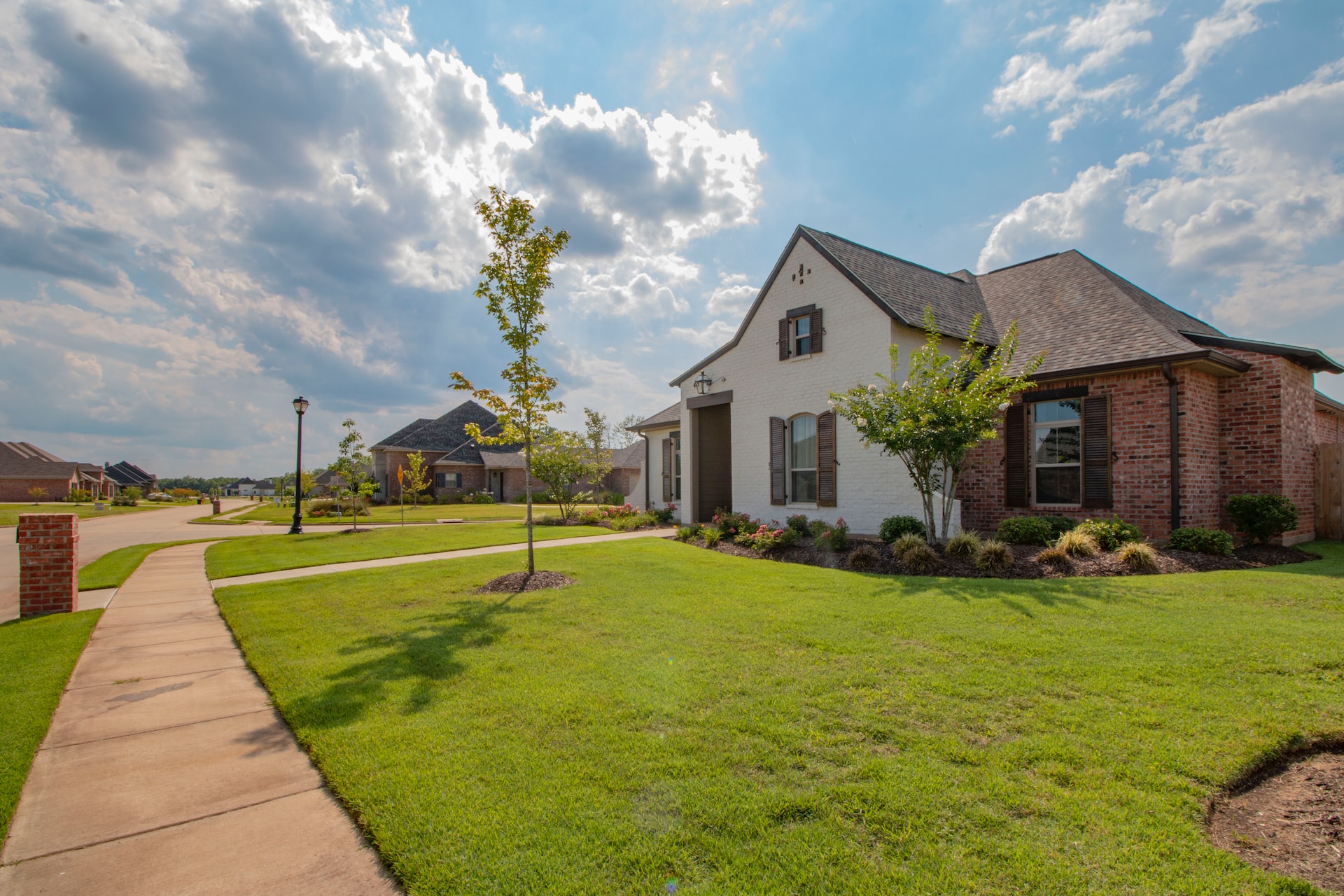
The foundation planting, the plantings that border the house at its base, does the critical job of visually connecting the structure to the ground and softening what would otherwise be a harsh junction between building and earth. Foundation plantings that are overgrown, asymmetrical, or full of unpruned woody shrubs obscure the home’s architecture and make it look neglected. Refreshing foundation plantings, by removing overgrown or out-of-scale plants and replacing them with a more curated selection of appropriate scale, is one of the most transformative exterior improvements available.
The entry approach, including the path from the street or driveway to the front door, shapes how visitors experience arriving at your home. A clear, generously scaled entry path in a quality material, whether natural stone pavers, brick, large-format concrete, or simply beautifully edged and maintained concrete, creates a sense of welcome that registers immediately. Flanking the entry path with lighting, planting, or both creates a processional quality that makes the arrival at your door a genuinely considered experience.
Trees are the longest-term investment in exterior improvement and the one with the greatest eventual impact. A well-placed ornamental tree, a flowering dogwood, a serviceberry, a Japanese maple, near the front of the property creates year-round interest, provides seasonal drama through bloom or fall color, and adds a sense of established maturity that newly built homes lack. Planting a tree today is one of the most significant things you can do for the character of your home’s exterior over the next decade.
Siding, Paint, and Surface Condition
The condition of your home’s primary surfaces, siding and exterior paint, is the most powerful single signal your home sends about how well it has been cared for. Peeling paint, damaged siding, visible wood rot, and mold or mildew staining on any surface tell every passerby that maintenance has been deferred. The converse is equally true: a home with fresh paint, intact siding, and clean surfaces looks well cared for regardless of its age or architectural ambition.
Exterior paint on wood siding typically has a useful life of seven to ten years with good initial preparation and quality product. Failing paint, beyond its aesthetic impact, allows moisture infiltration that leads to wood rot, which is far more expensive to repair than preventive painting. Staying ahead of the painting schedule is one of the most cost-effective maintenance decisions a homeowner can make.
If full repainting is on your agenda, consider whether the existing color palette is working optimally for your home. A color consultation with an exterior design professional or, at minimum, some time with large paint chips held against your home in multiple lighting conditions, is worth the investment. The cost of applying the wrong color is another full paint job. The relationship between body color, trim color, and accent colors requires specific consideration for your home’s architectural style and the surrounding landscape.
For homes with fiber cement, vinyl, or engineered wood siding, the maintenance requirements are lower than for painted wood, but periodic cleaning and inspection remain important. Power washing removes the biological growth that accumulates on siding surfaces and can cause permanent staining if left unaddressed. Inspect caulking around windows, doors, and penetrations annually and recaulk wherever deterioration is visible.
Outdoor Lighting: The Transformation That Works Day and Night
Exterior lighting deserves more design attention than it typically receives. Most homes have basic porch lighting at the front door, chosen for its affordability rather than its design quality, and nothing else. A thoughtfully designed exterior lighting scheme transforms how the home looks after dark, creates a sense of security and welcome, and extends the hours during which the exterior of the home is visually attractive.
Entry lighting flanking the front door should be at a scale appropriate to the door and the architecture. Under-scaled fixtures look timid. Well-proportioned fixtures with appropriate finishes, whether a matte black appropriate to a contemporary home or a lantern form suited to a traditional one, make an immediate difference in how the entry reads.
Path lighting along the entry approach serves both practical and aesthetic purposes. Low-profile bollard lights or in-ground step lights illuminate the path safely while adding visual interest at ground level. Solar path lights have improved considerably and offer a no-wire installation option that works in locations where running electrical conduit would be disruptive.
Architectural up-lighting, in which fixtures at grade level cast light upward against the facade, trees, or significant landscape elements, creates dramatic nighttime presence for homes that are otherwise invisible after dark. A few well-placed landscape fixtures can make your home visible and appealing from the street throughout the evening, adding to the sense of welcome that a well-designed exterior communicates. Outdoor LED landscape spotlights with adjustable heads provide flexible positioning for architectural and landscape highlighting and are designed for year-round outdoor use.
The Driveway and Hardscape
Hardscape, including the driveway, walkways, and any paving around the house, occupies a significant visual portion of most properties and is an area where improvements provide strong visible returns. A cracked, stained, or poorly maintained driveway visually dominates the property and is very difficult for good landscaping or a fresh paint job to overcome.
Driveway options vary considerably in cost, appearance, and maintenance requirements. Asphalt is the most common residential driveway material in most regions, providing durability at modest cost. Properly maintained asphalt, sealed every three to five years and repaired promptly when cracking develops, can last thirty years or more. Neglected asphalt deteriorates rapidly and becomes very expensive to restore compared to the cost of maintenance.
Concrete driveways offer longevity and can be finished with exposed aggregate, broom finish, or scored patterns that add visual interest beyond the plain slab look. Stamped concrete can replicate the appearance of more expensive materials at a lower installed cost. Gravel driveways, particularly in permeable gravel or compacted gravel with defined edging, suit certain property styles well and are among the most affordable options to install and maintain.
For a significant exterior upgrade, a driveway or entry approach in natural stone, brick pavers, or large-format concrete pavers provides the premium look that sets a home apart and holds its appearance well over many years. The installed cost is considerably higher than asphalt or basic concrete, but the visual dividend and the durability of quality paving materials make it a worthwhile investment for the right property and the right budget.
Putting It Together: Thinking in Compositions
The most important principle in exterior improvement is thinking compositionally rather than in isolation. Individual improvements that are each good ideas can still create a confused, incoherent exterior if they pull in different aesthetic directions. A craftsman-style home does not benefit from contemporary minimalist landscaping and modern metal porch lighting. A contemporary home does not benefit from traditional lantern fixtures and a Victorian-influenced garden gate.
Before beginning any exterior improvement project, take photographs of your home from the street and study them with an objective eye, the way you would look at an unfamiliar home. Identify what is already working, what the strongest visual elements are, and where the composition falls apart. Let that assessment drive the priority and direction of your improvements.
A home’s exterior is among its most important and most publicly visible expressions of care and character. The improvements you make to it benefit you every day through the pleasure of arriving home to something beautiful and well-maintained, and they benefit the people around you through the contribution your property makes to the character of the neighborhood. Both kinds of value are real, and both are worth pursuing with genuine thoughtfulness and ambition.