
Last Updated on August 24, 2026
Updated for 2026.
Kitchen remodeling sits in a unique position among home improvement projects. It’s consistently cited as one of the highest-return renovations in terms of both resale value and daily quality of life, but it’s also among the most complex and expensive projects a homeowner can undertake. The decisions made during a kitchen remodel — from the layout to the cabinetry to the appliances to the finish materials — will define how you cook, gather, and live for the next ten to twenty years. Getting those decisions right requires both clear vision and practical discipline.
These are the best tips for planning and executing a kitchen remodel that delivers the kitchen you actually want at a budget that doesn’t derail the project before it’s complete.
Start with Function, Then Add Beauty
The most common mistake in kitchen remodeling is leading with aesthetics rather than function. A kitchen can be visually stunning and functionally miserable — beautiful cabinetry with terrible storage logic, gorgeous countertops paired with a workflow that creates constant frustration, picture-perfect fixtures that don’t perform well. Reversing this priority, at least during the planning phase, produces kitchens that are both beautiful and genuinely wonderful to work in.
The kitchen work triangle — the functional relationship between sink, refrigerator, and range or cooktop — is the foundational concept in kitchen design for good reason. When these three primary work zones are positioned to minimize unnecessary movement between them, cooking is more efficient and less exhausting. The total perimeter of a well-designed work triangle is typically 12-26 feet. Triangles outside this range either crowd the cook or require excessive movement between work stations.
Counter space adjacent to primary work zones is an underappreciated functional priority. A kitchen with beautiful cabinets and minimal counter space is frustrating to work in regardless of how attractive it is. Planning for at least 18 inches of counter space on either side of the range, at least 18-24 inches beside the refrigerator on the handle side, and generous prep space adjacent to the primary prep sink creates a kitchen that accommodates real cooking activity rather than just looking good in photographs.
Storage planning should be driven by an honest inventory of what you actually need to store. Kitchen cabinet space is often wasted on items that could live elsewhere or could be eliminated. A realistic assessment of your cooking tools, equipment, pantry goods, and everyday items — as opposed to aspirational storage for every kitchen gadget ever made — allows you to design storage that is actually used efficiently rather than padded with excess space that fills with clutter.
Budget Realistically and Build in Contingency
Kitchen remodels are notorious for budget overruns, and the overruns are rarely random — they follow predictable patterns that realistic upfront budgeting can account for. The first pattern is scope creep: once walls are open, previously unknown conditions (old wiring that must be updated to code, inadequate insulation, unexpected plumbing configurations) add costs that weren’t in the original estimate. The second pattern is selection upgrades: homeowners select materials in their budget range and then discover options they prefer that cost more, gradually upgrading the overall selections and the total budget with them.
The standard recommendation is to build a 15-20 percent contingency into any kitchen remodeling budget, treating it as a real cost rather than a cushion to be drawn down only if something goes catastrophically wrong. This contingency absorbs the normal unexpected costs that virtually every kitchen remodel encounters without creating a financial crisis or forcing compromises on elements you care about.
Understanding where your budget delivers the most value in a kitchen remodel helps prioritize when trade-offs are necessary. Cabinetry typically represents 30-40 percent of a kitchen remodel budget, and investing in quality cabinetry construction — solid wood boxes, dovetail-jointed drawers, soft-close hinges and drawer slides — pays returns in longevity and daily satisfaction that budget cabinetry can’t match. Appliances are a category where performance and quality genuinely correlate with price more consistently than in some other categories. Counter materials span an enormous price range for similar visual outcomes — quartz that looks similar to marble can be purchased for half the price of the natural stone it mimics. Understanding these value dynamics helps you allocate your budget where it matters most to you specifically.
Cabinetry: The Foundation of Your Kitchen Design
Cabinetry occupies more visual space in a kitchen than any other element, and its quality — both in construction and in finish — defines the character of the entire space more than any other single decision. Cabinetry decisions break down into three categories: construction quality, door style, and finish.
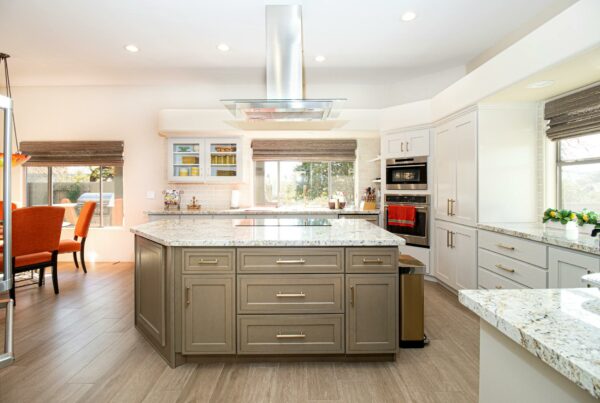
Construction quality has two tiers worth distinguishing. Stock cabinetry — standard sizes sold off the shelf at big-box home improvement stores — is the most affordable option and suitable for kitchens where the standard sizes work with the space without awkward filler pieces. Semi-custom cabinetry is ordered in standard sizes but with more finish options and some size flexibility. Custom cabinetry is built to the exact dimensions of your kitchen, can incorporate non-standard features and configurations, and is available in the widest range of woods, finishes, and designs.
Door style communicates the kitchen’s design character more than almost any other element. Shaker-style doors — with a flat center panel framed by a simple, square-edged frame — have become the dominant choice in contemporary American kitchens for their versatility across design styles from traditional to modern farmhouse to contemporary. Full-overlay slab doors — flat front with no profile detail — are the purist’s choice for truly contemporary design. Traditional raised-panel doors suit formal or classic kitchen aesthetics. The door style you choose should relate coherently to your home’s overall architectural character and to the other design decisions in the kitchen.
Cabinet finish is the most stylistically expressive decision in cabinetry. White painted cabinetry has been the dominant choice for many years for its brightness, timelessness, and the way it showcases other design elements. Two-tone kitchens — upper cabinets in white or light color, lower cabinets in a deeper tone — add visual interest and grounding that all-white kitchens can lack. Natural wood finishes in white oak, walnut, or other distinctive species have grown significantly in popularity and bring organic warmth that painted alternatives can’t match. Navy, forest green, and dark grays are bolder choices that create dramatic, sophisticated kitchens when paired with appropriate hardware and countertop materials.
Countertops: Function, Beauty, and Maintenance Reality
Countertop selection involves the intersection of aesthetic preference, practical performance, and maintenance tolerance. Each major countertop material category has genuine strengths and genuine limitations, and understanding both allows you to make a choice that you’ll remain satisfied with for the life of the kitchen.
Quartz countertops — engineered stone composites of natural quartz bound with resin — have become the dominant choice in residential kitchen design for their combination of durability, low maintenance, consistent appearance, and availability in colors and patterns that convincingly mimic natural stone. Quartz is non-porous and requires no sealing, resists staining and bacterial growth well, and is available in slabs large enough for seamless countertop runs. Its consistent patterning, compared to the natural variation of stone, is an advantage for homeowners who want a controlled, predictable appearance and a limitation for those who love the uniqueness of natural stone.
Granite remains a perennial choice for its incomparable uniqueness — no two granite slabs are alike — and its proven durability in kitchen applications. Quality granite is hard, scratch-resistant, and heat-resistant, though it requires annual sealing to prevent staining and is vulnerable to etching from acidic substances. The variation in granite patterns means that selecting from actual slabs rather than catalog samples is essential, as the variation between slabs of the same material can be substantial.
Marble’s soft, veined beauty is unmatched in residential design, but its practical limitations in kitchen applications are significant. Marble is soft relative to granite and quartz, etches readily from contact with acidic foods and beverages (citrus, vinegar, wine), stains relatively easily, and requires regular sealing. For homeowners who are willing to accept and even embrace the living patina that these characteristics produce over time — the marks that tell the story of a kitchen in use — marble is a deeply satisfying choice. For homeowners who require pristine surfaces, it is not.
Appliances: Invest Where It Matters
Appliance selection involves understanding which pieces you actually use heavily and which serve more supplementary roles. The range or cooktop is the heart of a cooking kitchen, and this is where premium investment delivers the most daily return for someone who genuinely cooks. A professional-style 36-inch range with powerful burners, a high-performance convection oven, and quality construction transforms the cooking experience in ways that a basic 30-inch model simply cannot.
Refrigerator selection should prioritize capacity and configuration for your household’s actual food storage patterns. Counter-depth models that align with the cabinet face rather than protruding beyond it create a cleaner, more built-in appearance but sacrifice some storage capacity relative to full-depth models of the same door configuration. French door configurations with bottom-mount freezer provide convenient refrigerator access at eye level and relegates the less-accessed freezer to the lower compartment.
Dishwasher performance and noise level are the specifications that matter most in day-to-day use. Premium dishwashers clean more thoroughly with less rewashing, operate more quietly (a genuine quality-of-life factor in open kitchen-living room configurations), and often include drying performance improvements that mean dry dishes actually come out dry. The noise specification — measured in decibels — should be a primary consideration; the quietest dishwashers operate at 38-40 dB, nearly imperceptible from the adjacent living space.
Lighting: Often Budgeted Too Low
Kitchen lighting is consistently under-budgeted relative to its impact, and the results are visible in kitchens that look beautiful in the morning and oppressive in the evening because the lighting design wasn’t given adequate attention. A well-designed kitchen lighting plan includes three layers: ambient lighting that provides general illumination, task lighting that focuses light on specific work surfaces, and accent lighting that creates visual interest and warmth.
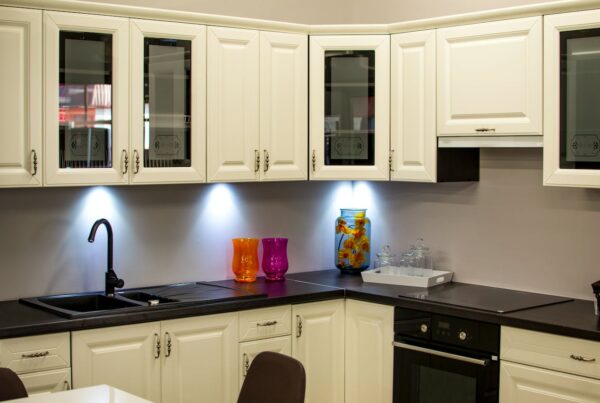
Under-cabinet lighting is the most impactful kitchen lighting element relative to its cost. LED strip lights or puck lights mounted under upper cabinets illuminate the countertop work surface directly below, eliminating the shadow that base cabinets cast on the counter in a kitchen lit only from above. Under-cabinet lighting transforms food prep from a task done in one’s own shadow to a well-lit, efficient activity. LED under-cabinet systems are available in both hard-wired and plug-in configurations; hard-wired systems with dimmers are preferable for permanent installations.
Pendant lights over a kitchen island or peninsula are the decorative lighting element that most directly expresses the kitchen’s design character. The fixture choice — industrial-style metal pendants, glass globe pendants, sculptural ceramic shades, vintage-inspired schoolhouse fixtures — makes a significant design statement that should be made with the overall kitchen aesthetic in mind. Size matters: pendants that are too small for the island scale look tentative, while appropriately scaled pendants anchor the space confidently.
Details That Elevate the Finished Kitchen
Hardware — the pulls and knobs on cabinet doors and drawers — has a cumulative visual impact that’s surprisingly significant given the small size of each individual piece. A kitchen with 50-60 drawer pulls has 50-60 opportunities for a finish that either coheres with or undermines the overall design. Selecting a single hardware finish for all cabinetry hardware creates unity; mixing pull styles thoughtfully (perhaps bar pulls on drawers and knobs on doors) adds visual interest without disorder.
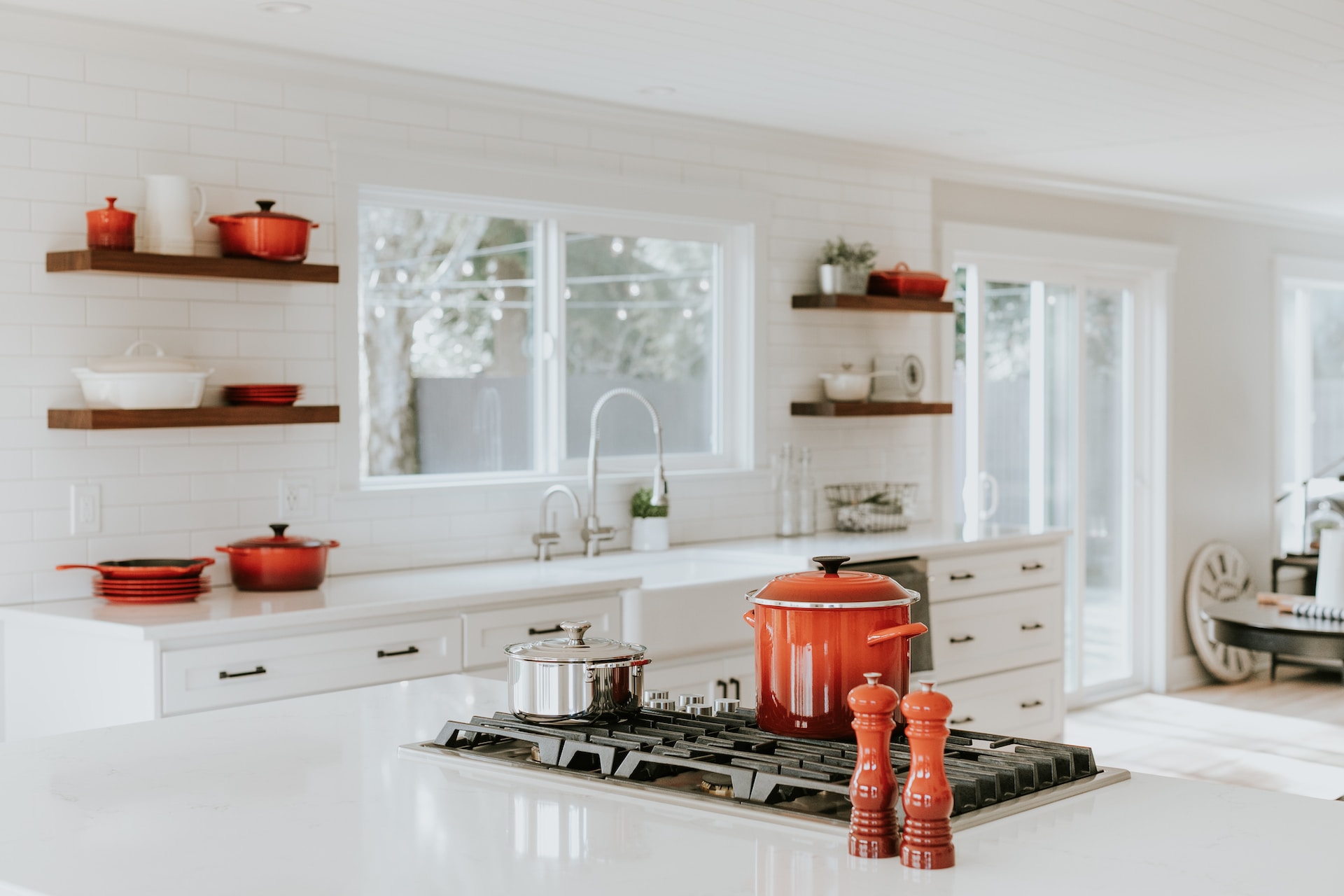
The kitchen faucet is one of the most frequently touched and noticed fixtures in the kitchen, used multiple times daily. A quality faucet — well-designed, with solid construction and an appropriate spray function for how you actually use the sink — is a pleasure to use every day. Matching the faucet finish to other kitchen fixtures and hardware creates a polished, cohesive appearance. A pull-down sprayer is the most practical configuration for most cooking kitchens, making rinsing vegetables, filling pots, and cleaning the sink all easier than a standard faucet manages.
A kitchen faucet with pull-down sprayer in brushed nickel is the kind of daily-use element that rewards careful selection — you’ll interact with it thousands of times over the life of your kitchen remodel, and choosing well means each of those interactions is satisfying rather than frustrating.
The kitchen you design through a thoughtful, well-executed remodel becomes the center of your home’s daily life in a way that fully justifies the investment of planning, budget, and creative energy it requires. Approach it with clear priorities, realistic expectations, and the discipline to make decisions that serve how you actually live, and you’ll end up with a kitchen that pays returns in pleasure and practicality for decades to come.
Are you an expert in this space? Write for us about kitchen remodeling — we welcome guest contributions from industry professionals.