
Last Updated on May 28, 2026

There is something undeniably romantic about a home wine cellar. The thought of descending a few steps into a cool, dimly lit room lined with bottles — each one representing a moment, a trip, a special occasion — appeals to a deeply human instinct for ritual and refinement. If you have been dreaming about creating your own wine cellar at home, the good news is that the project is more accessible than most people realize. It does not require a centuries-old chateau or a professional sommelier. It requires thoughtful planning, an understanding of what wine actually needs to thrive, and a willingness to invest in a space that will reward you for decades.

This guide walks you through everything you need to know to design a home wine cellar that is both beautiful and genuinely functional — a space that protects your collection and becomes one of the most distinctive rooms in your home.

Understanding What Wine Actually Needs

Before you think about aesthetics, understand the conditions wine requires to age properly. Temperature is the most critical factor. Wine should be stored between 55 and 65 degrees Fahrenheit, with 55 to 58 degrees considered ideal for long-term aging. Fluctuations matter almost as much as the target temperature itself — rapid temperature swings cause the wine to expand and contract, which accelerates aging and can push the cork out slightly, allowing air to enter.

Humidity is the second essential element. The ideal range is 60 to 70 percent relative humidity. Too dry and corks dry out, allowing oxidation. Too humid and mold becomes a problem. Most dedicated wine cellar spaces use a combination of cooling unit and vapor barrier to maintain both temperature and humidity simultaneously.

Light is wine’s enemy. Ultraviolet light degrades the organic compounds in wine, leading to premature aging and off-flavors. This is why wine cellars traditionally have minimal lighting and use incandescent or LED fixtures rather than fluorescent. Bottles should be stored away from windows entirely.

Finally, vibration disrupts the slow chemical processes that make wine age gracefully. Your wine cellar should be away from mechanical equipment, high-traffic areas, and anything that creates persistent vibration.

Choosing the Right Location in Your Home

The basement is the classic location for a home wine cellar, and for good reason. Below-grade spaces naturally maintain cooler, more stable temperatures and are protected from light and vibration. If your home has a basement, it is your starting point.

However, not every homeowner has a basement, and not every basement is equally suitable. If you are working with an above-grade space, you will need more robust climate control — which is achievable but adds to the project budget. Some homeowners convert closets, spare rooms, or even under-stair spaces into wine storage with the right insulation and cooling unit.

Wherever you choose, insulation is non-negotiable. The walls, ceiling, and floor of a wine cellar must be thoroughly insulated to maintain stable temperature against the ambient conditions of the surrounding house. Closed-cell spray foam insulation is the gold standard because it provides both thermal insulation and a vapor barrier in a single application.

RELATED  Style vs. Functionality: How to Have Both With Your Door Handles

Sizing Your Cellar for Your Collection

How many bottles do you currently own, and how large do you expect your collection to grow? These questions determine the scale of your cellar. A modest cellar holding 500 to 1,000 bottles suits most enthusiastic home collectors. Serious collectors with large holdings may design cellars holding several thousand bottles.

Standard wine racks are designed around the 750ml Bordeaux-style bottle — the most common shape worldwide. However, if you collect Burgundy bottles (which have wider shoulders), large formats like magnums, or Champagne bottles (which are larger than standard), make sure your rack system accommodates them. Nothing is more frustrating than a beautiful rack that will not properly hold your favorite bottles.

Plan for growth. It is very common to underestimate how quickly a collection expands once you have proper storage. Building in 20 to 30 percent more capacity than you currently need is usually a sound approach.

Climate Control Systems

Unless you are in a location with naturally stable underground temperatures, you will need a wine cellar cooling unit. These are specialized pieces of equipment — not standard air conditioners — designed to maintain both temperature and humidity within the narrow range wine requires.

Through-the-wall cooling units are the most common choice for residential wine cellars. They mount in the wall between the cellar and an adjacent conditioned or unconditioned space and push heat out of the cellar. They are relatively compact and effective for cellars up to several hundred cubic feet.

Split systems, similar in concept to mini-split HVAC systems, are better suited for larger cellars where a through-the-wall unit would not have sufficient capacity. They separate the evaporator and compressor, which can reduce noise inside the cellar.

Whatever system you choose, size it appropriately. An undersized cooling unit will run constantly and struggle to maintain target temperature during warm months. Have a professional calculate the BTU requirements based on your cellar’s cubic footage and insulation quality.

Racking Systems: Where Function Meets Beauty

The rack system is where your wine cellar finds its visual personality. The choices range from simple and utilitarian to strikingly beautiful, and the material and configuration you choose will define the aesthetic of the entire space.

Redwood and mahogany are traditional favorites for wine racks because they resist moisture and mold naturally, hold up in the humid cellar environment, and develop a rich patina over time. They also happen to be beautiful, with a warmth and character that suits the contemplative mood of a wine cellar.

Metal racks — particularly in wrought iron or brushed steel — suit contemporary and industrial-influenced designs. They are exceptionally durable, easy to clean, and can be configured in dramatic floor-to-ceiling installations that make a strong visual statement.

RELATED  Checking In: Regular Maintenance And Updates For Your Ann Arbor Home

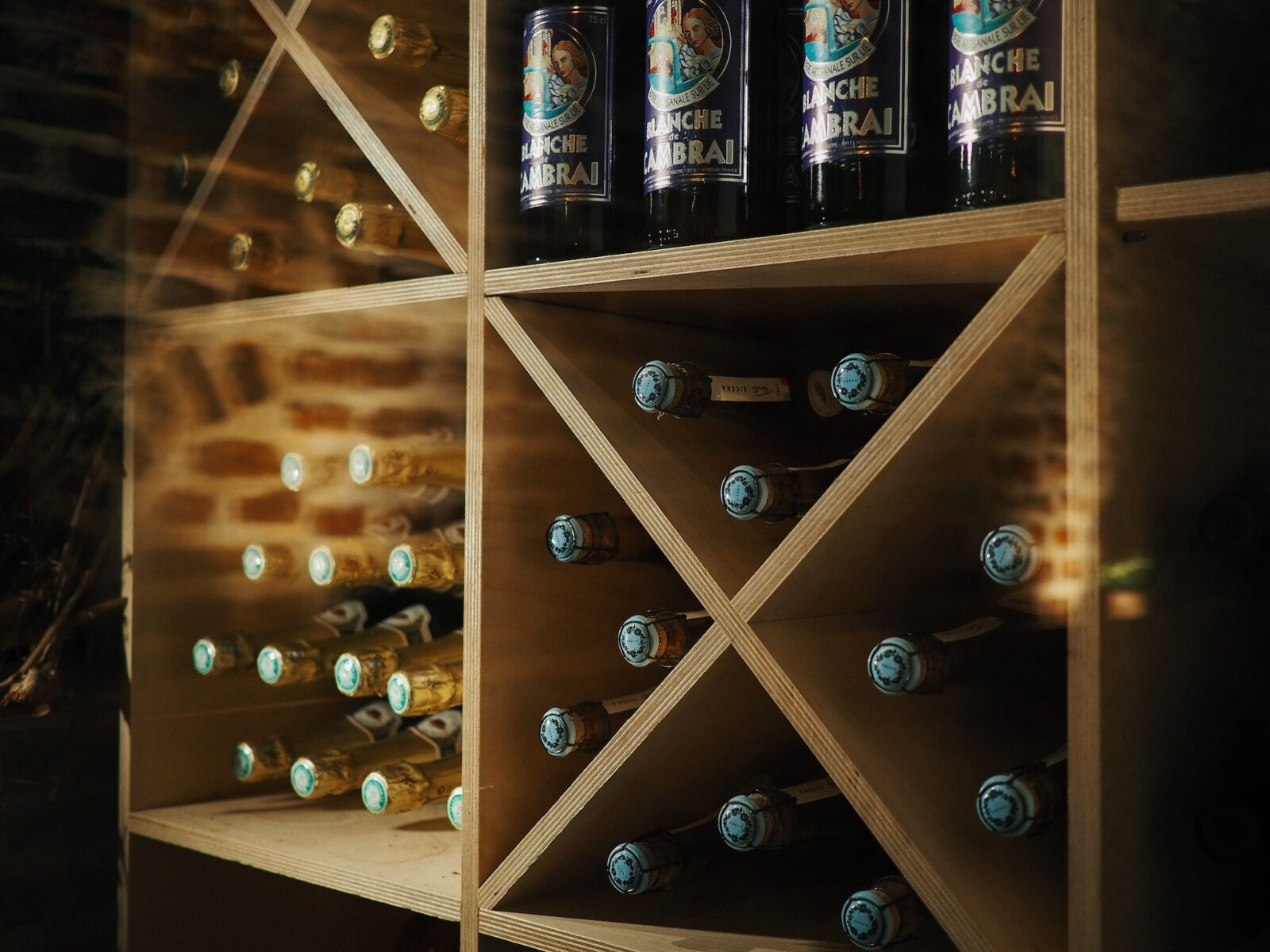
Modular systems offer flexibility and are often the most cost-effective choice for smaller cellars. They can be expanded as your collection grows and rearranged as your needs change. If you are looking for a quality starting point for a smaller collection or a secondary storage area, the Bodegas wine rack organizer offers solid construction that works beautifully as a standalone display.

Custom-built racking is the ultimate choice for a dedicated cellar. A skilled woodworker or specialized wine cellar company can design a racking system that fills the space exactly, integrates display sections for special bottles, incorporates a tasting ledge, and creates visual rhythm through the combination of individual bottle storage and case storage.

Lighting: Setting the Mood Without Damaging the Wine

Wine cellar lighting serves two purposes: functional illumination for reading labels and navigating the space, and atmosphere. The lighting choices you make have a significant effect on how the cellar feels.

LED lighting is the right choice for wine cellars. Modern LED bulbs produce no UV light, generate minimal heat, and consume very little energy. They are available in warm color temperatures that give the cellar a soft, golden glow rather than the harsh white light of fluorescent fixtures.

Consider layering your lighting. Recessed ceiling lights provide general illumination. Under-rail lighting built into the rack system casts light along the bottles themselves, making the collection visible and creating beautiful visual depth. A pendant light or chandelier over a tasting table adds character and creates a focal point.

Dimmer switches are a worthwhile addition. Being able to bring the light down to a warm, low level when you are in the cellar for pleasure — rather than retrieval — changes the feel of the space entirely.

Flooring Choices for a Cellar Environment

Cellar flooring needs to stand up to humidity and the occasional spilled glass or leaking bottle. It also contributes significantly to the room’s character. Your options include:

Stone and tile are classic and practical. Slate, travertine, and tumbled stone all work beautifully in wine cellars, providing a cool, tactile surface that suits the underground character of the space. They are impervious to moisture and easy to clean. The main consideration is that stone can be cold underfoot — something to consider if you plan to spend extended time in the cellar.

Sealed concrete is a less expensive option that can be stained or polished for an attractive finish. It handles humidity well and is extremely durable. A well-executed polished concrete floor in a wine cellar looks sophisticated and intentional rather than merely utilitarian.

Reclaimed wood flooring, properly sealed against moisture, brings warmth and character. It is a particularly beautiful choice in cellars with a more traditional or rustic aesthetic. Ensure any wood flooring used in a high-humidity environment has a proper vapor barrier below it and is finished with a sealant rated for wet environments.

RELATED  All Four Walls: Step-By-Step Process For Siding And Window Installation

The Tasting Area: Making Your Cellar a Destination

A wine cellar becomes a true destination — not just a storage room — when it includes a space for actually enjoying wine. Even in a modest-sized cellar, a small tasting table and a couple of stools invite you to linger, to open a bottle, to share the experience with someone who appreciates it.

The tasting table does not need to be elaborate. A thick wooden slab on a simple base, a reclaimed door repurposed as a table, or a purpose-built wine bar all serve the function. What matters is that you have a flat surface at a comfortable height and enough space to open a bottle, set out glasses, and sit without feeling cramped.

A wall-mounted wine glass rack above the tasting area keeps stemware accessible and looks intentional. A small prep sink, if your plumbing allows, adds tremendous convenience. A few architectural elements — exposed brick, a stone accent wall, a chandelier with vintage Edison bulbs — transform a functional storage room into something that genuinely feels like a retreat.

Building Your Budget

Wine cellar projects vary enormously in cost depending on size, climate control requirements, and finish level. A modest converted closet with modular racking and a through-the-wall cooling unit can be done for a few thousand dollars. A full-scale, custom-designed basement wine cellar with professional installation might run fifty thousand dollars or more at the top end.

For most homeowners, the sweet spot is somewhere in between. A well-insulated room with a quality cooling unit, custom wood racking, appropriate lighting, and attractive flooring can typically be accomplished in the fifteen to thirty thousand dollar range depending on size and local labor costs.

Whatever your budget, prioritize the essentials: proper insulation, an appropriately sized cooling unit, and a racking system that is built to last. These functional elements protect your investment in wine. Aesthetic refinements are meaningful and worthwhile but secondary to getting the fundamentals right.

When to Call in a Professional

Wine cellar design and installation is a specialized field with its own contractors, designers, and suppliers. For anything beyond a very simple conversion, working with a professional wine cellar designer is money well spent. They understand the technical requirements of climate control, vapor barriers, and insulation in ways that general contractors often do not.

Many wine cellar companies offer design-build services, handling everything from the initial consultation through final installation. They can provide detailed renderings so you can see what the finished space will look like before a single board is cut, and they can help you avoid costly mistakes that are difficult to correct after the fact.

A home wine cellar is not a casual weekend project — it is an investment in a permanent feature of your home that should be done carefully and correctly the first time. The result, when done right, is a space that will give you pleasure every time you descend those stairs for decades to come.

Brooks Manley

Brooks Manley

Brooks is a marketer by trade, but has developed quite the passion for home design since becoming a homeowner in New Orleans. He'll be writing about he and his wife's favorite home decor products as well as simple tips and tricks for creating a home you love.

Leave a Reply