
Last Updated on May 28, 2026
Bathroom design has become one of the most dynamic and design-forward categories in residential interiors, with a pace of innovation that’s genuinely exciting for anyone planning a renovation or simply curious about where aesthetic sensibility is heading. What was considered a luxury bathroom just a decade ago now reads as standard, and the expectations for what a primary bathroom can feel and function like have shifted considerably. Today’s most compelling bathroom designs draw from hotel experiences, spa culture, and a growing desire for daily rituals that feel restorative rather than perfunctory.
Whether you’re planning a full renovation, looking for achievable updates to an existing space, or simply interested in where bathroom design is heading, these are the trends defining the most interesting bathrooms right now.
Wet Rooms: Bathrooms Without Barriers
The wet room concept — in which the entire bathroom floor is waterproofed and the shower occupies open space without a defined enclosure or threshold — has been popular in European and Japanese bathroom design for years, and it’s arrived emphatically in American residential design. The appeal is intuitive: eliminating the visual and physical barriers between shower and bathroom produces a space that feels expansive, serene, and deliberately designed.
In a true wet room, the floor slopes gently toward a drain that’s positioned to accommodate both shower and bathroom use. The entire floor and lower walls are waterproofed, and the shower fixtures — head, handheld, body sprays — are positioned without a confined enclosure surrounding them. A freestanding bathtub positioned within the wet room space reads as a sculptural element rather than a functional box, and the combination of tub and open shower in a single, unified environment is among the most dramatic statements available in bathroom design.
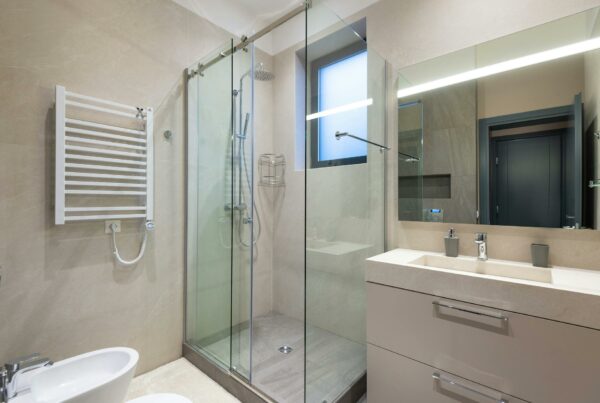
For those who want the wet room aesthetic without fully committing to the infrastructure required, a doorless walk-in shower with a wide, open entry creates much of the same visual effect. The key is eliminating the visual interruption of a door frame and threshold while ensuring the shower geometry directs water spray effectively away from the bathroom floor beyond the shower zone.
Statement Tile as the Primary Design Element
Tile has always been the dominant material in bathroom design, but the way designers and homeowners are using tile has shifted from the background to the foreground. Rather than treating tile as a neutral backdrop for plumbing fixtures and vanity furniture, the most compelling current bathroom designs use tile as the primary design element — the statement around which everything else is organized.
Oversized tile formats have become particularly dominant. Large-format porcelain panels — 24×48, 36×36, or even larger — create a sense of seamless surface with minimal grout lines that reads as luxurious and contemporary. The reduction in grout also has practical advantages: less grout means less area for mold and mildew to develop and less surface to clean. Large-format tile requires a flat, well-prepared substrate and professional installation, but the result justifies the investment.
Handmade and artisanal tile is experiencing a strong moment. Zellige tile — hand-made Moroccan terracotta tiles with a distinctive irregular surface that catches light in endlessly varied ways — has become a signature element in bathrooms with personality. The irregularity in thickness and surface that would have seemed like a defect in conventional tile is precisely what makes zellige so beautiful in application. No two tiles are exactly alike, and the combined effect of hundreds of slightly different tiles on a shower wall creates a shimmering, luminous surface that photographs beautifully and lives even better. Handmade ceramic tiles with a similar expressiveness, now made by an increasing number of American and European craft studios, share the same irregular appeal.
Terrazzo has made a genuine comeback from its mid-century heyday. Its characteristic speckled composition — marble, glass, or stone chips set in cement or epoxy — is available in contemporary colorways that range from subtle (cream matrix with pale gray chips) to bold (black matrix with vivid multi-colored chip pattern). Terrazzo flooring and wall tile in contemporary colorways feel fresh rather than retro, and its durability and ease of maintenance make it practically appealing as well as visually interesting.
Warm Tones and Earthy Palettes
The long dominance of white, gray, and cool-toned bathrooms is giving way to warmer, earthier palettes that feel more organic, more personal, and genuinely more relaxing. This shift reflects a broader movement in interior design toward tactile materials and grounding colors that connect interiors to the natural world.
Warm whites with yellow or cream undertones are replacing cool whites as the standard backdrop. Slightly aged or antiqued whites — off-whites that suggest natural materials like plaster, limestone, or aged linen — create bathrooms that feel warmer and more welcoming than the clinical bright white that dominated bathroom design through much of the 2000s and 2010s.
Earthy terracotta, dusty clay, warm sage green, and rich ochre are appearing in bathrooms as both paint colors and tile choices. These colors connect to natural pigments in a way that manufactured cool colors don’t, and they create bathrooms that feel genuinely enveloping. A terracotta floor tile with a warm white wall tile and unlacquered brass fixtures creates a space with a European farmhouse sensibility that’s tremendously appealing. Sage green zellige in a shower paired with warm oak wood vanity cabinetry produces a bathroom that feels equally at home in a contemporary city apartment or a classic country house.
Natural Materials and Organic Textures
The move toward warmer tones is accompanied by a growing preference for natural materials in all their textural variation. Polished concrete, natural stone, wood, rattan, and linen are appearing in bathrooms in ways that would have seemed impractical to previous generations of designers — and the performance of these materials in bathroom environments has improved significantly with advances in sealing technology and waterproofing.
Natural stone — whether marble, limestone, slate, travertine, or quartzite — brings a quality of surface variation that manufactured tile cannot replicate. The veining in marble, the layered texture of slate, the pitted surface of travertine: these are the marks of geological time, and they give stone surfaces a presence and depth that is genuinely difficult to achieve with any other material. Natural stone requires sealing to resist moisture damage and staining, and it’s more expensive than porcelain alternatives, but its beauty and longevity justify the investment in bathrooms designed to last.
Wood in bathrooms raises eyebrows among those familiar with the damage moisture can cause. But properly sealed hardwoods, thermally modified wood, or engineered wood products designed specifically for wet environments can perform reliably in bathroom applications when used thoughtfully. Wood vanity cabinetry, teak shower flooring, and cedar shower benches are well-established examples. The warmth and visual contrast that wood introduces in a primarily mineral bathroom environment is difficult to achieve otherwise, and the increasing availability of performance-treated wood products has made the practical challenges manageable.
Freestanding Tubs as Sculptural Anchors
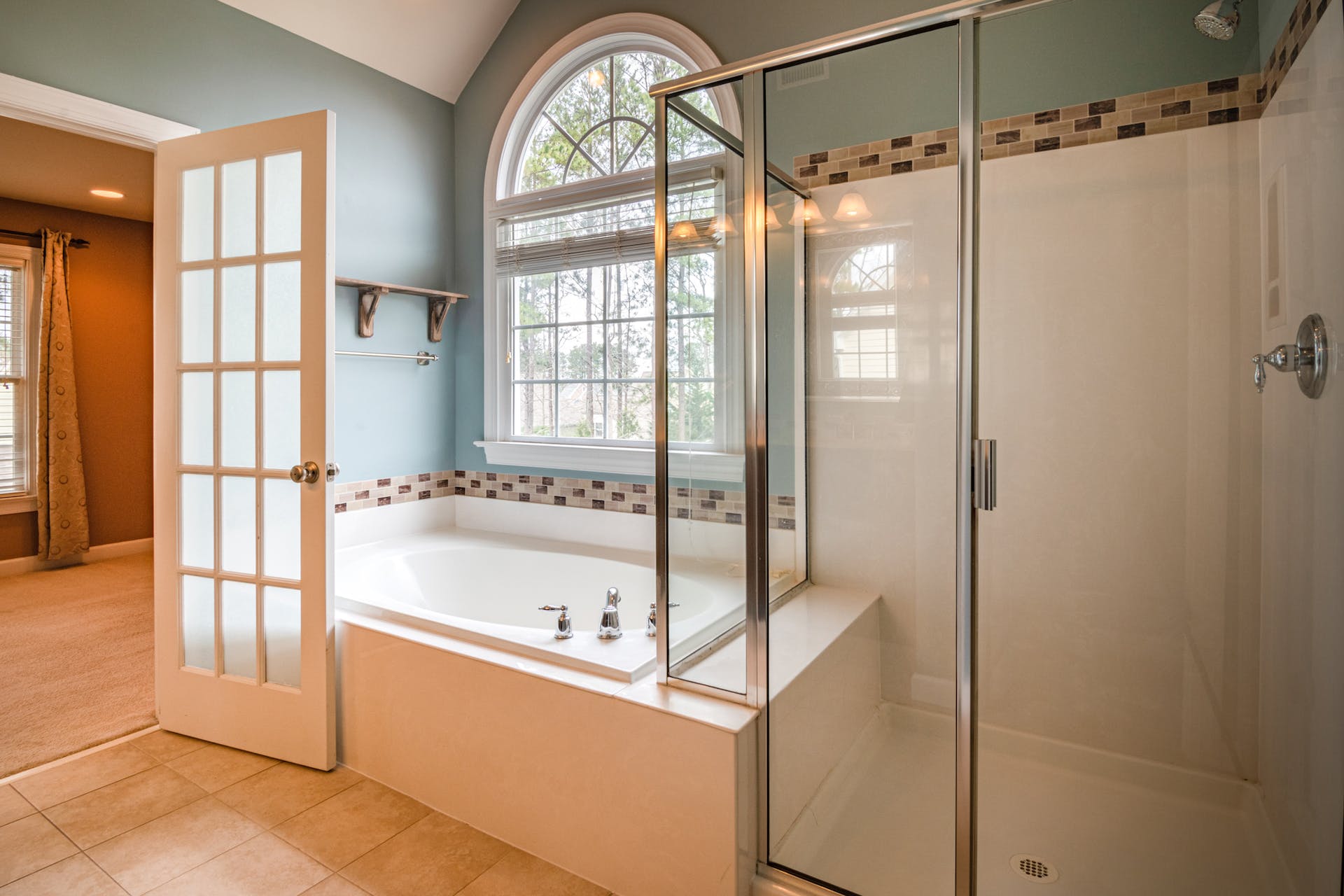
The freestanding bathtub has ascended from luxury feature to aspirational standard in primary bathroom design. Unlike alcove tubs that are defined primarily by what surrounds them, freestanding tubs command space as three-dimensional sculptural objects, and the choice of form — the silhouette, proportions, and surface treatment of the tub — makes a design statement that defines the character of the entire bathroom.
Slipper tubs with their elevated headrest and gracefully curved profile carry a classical elegance that suits traditional and transitional bathrooms. Japanese soaking tubs — compact, deep, and designed for a different bathing posture than the reclining Western bath — offer a minimalist beauty that suits contemporary interiors. Sculptural concrete tubs, boat-shaped resin tubs with dramatic form, and double-ended tubs symmetrical on both ends for two bathers: the variety available has never been greater, and the range of price points has expanded considerably as the category has matured.
Positioning the freestanding tub is a key design decision. Against a window where the bather looks out to a garden or landscape is the most aspirational placement, but also the most privacy-constrained. At the center of a large bathroom as a true room divider between the vanity zone and the shower zone creates a floor plan that reads more like a spa than a conventional bathroom. At the end of a longer room as a terminal focal point invites the eye through the space and establishes the tub as the destination it should be.
Spa Features and Wellness Integration
The bathroom has become explicitly associated with wellness in contemporary design discourse, and the features that serve genuine relaxation and therapeutic needs are appearing in residential bathrooms with increasing frequency. This isn’t about adding luxury for its own sake but about designing daily rituals that actively support wellbeing.
Steam showers — enclosed shower spaces that generate and retain steam at therapeutic temperatures and humidity — have become much more attainable for residential installation. Digital steam generators installed in a small closet adjacent to the shower control steam output and temperature precisely, and the health benefits of regular steam bathing are well documented: improved circulation, muscle relaxation, respiratory benefits, and the deep skin hydration that comes from extended steam exposure. A properly constructed steam shower requires complete waterproofing including the ceiling, tight door seals, and a steam generator sized appropriately for the enclosed volume.
Heated floors have become a near-standard expectation in renovated primary bathrooms. Stepping out of a shower or bath onto a warm floor is a pleasure that, once experienced, becomes difficult to relinquish. Electric radiant heating systems installed beneath tile are relatively simple to integrate into bathroom renovations and inexpensive to operate given the small area involved. The thermostatic controls on modern systems allow you to schedule heating so the floor is at the ideal temperature when you step on it in the morning without running unnecessarily through the day.
Chromotherapy lighting — adjustable color temperature and color systems that allow you to shift the light quality to support different activities and moods — is finding its way into primary bathrooms. Cool, bright light for morning grooming and makeup application; warm, dim light for evening baths and relaxation. The difference in how these different lighting conditions make you feel and how effectively they support their respective activities is significant, and smart lighting control makes the transition between them effortless.
Floating Vanities and Storage Innovation
Vanity design has been one of the most actively evolving categories in bathroom design. The floor-mounted vanity with traditional cabinet doors and drawers — the default bathroom furniture for decades — has been challenged by floating designs that introduce a sense of lightness and space, and by custom configurations that address the specific storage needs of how different people actually use their bathrooms.
Floating vanities — wall-mounted cabinetry with open space between the bottom of the cabinet and the floor — create a visual relationship with the floor that makes the bathroom feel larger. The clean line beneath the vanity allows the floor tile to read continuously, and the illuminated space beneath the vanity (particularly when lit by a strip of LED lighting) provides a gentle wash of ambient light at floor level that’s both practical for nighttime navigation and atmospherically beautiful. The open space also makes cleaning the floor considerably easier than navigating around the feet and base of a floor-mounted vanity.
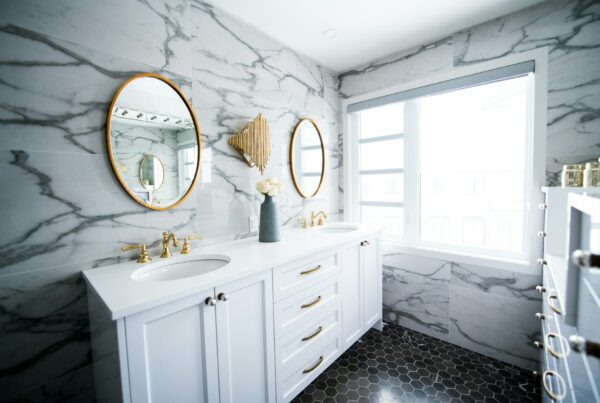
Double vanities — two separate sink areas within a shared bathroom — are a standard feature in primary bathrooms serving couples who want separate grooming spaces without requiring separate bathrooms. Contemporary interpretations of the double vanity move away from the twin-sink-in-a-single-long-cabinet approach toward more individualized expressions: two separate vanity units at slightly different heights if partners are significantly different in stature, vanities positioned on opposite walls for maximum privacy, or one vanity unit with two distinct zones defined by pendant lighting or storage configurations above each sink.
Hardware and Fixture Trends
The hardware and fixtures in a bathroom do a disproportionate amount of design work relative to their physical size. Faucet design, shower system design, towel bar finish, cabinet hardware — these details either harmonize and elevate the overall design or undercut it, and the current market offers extraordinary variety.
Unlacquered brass has become one of the most coveted finish options in bathroom hardware. Unlike polished brass, which maintains its bright gold appearance permanently, unlacquered brass is not coated and will naturally develop a patina over time — darkening in areas that are less frequently handled, developing a slightly mottled depth that many homeowners find more interesting and authentic than a uniformly bright surface. This living quality makes unlacquered brass particularly suited to bathrooms with natural materials and warmer tones where a bit of character is appreciated.
Matte black fixtures maintain strong contemporary relevance for their graphic clarity and their ability to hold their appearance in hard water conditions that can wreak havoc on polished finishes. In bathrooms with white or light tile, matte black fixtures create a striking contrast that reads as intentional and considered. In darker, more dramatic bathrooms, matte black can blend into the overall darkness in a way that allows other elements to stand out.
Integrated shower systems that combine showerhead, handheld wand, body sprays, and steam in a single control panel are the pinnacle of shower experience. Quality systems offer precise temperature control that maintains the set temperature regardless of other water use in the home, and digital interfaces with preset options for different users. A quality rainfall shower head system can be a meaningful upgrade that transforms the daily shower experience significantly, even in an otherwise unchanged bathroom.
The Bathroom as Personal Sanctuary
The common thread connecting all of these trends is a shift in how we conceive of the bathroom’s role in domestic life. The bathroom has moved from purely functional service space to genuine sanctuary — a room designed with the same care and aesthetic attention as any other room in the house, and serving explicitly restorative functions as part of a deliberate approach to daily wellbeing.
This shift is reflected in how people are spending on bathroom renovations: investing in quality materials, thoughtful design, and features that genuinely support the experience they want to have in the space every day. The return on that investment isn’t purely financial, though bathroom renovations consistently rank among the highest-return home improvements. The daily return — the pleasure of moving through a beautifully designed space that supports your morning and evening rituals — compounds over years in a way that makes the investment genuinely meaningful.