
Last Updated on May 1, 2026
Choosing a ceiling fan for a tiny home is one of those decisions that sounds simple until you are standing in the hardware store staring at a wall of options, none of which seem quite right. Too large and the fan overwhelms your space, makes the ceiling feel lower, and throws the whole room off balance. Too small and it barely circulates air. Getting it right matters, and with the right guidance, it is actually a pretty satisfying purchase.
Living small means every decision in your home counts twice. You work hard to maximize the space you have, and your ceiling fan should support that effort, not undermine it. Here is what to keep in mind when you are shopping for the best small ceiling fan for your tiny home.
Start with the Room Size
Room dimensions are the first thing to nail down before you even start browsing fans. Ceiling fan sizing is not arbitrary. There are clear guidelines based on square footage, and following them means the difference between a fan that works beautifully and one that looks like a helicopter landed in your living room.
For rooms up to 75 square feet, look for fans with blade spans in the 29-36 inch range. For spaces between 76 and 144 square feet, blade spans of 36-42 inches work well. Most tiny homes and micro apartments fall within these two categories, so you have solid options to choose from.
Also consider ceiling height when thinking about blade count. Three-blade fans have a lighter, more open visual profile that can make a small room feel a bit larger and less cluttered. Four and five blade fans move more air but add visual weight. In very tight spaces, fewer blades often feel more intentional.
If your bedroom or living area has any angled walls, look for fans specifically designed for sloped ceilings. These come with an angled canopy or a downrod adapter that keeps the blades level even when the mounting surface is not. A fan hung wrong on a sloped ceiling does not just look odd, it can also wobble and wear out faster.
Understand Your Installation Type
Before purchasing, look up at your ceiling and think about what kind of mounting you are working with. Tiny homes often have lower ceiling heights, which means a standard downrod fan might hang too low for comfortable clearance. The general rule is that fan blades should sit at least 7 feet above the floor for safe, effective operation.
If your ceilings are 8 feet or under, consider a flush-mount or hugger-style ceiling fan. These mount directly to the ceiling without a downrod, keeping everything tight and proportional. They sacrifice a tiny bit of airflow efficiency compared to fans hung lower, but in a small space the difference is minimal, and the visual result is much cleaner.
Also think about whether you want a fan with a built-in light kit. If your tiny home is short on room lighting options or you are working with minimal ceiling fixtures, a fan with a good integrated light can genuinely solve two problems at once. Look for one with a warm or adjustable color temperature rather than harsh daylight bulbs.
Pay Attention to the Downrod Length
If you are going with a standard mount rather than a hugger fan, the downrod length needs to match your ceiling height. This is something a lot of buyers overlook until they get the fan home and realize the blades are either scraping the crown molding or hanging too close to the tops of their heads.
Measure your ceiling height carefully. For a standard 8-foot ceiling with a flush mount, a short 3-4 inch downrod works well. For higher ceilings, you may need a longer rod to bring the fan down into the most effective air circulation zone. Most fans come with a standard downrod included, but longer options are usually available separately.
The right downrod position also visually opens up the ceiling. When a fan is installed at the correct height, it draws the eye upward and makes the entire room feel more proportional, which is a useful trick in a compact space.
Choose a Quiet Motor
This point does not get talked about enough: fan noise in a tiny home is a real issue. In a larger house, a slightly noisy fan in the living room is a background hum. In a 200-square-foot studio, that same fan is genuinely disruptive, making conversations harder and affecting how well you sleep.
Look for fans rated as “whisper quiet” or those that specifically mention low-noise DC motors. DC motor fans are generally quieter and more energy efficient than AC motor models. They also tend to have more speed settings, which gives you finer control over airflow and noise level. The higher upfront cost is usually worth it in a small-space context where you spend a lot of time close to the fan.
Read reviews carefully, paying attention to comments about noise at different speeds. A fan that is quiet on low but sounds like a box fan on high is not truly quiet. You want consistent, calm operation at every setting.
Match the Style to Your Space
Function aside, a ceiling fan is a visual anchor in any room, and in a tiny home it is especially prominent because the space is small enough that you see it constantly. A fan that clashes with your decor style is a daily annoyance.
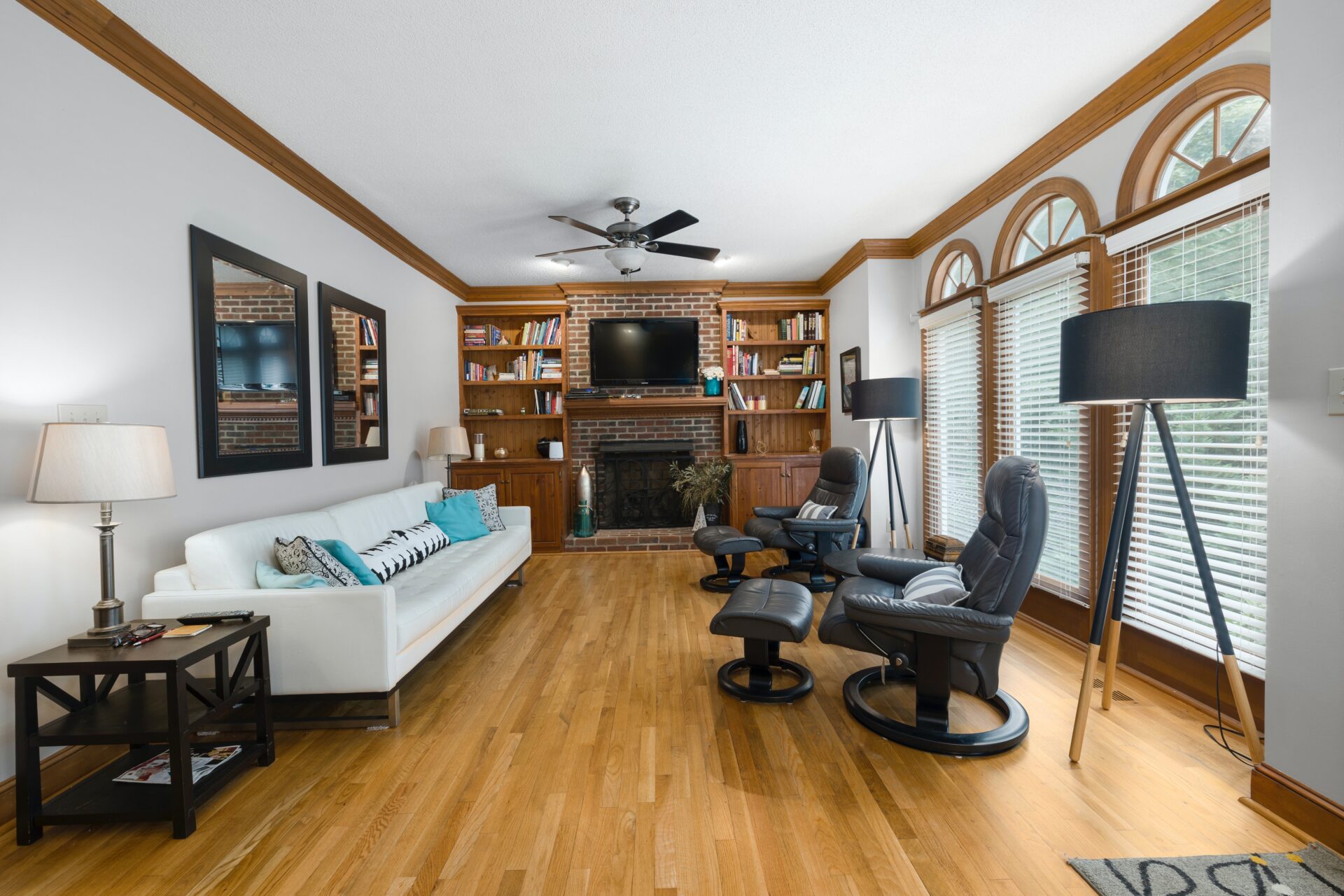
Fortunately, small ceiling fans come in a wide range of styles now. Modern matte black fans with minimal blades feel sleek in industrial or contemporary spaces. Natural wood-blade fans with a brushed nickel finish work beautifully in Scandinavian or boho interiors. Antique brass and wicker blade fans are gorgeous in cottage or coastal rooms. Browse for the best small ceiling fans for tiny homes with style in mind, not just specs.
Take your existing palette and materials into account. A fan that references one of the finishes already present in the room, whether that is the light fixtures, the cabinet hardware, or the furniture legs, will feel considered and intentional rather than an afterthought.
When a Ceiling Fan Is Not the Right Call
Sometimes a room’s layout, ceiling height, or structural setup makes a ceiling fan impractical. If that is your situation, do not worry. There are plenty of ways to cool your home without air conditioning or a ceiling fan. Tower fans, window fans, and strategic cross-ventilation can all be highly effective in a small footprint.
But if the ceiling is workable and you have the mounting option, a well-chosen small ceiling fan remains one of the most efficient ways to improve year-round comfort in a tiny home. It circulates warm air down in winter and keeps the space cool in summer, all without the noise and energy consumption of portable units.
Want to share your experience living or decorating in a small space? Visit our Write for Us page and contribute your story to the Fifti Fifti community.