
Last Updated on May 28, 2026
When the sun sets and the last sliver of daylight slips below the horizon, your outdoor living space faces its defining moment. Will it retreat into shadow, effectively closed for business until morning? Or will it come alive in a different, more intimate key — lit with intention, glowing warmly, inviting you to linger? The difference between these two outcomes comes down almost entirely to lighting design, and it’s one of the highest-return investments you can make in your outdoor living experience.
Good outdoor lighting does more than simply allow you to see after dark. It creates atmosphere, defines zones within a larger space, extends the practical use of your patio or garden into the evening hours, and contributes meaningfully to your home’s curb appeal and security. Poor outdoor lighting — or no outdoor lighting at all — is a missed opportunity that no amount of beautiful furniture or elegant plantings can fully compensate for.
The Design Principles Behind Great Outdoor Lighting
The fundamentals of good indoor lighting design translate directly to outdoor spaces, with some important modifications for the larger scale and the absence of walls and ceilings to reflect and contain light. The core principle is layering: combining multiple light sources at different heights and intensities to create depth, visual interest, and appropriate illumination for different activities and areas.
Ambient lighting provides the general illumination of the space — the baseline of light that allows comfortable movement and conversation without squinting into darkness. In outdoor living spaces, ambient lighting typically comes from overhead sources like string lights, pendant fixtures under a covered patio, or floodlights positioned to wash the space broadly. The goal isn’t brightness but a comfortable overall glow that allows the other layers of lighting to read clearly against it.
Task lighting provides focused illumination for specific activities: cooking at an outdoor kitchen, reading in a seating area, working at a garden potting bench. This layer is brighter and more directional than ambient lighting and serves practical needs rather than purely atmospheric ones. Positioning task lighting directly at its intended use area rather than attempting to provide it from a general overhead source produces far better results for the activities in question.
Accent lighting is where outdoor lighting becomes genuinely exciting from a design perspective. This layer highlights specific elements — a beautiful tree, a garden sculpture, an architectural feature of the house, a water feature, a planting arrangement — by directing light at them from carefully chosen angles. Accent lighting creates depth and mystery in an outdoor space, drawing the eye through the garden and making the overall composition feel designed rather than incidental.
String Lights: The Perennial Favorite
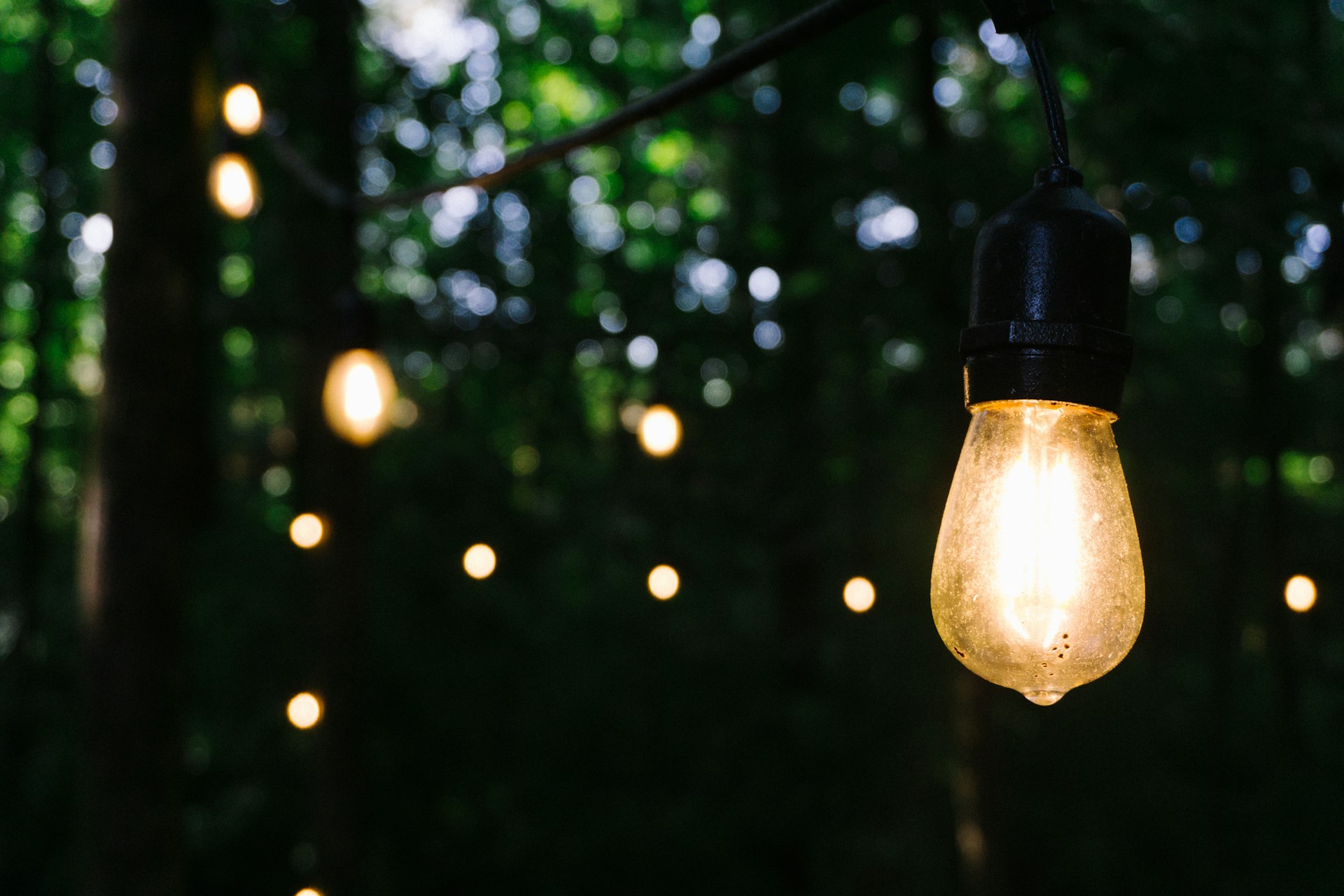
String lights have become synonymous with outdoor entertaining for good reason. They’re versatile, relatively affordable, easy to install and reconfigure, and they produce a quality of light that is uniquely flattering — warm, soft, and diffused in a way that makes everyone and everything look their best. A canopy of string lights suspended above an outdoor dining area transforms even a modest patio into something that feels genuinely magical after dark.
The variety available in string lights today is considerably broader than the single-bulb style that started the trend. Globe string lights in various sizes — from 1-inch bulbs to substantial 4-inch globe clusters — produce different visual effects from delicate and sparkling to bold and architectural. Edison-style filament bulbs offer warm amber light with the added visual interest of visible filaments inside the glass. Festoon lights with classic incandescent-look shapes carry a timeless European garden party aesthetic. Solar-powered string lights eliminate the need for a power outlet, though they typically produce slightly less light and depend on adequate daytime sun exposure to power the evening display.
Installation technique matters considerably for string lights. Lights strung limply between anchor points look very different from lights pulled taut and level, creating a clean geometric canopy effect. Using properly rated outdoor extension cords and anchor hardware rated for the light string weight prevents the drooping and sagging that makes string lights look sloppy. For permanent installations, having an electrician install a weatherproof exterior outlet specifically for the purpose is a worthwhile investment in both safety and convenience.
Lanterns and Portable Lighting
The beauty of lanterns and portable lighting is their flexibility — they can be moved, regrouped, and adapted as the use of a space evolves through an evening or across seasons. A cluster of large pillar candles in hurricane lanterns on a dining table creates extraordinary intimacy. Battery-operated lanterns that mimic candlelight convincingly provide safe ambiance without the fire management challenges of real candles, particularly in windy conditions.
Floor lanterns placed at the corners of a seating area, along a garden path, or flanking outdoor stairs serve both functional and decorative purposes. Oversized woven lanterns with LED candle inserts have become popular accents on covered porches and outdoor rooms, contributing both light and texture. Metal lanterns with an aged finish suit traditional garden aesthetics; clean-lined geometric lanterns in matte black or brushed brass suit contemporary spaces.
Tabletop solar lanterns that charge during the day and glow softly through the evening are a practical and charming solution for dining tables and surfaces away from power sources. The technology has improved considerably in recent years — the best solar lanterns produce genuinely warm, natural-looking light rather than the cold, blue-tinted glow of early solar products. Groupings of three lanterns at different heights create a more interesting arrangement than a single centered piece.
Pathway and Step Lighting
Pathway lighting serves the important practical function of safely guiding movement through your outdoor space after dark, but it doesn’t have to be purely utilitarian. Well-chosen pathway lights make a significant contribution to the evening atmosphere and curb appeal of your property.
Low-voltage path lights — the classic stake-mounted fixtures — are the most common solution and work well when chosen and installed thoughtfully. The key considerations are fixture quality (cheap path lights have notoriously short lifespans and develop an increasingly sad appearance as plastic components yellow and metal corrodes), spacing (path lights are typically most effective at 6-8 foot intervals rather than the closer spacing that many installations use), and light direction (path lights should illuminate the path itself rather than glaring directly into the eyes of approaching pedestrians).
Recessed step lights built into the risers of outdoor stairs are a cleaner solution than surface-mounted fixtures and are less vulnerable to physical damage from foot traffic. They cast light downward onto the tread of each step, making them easy to see safely without creating glare. Recessed lights in low stone walls or along patio edges provide ground-level accent lighting that pools beautifully on paving surfaces.
Solar-powered pathway lights have become a genuinely viable option for many applications, particularly in garden areas where running power would be disruptive or expensive. Modern solar path lights with good solar panels and quality LED components can provide reliable illumination through full evenings. Their performance does depend on adequate daily sun exposure, so placement in full shade may produce disappointing results.
Uplighting Trees and Architectural Features
Uplighting — directing light upward from ground level into trees, against architectural features, or through garden plantings — is the accent lighting technique that most dramatically transforms an outdoor space after dark. It creates depth and drama by illuminating the vertical plane rather than just the horizontal, drawing the eye upward and creating a sense of theater that flat, downward-directed lighting can’t achieve.
A mature tree uplighted from its base with two or three carefully positioned spotlights becomes a genuine focal point visible from inside the house as well as from the garden itself. The interplay of light and shadow through the canopy creates movement and mystery. The choice of beam angle matters: a narrow spot focuses light on a specific branch structure while a wide flood illuminates the whole canopy volume. For most trees, a combination works best — one narrow spot picking out the main trunk and primary branches, with a wider flood washing the canopy overall.
Wall washing — positioning fixtures to graze light across the surface of a stone wall, brick facade, or stucco surface — reveals texture in a way that flat-on illumination can’t. The raking light picks up every variation in the surface, creating a visual richness and depth that’s particularly beautiful with natural stone or textured masonry.
Water features — fountains, ponds, small waterfalls — are dramatically enhanced by submersible LED lighting installed in the water itself or spotlighting installed to illuminate the movement of water. The combination of light, water movement, and reflected sparkle is genuinely magical and justifies the installation effort and cost involved. Submersible LED spotlights in warm white or soft blue tones are available in waterproof ratings appropriate for permanent submersion and controlled by standard outdoor dimmer systems.
Smart Outdoor Lighting Systems
The arrival of smart lighting technology has transformed the practical management of outdoor lighting. Rather than a collection of switches inside the house controlling fixed-on fixtures outside, smart outdoor lighting systems allow you to manage your entire exterior lighting scheme from a single app, set schedules, create scenes for different occasions, and integrate outdoor lighting with the rest of your smart home ecosystem.
Smart outdoor plugs convert any existing exterior outlet into a connected device controllable from your phone or by voice assistant. This is the most affordable entry point into smart outdoor lighting and works well for string lights, lanterns, and decorative accent fixtures. Setting schedules — lights on at sunset, lights off at 11pm, for instance — through the app eliminates the need to think about it at all. Scenes can dim lights after a certain hour, shift color temperature, or create holiday-specific settings.
Dedicated smart outdoor lighting ecosystems like Philips Hue Outdoor or similar offerings integrate pathway lights, wall lanterns, spot uplights, and string lights into a unified system with consistent control and scene-setting capabilities. The investment is higher than standard outdoor lighting but the result is an outdoor lighting experience that’s genuinely sophisticated and responsive to how you use your space. Color-changing capabilities allow for holiday lighting effects, party ambiance, or simply experimenting with different color temperatures to find what suits your space best.
Motion-activated lighting serves both security and convenience purposes. A quality motion-activated floodlight near the driveway, garage, and back door provides security illumination when movement is detected while staying off when the area is unoccupied. The best smart motion-activated lights integrate with your home security system and can notify your phone when triggered, providing awareness of activity around your property even when you’re away.
Power Solutions and Practical Considerations
The question of how to power outdoor lighting is often the most practically challenging aspect of implementing a lighting design. The cleanest and most versatile solution is a professionally installed low-voltage outdoor lighting system connected to a dedicated transformer with a timer and photocell. Low-voltage systems operate at 12 volts, making them safer to install and far more energy-efficient than line-voltage alternatives, and the wiring can be run underground relatively easily without the requirements that govern high-voltage electrical work in most jurisdictions.
For areas where running power is difficult or expensive, solar-powered fixtures have become genuinely capable alternatives. The best solar outdoor lighting products — notably those with separate solar panels that can be positioned for optimal sun exposure while the fixture is placed where aesthetics require — provide reliable performance in most climates. For a comprehensive and reliable solar-powered outdoor lighting solution, a high-quality solar LED path light set delivers consistent illumination without any wiring and eliminates the ongoing electricity cost.
Battery-powered LED fixtures have also improved dramatically. Rechargeable battery-powered lanterns and spotlights with long run times are genuinely practical for areas without convenient power access, and they can be charged discreetly during the day. The convenience of being able to position lighting wherever you want without regard for power outlet locations is particularly valuable for renters or anyone who wants flexibility to rearrange their outdoor space easily.
Bringing It All Together
The most successful outdoor lighting designs don’t happen by accident or through the random accumulation of whatever fixtures were on sale. They begin with a clear vision of how the space is used, what elements are worth highlighting, and what atmosphere is desired — and then work backward to select the fixtures, positions, and control systems that achieve those goals.
Walking your outdoor space after dark — or standing at your windows looking out — with fresh eyes reveals what’s working and what isn’t. Dark corners that feel unsafe or uninviting. Beautiful plantings invisible at night. Dining areas without sufficient light for comfortable meals. Each observation points toward a specific solution, and addressing them systematically produces an outdoor lighting scheme that genuinely enhances your enjoyment of your property through every evening of the year.
The investment in well-planned outdoor lighting pays off in a remarkably direct and daily way: the evening hours in your garden or on your patio become genuinely available to you, lit and welcoming, extending the precious time you spend in the outdoor spaces you’ve worked to create.