
Last Updated on July 9, 2026
Figuring out where to put a rug under a sectional is one of those things that sounds simple until you’re standing in your living room with a tape measure, completely stumped. The sectional is huge. The rug never seems right. And interior design advice online tends to conflict.
This guide cuts through the confusion. Below are 6 designer-approved rug layouts for every sectional shape, with exact rug sizes and a visual explanation of what actually works. best couch covers every
The Golden Rule: Front Legs On, Back Legs Off
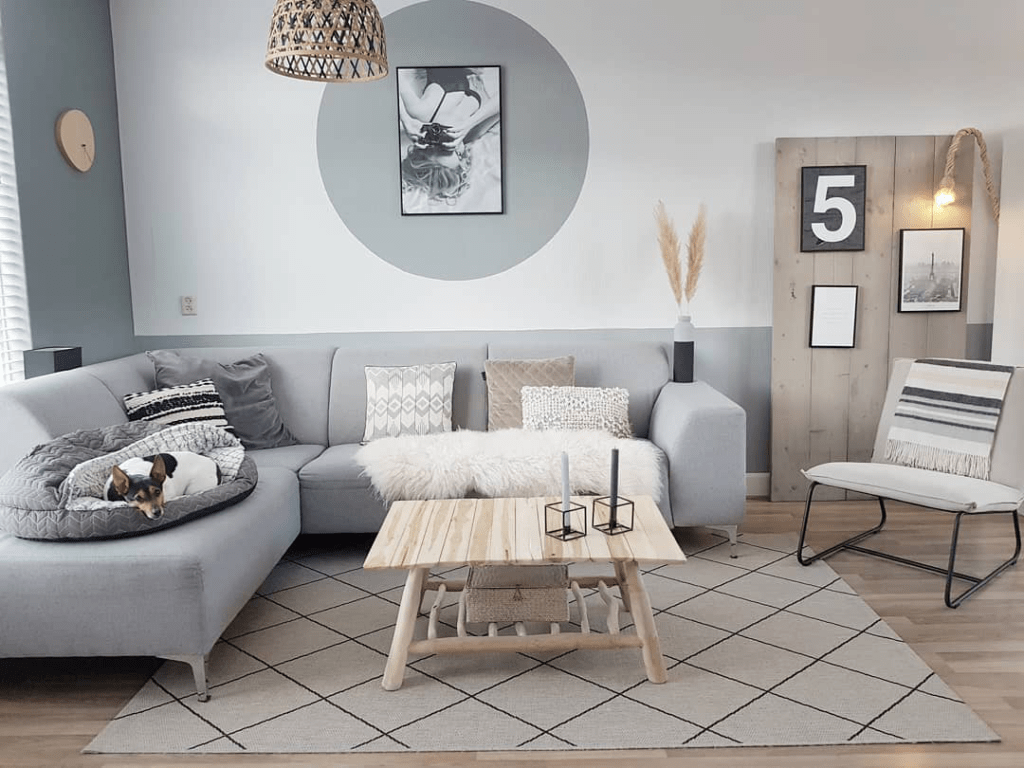
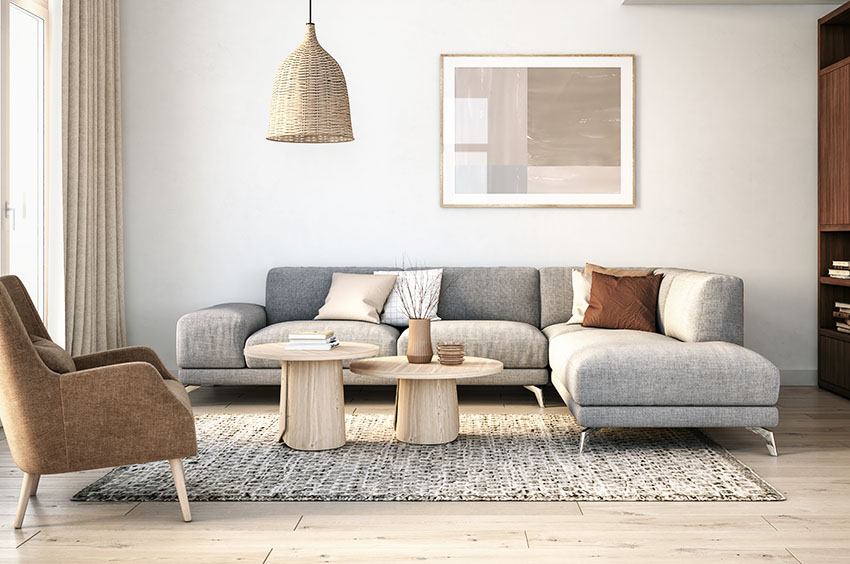
For the majority of sectionals in the majority of rooms, the standard designer approach is: front two legs of each section on the rug, back legs off. This is sometimes called “front legs on.”
Why does this work?
- It visually anchors the sectional to the rug without requiring a massive (and expensive) rug
- It makes the seating area feel unified and intentional
- It’s forgiving — a rug 12–18 inches shorter than ideal still looks correct
- Interior designers and decorators use this rule on 80% of their sectional projects
The exception: if you have a very large open-plan living area (over 20 ft wide), consider going all legs on for a more grounded, formal feel.
Rug Size Guide by Sectional Shape
| Sectional Type | Recommended Rug Size | Layout Rule |
|---|---|---|
| Small L-shape (under 100″) | 8×10 ft | Front legs on, centered under coffee table |
| Standard L-shape (100–130″) | 9×12 ft | Front legs on both sections, coffee table fully on rug |
| Large L-shape (130″+) | 10×14 ft | All legs on or front legs on depending on room size |
| U-shape sectional | 10×14 ft or larger | Rug fills the interior of the U, front legs on all three sections |
| Small apartment sectional | 6×9 ft or 8×10 ft | All legs on rug — the rug defines the zone |
| Open floor plan sectional | 10×14 ft or 12×15 ft | All legs on — rug creates a room-within-a-room |
6 Designer-Approved Rug Layouts for Sectionals
Layout 1: Standard L-Shape — Front Legs On (Most Common)
Best for: Most L-shaped sectionals in standard living rooms
Rug size: 9×12 ft
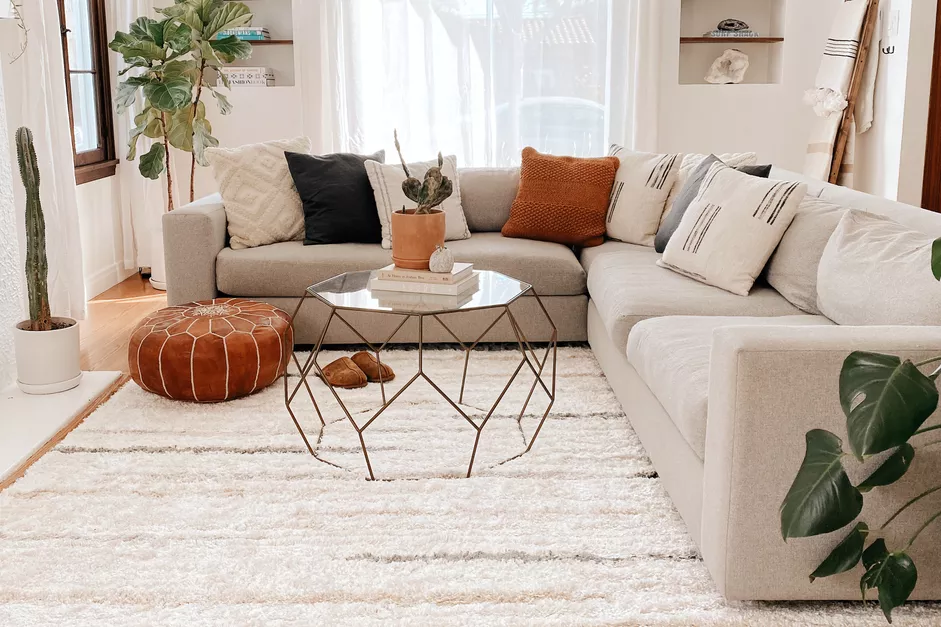
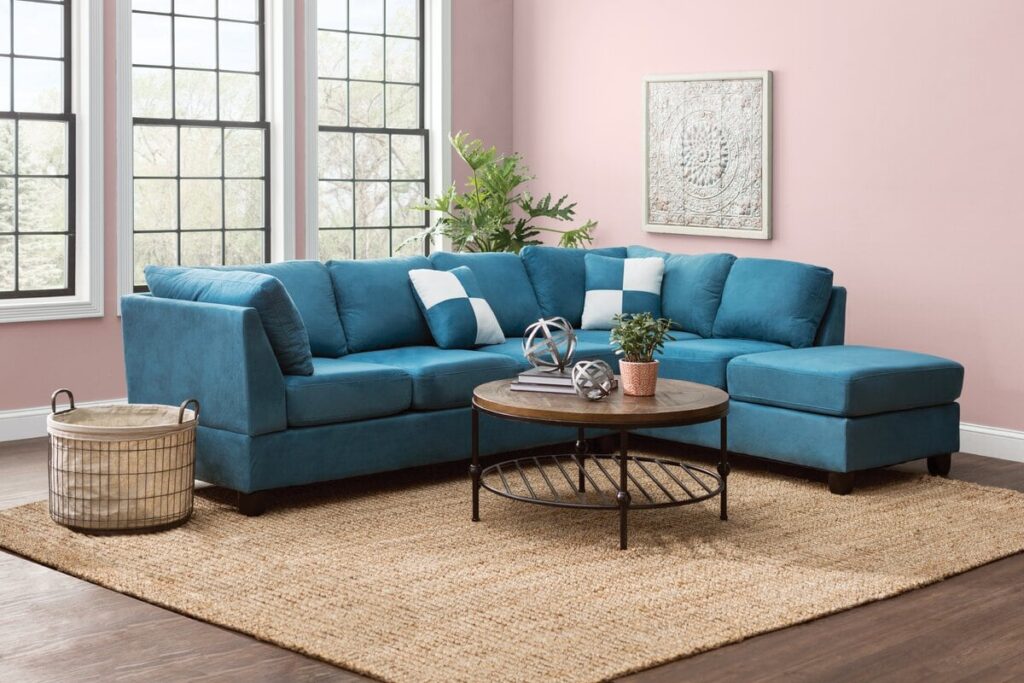
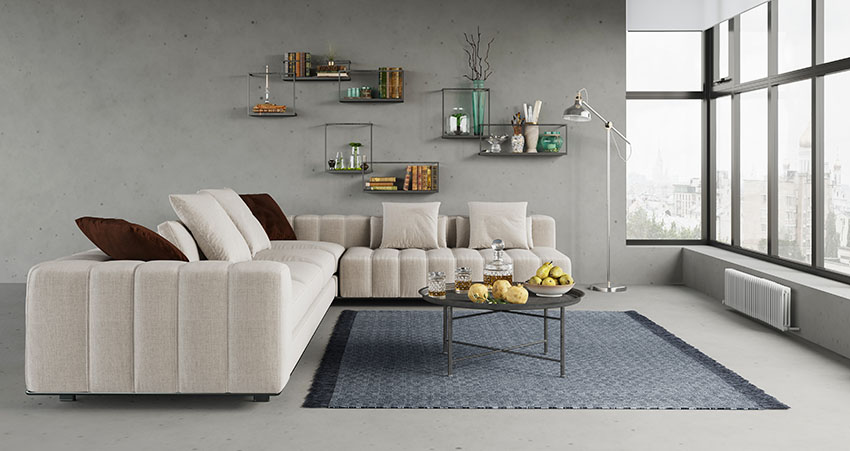
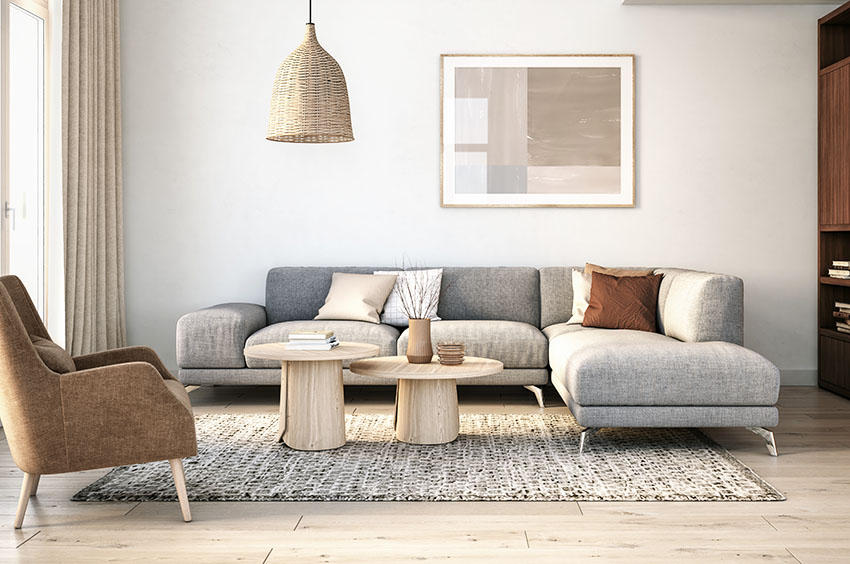
How it works: Position the rug so the front two legs of the long side AND the front two legs of the short side (the chaise or return) are resting on the rug. The coffee table should sit fully on the rug. The back legs of both sections remain on the floor.
Common mistake: Placing the rug only under the long section and leaving the chaise/return section off the rug entirely. This makes the sectional look like it’s split into two separate pieces instead of one cohesive unit.
Layout 2: L-Shape — All Legs On
Best for: Large open-concept rooms, high-end design projects
Rug size: 10×14 ft or 12×15 ft
How it works: The rug is large enough that all four back legs of the sectional also sit on the rug. The seating area is fully contained on the rug surface. best couch covers actually best throw pillows couch
When to use this: If your room is 15+ feet wide and the sectional would look “floating” with a smaller rug, go all legs on. It creates a more formal, anchored look.
Layout 3: U-Shape Sectional
Best for: Large family rooms, media rooms, basement lounges
Rug size: 10×14 ft minimum; often 12×15 ft
How it works: The rug fills the interior “cup” of the U-shape. Position it so the front legs of all three sections (left, back, and right) are resting on the rug. The coffee table sits centered on the rug inside the U.
Pro tip: With U-shapes, most people underestimate how large the rug needs to be. Measure the total interior width of the U (not just one section) and add 12–18 inches on each open side before choosing a rug size.
Layout 4: Small Apartment Sectional — All Legs On
Best for: Smaller sectionals in apartments or compact living rooms
Rug size: 6×9 ft or 8×10 ft
How it works: In a smaller space, getting all four legs of a compact sectional on the rug actually works well. The rug defines the conversation zone without wasting space on a oversized rug. Best for Smaller sectionals
Why this differs from larger sectionals: A small sectional (under 90″) can sit fully on an 8×10 rug. A large sectional cannot — which is why front-legs-on is the standard for bigger pieces.
Layout 5: Sectional with Angled Placement
Best for: Rooms with awkward corners, small square rooms
Rug size: Round rug (8 ft diameter) or 9×12 ft placed at 45°
How it works: If your sectional is angled in the room (not against a wall), a round rug or a rectangular rug placed on the diagonal can work beautifully. The rug ties together the seating area without fighting against the sectional’s direction.
Alternatively, you might want to read our guide on how to decorate an angled wall in the living room — the two challenges often appear in the same room.
Layout 6: Open Floor Plan — Zone Creation
Best for: Open-plan kitchen/living/dining spaces
Rug size: 10×14 ft or 12×15 ft
How it works: In an open floor plan, the rug’s job is to define the living zone and separate it visually from the dining area or kitchen. Position the rug so all legs of the sectional are on it. Leave 6–12 inches of rug exposed on the open (non-sectional) sides to “frame” the zone.
This is one of the few situations where a rug that’s too large is genuinely better than one that’s too small.
How to Measure for a Rug Under Your Sectional
Before buying, measure your sectional and the room. Here’s the process designers use:
- Measure the sectional’s footprint: Width × depth of the longest section, then width × depth of the shorter section (or chaise). Note both measurements.
- Mark the coffee table zone: The coffee table should ideally sit fully on the rug. Measure the table footprint too.
- Add your rug overlap: For front-legs-on layouts, you need the rug to extend 12–18 inches beyond the coffee table on the open (non-sofa) sides. This gives you a “breathing room” border.
- Use painter’s tape on the floor: Tape out your rug dimensions before ordering. This step alone prevents 90% of sizing mistakes.
What Rug Shape Works Best Under a Sectional?
Rectangular rugs are the standard choice for sectionals and work for all 6 layouts above.
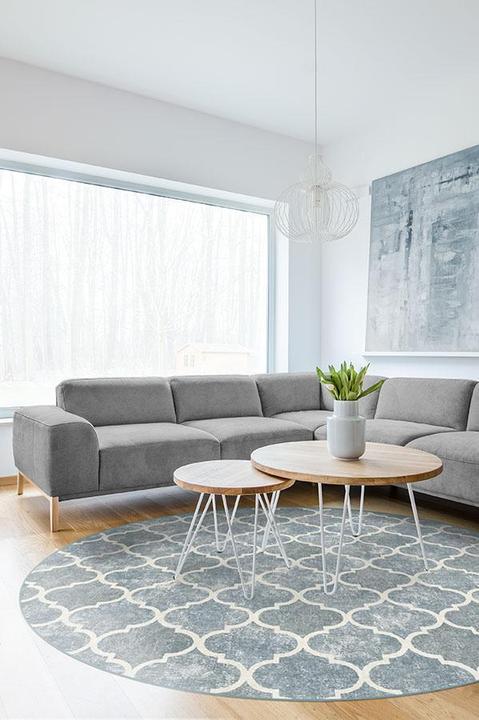
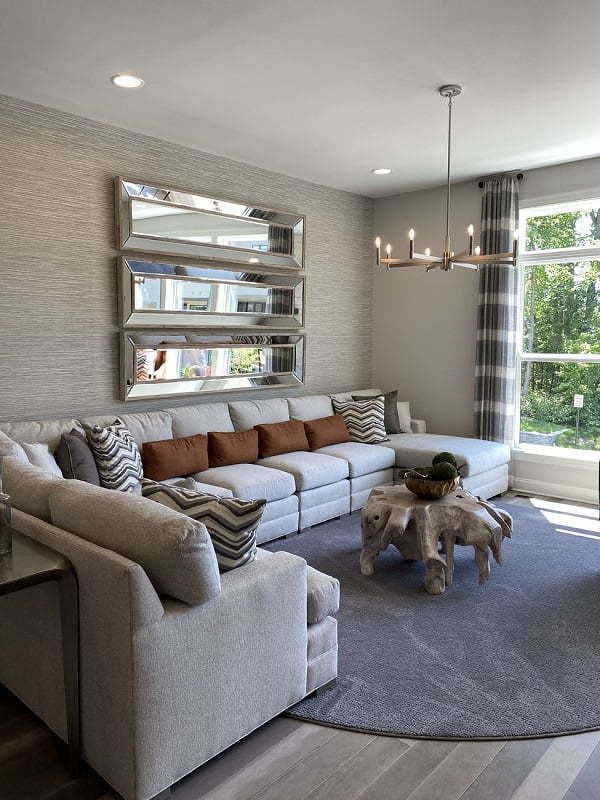
Round rugs can work with angled or curved sectionals, but they’re tricky with standard L-shapes because the corners of the sectional won’t align with the rug’s edges. Stick to 8 ft diameter minimum.
Square rugs work best under U-shape sectionals in square rooms. A 10×10 or 12×12 ft square rug can look intentional under a symmetric U-shape.
Common Rug Placement Mistakes to Avoid
- Too small: The most common mistake. A rug that only fits under the coffee table — with no sectional legs on it — makes the room feel disconnected. When in doubt, go one size larger.
- Centered incorrectly: The rug should be centered under the coffee table, which is typically the focal point of the seating area. The sectional doesn’t need to be perfectly centered on the rug.
- Only one section on the rug: If you have an L-shape and only the long section’s legs are on the rug, the short section looks unanchored. Both sections need front legs on the rug.
- Rug too close to the wall: Leave at least 12–18 inches between the edge of the rug and any wall. This creates a visual “mat” effect that makes the room look intentional.
Frequently Asked Questions
Should all legs of a sectional be on the rug?
Not necessarily. The front legs on, back legs off rule works for most sectionals and most rug budgets. All legs on is a valid choice for large open-plan spaces or when you have a smaller, compact sectional that fits comfortably on the rug.
What size rug goes under a sectional sofa?
For a standard L-shaped sectional, a 9×12 ft rug is the most common size. For larger sectionals or open-plan rooms, a 10×14 ft is often better. For U-shaped sectionals, start at 10×14 ft and go up from there.
Can you put a round rug under a sectional?
Yes, but it works best with curved or angled sectionals. An 8 ft round rug under a standard L-shape often looks mismatched because the rug’s shape conflicts with the sectional’s 90-degree corners. If you love round rugs, try an 8–9 ft diameter and position it centered under the coffee table.
How far should a rug extend past a sectional?
For front-legs-on layouts, the rug should extend 12–24 inches past the front of the sectional’s front legs — this is the “breathing room” zone where people’s feet rest when sitting. On the sides, 6–12 inches of exposed rug border creates a clean framed look.
What if my room is too small for the recommended rug size?
Go with the largest rug that fits in the space while leaving 18 inches from each wall. If that means a smaller rug, shift to the “all legs on” approach — it works better with smaller rugs than front-legs-on does. A 6×9 or 8×10 with all four sectional legs on can look very intentional in a compact space.
Related Reading
Have living room design expertise to share? Our Living Room Design guest post page is open for contributors.